• 2 min de lectura
• 2 min de lectura
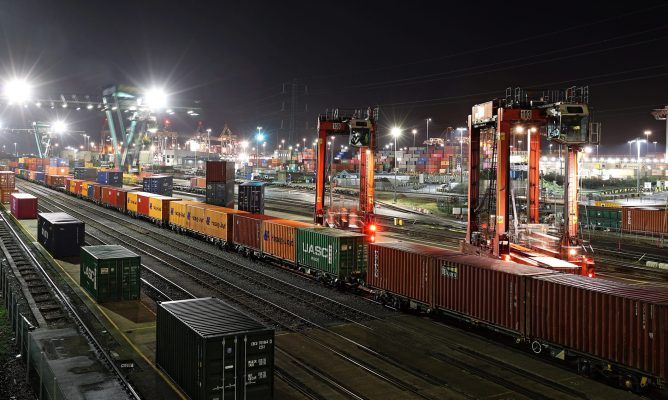
DP World helped its customers reduce over 160,000 tonnes of CO2e in their UK supply chains in less than three years, thanks to a combination of increased rail freight, low-carbon road transport solutions, and innovative carbon reduction programmes.
The Modal Shift Programme, launched in September 2023, has played a fundamental role in this achievement, increasing the proportion of rail freight at DP World's Southampton terminal from 21% to over 30%, with more than 200,000 truck journeys transferred from road to rail.
DP World UK's Low Carbon Truck Pilot Programme (LCTP) has registered over 1,500 trucks in the programme, allowing hauliers serving London Gateway and Southampton to switch from diesel to hydrotreated vegetable oil (HVO) at no additional cost in the first phase.
The LCTP has been further strengthened with the second phase, which includes the implementation of the EVITA (Electric Vehicle Introduction and Transition Accelerator) pilot programme in Southampton, enabling hauliers to operate electric heavy goods vehicles at the same cost as diesel and conduct trials in real operations over a 12-week period.
John Trenchard, Vice President of Sustainable Supply Chains at DP World, stated that "exceeding 160,000 tonnes of CO2e savings in just three years is a significant milestone. We see the net-zero economy as a key driver for our future growth and our ability to provide quality service to our customers."
"This achievement demonstrates the real benefits of collaboration between ports, logistics providers, and customers to decarbonise supply chains at scale. Through initiatives covering rail freight, low-carbon fuels, electrification, and carbon credits, we help our customers reduce emissions while maintaining efficient, resilient, and commercially sustainable supply chains," he added.
These initiatives help customers reduce Scope 3 emissions without compromising supply chain efficiency, reliability, or competitiveness.
DP World's Carbon Insetting Programme (CIP) has continued to grow since its launch in January 2025, with registrations exceeding 250,000 TEU of cargo after the credits available through the programme quintupled, from 50 kg to 250 kg of CO2e per container.
Leveraging the programme, DP World UK earlier this year launched the new Container Terminal Insetting Certificates, generated through emission reductions in Southampton, which will be included in DP World's Carbon Insetting Programme.
These certificates allow customers to account for emission reductions generated through electrification, renewable electricity, and low-carbon fuels, such as HVO, for their own supply chain decarbonisation targets.