• 2 min de lectura
• 2 min de lectura
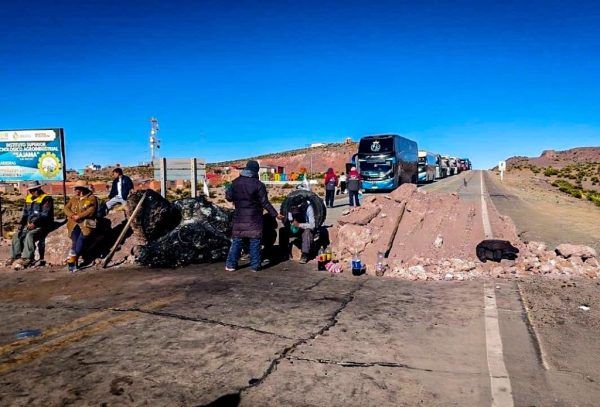
Damage to roads and the loss of toll revenue in Bolivia, during more than 50 days of road blockades, caused preliminary economic damage of approximately USD 21.5 million, reported the Bolivian Minister of Public Works, Mauricio Zamora.
The authority explained that the Bolivian Road Administration (ABC) continues to carry out technical evaluations and necessary actions to fully restore road conditions and safety in the affected sections.
According to technical evaluations, the ABC identified damage to 37 sections of the Fundamental Road Network, with an estimated preliminary economic impact of USD 3.1 million, a loss of toll collection revenue of USD 7.5 million, and the destruction of the Vilaque–Cocapata Toll Station, amounting to approximately USD 916.4 thousand.
The technical evaluations primarily showed accelerated deterioration of the asphalt pavement, the formation of superficial and deep potholes, the accumulation of solid waste and material on the roadway, damage to horizontal and vertical signage, impact on road safety elements, and localized damage to drainage works.
Likewise, there was an increase in superficial deformations due to the prolonged presence of heavy vehicles, hence the need to carry out extraordinary cleaning and rehabilitation work.
Furthermore, the blockades prevented the normal development of road conservation activities in several departments of the country. Restrictions were recorded for the movement of heavy machinery, supervisors, section monitoring engineers, section responsible engineers, and maintenance companies, hindering the execution of routine maintenance activities and emergency response.
On the other hand, fuel shortages affected the operation of equipment destined for road conservation and limited the institutional response capacity. In numerous sectors, it was not possible to carry out timely technical inspections due to the impossibility of accessing the blockade points, a situation that delayed the damage assessment and the scheduling of interventions, according to institutional information.