• 3 min de lectura
• 3 min de lectura
Companies are increasingly routing cargo through Türkiye to Gulf markets as they diversify supply chains in response to geopolitical uncertainty and disruption to traditional shipping routes, DP World said today. The shift is reinforcing Türkiye's position as a strategic trade and logistics hub connecting Europe, Asia and the Middle East.
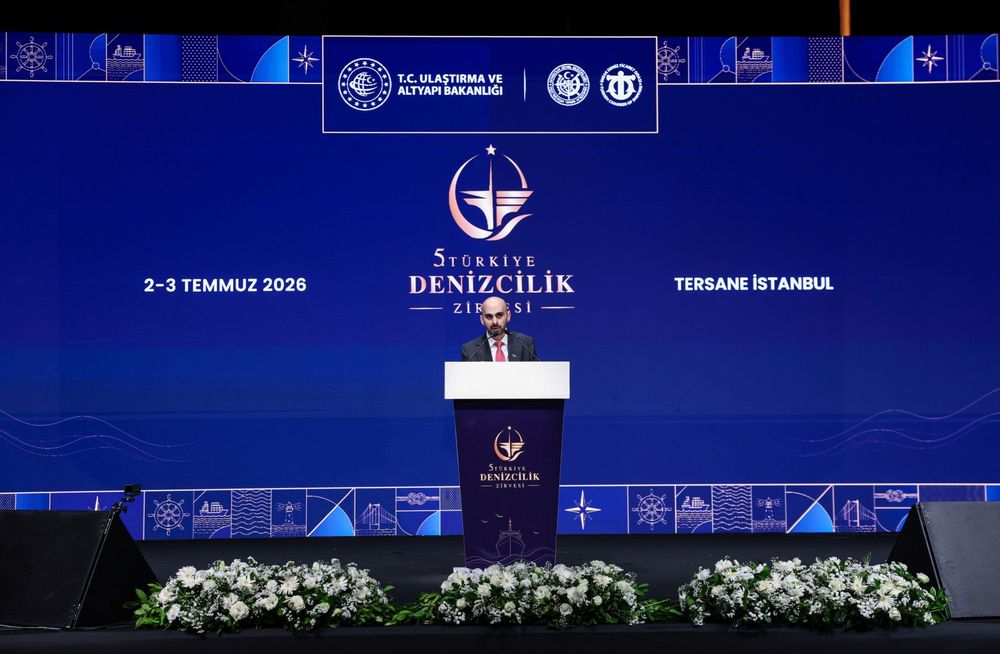
Speaking at the 5th Türkiye Maritime Summit in Istanbul, Abdulla Al Hashmi, DP World's Global Chief Operating Officer, Parks & Economic Zones, said businesses are increasingly looking for alternative trade corridors that complement traditional maritime routes and improve supply chain resilience. Recent disruption to traditional maritime routes has reinforced the importance of diversified supply chains, with businesses increasingly combining sea and overland transport to improve resilience and reduce transit times.
"We are seeing a significant increase in the amount of freight moving through Türkiye as companies use the country as a corridor to move goods into Gulf markets. This trend spans multiple sectors and is taking place in both directions – from Europe into the Gulf, and from the Far East through Türkiye and onward," Abdulla Al Hashmi said.
DP World is already supporting customers across the automotive, consumer goods and industrial manufacturing sectors as they increasingly use Türkiye as a gateway into Gulf markets. Its integrated multimodal corridor, DP World combines maritime and road transport to reduce transit times between Europe and Gulf markets from around 55 days by sea to approximately 22-29 days, providing customers with a faster and more resilient alternative for time-sensitive cargo.
Al Hashmi said Türkiye's strategic geography, combined with continued investment in ports, freight forwarding, road transport, rail connectivity and logistics infrastructure, is strengthening the country's position as one of the region's most important trade gateways.
"Türkiye is no longer simply a transit country. It is becoming a strategic logistics hub connecting Europe, Asia and the Gulf. As businesses rethink their supply chains, Türkiye is well positioned to become an even more important gateway for global trade," he added.
DP World's strategy is to build an integrated logistics ecosystem across Türkiye, combining ports, freight forwarding, contract logistics and multimodal transport into a single end-to-end supply chain solution.
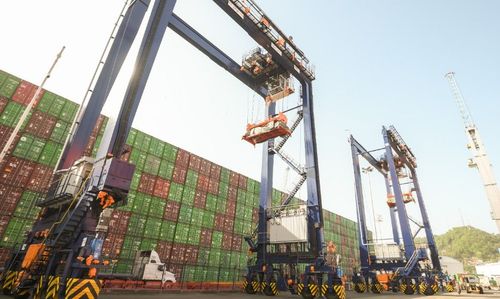
DP World has invested more than US$600 million in Türkiye, creating one of Türkiye's most integrated logistics platforms. The formation of DP World Evyap in 2024 combined the Yarımca and Körfez terminals to create the largest port operation in East Marmara and the second largest in Türkiye, expanding capacity and strengthening the country's connectivity to regional and global markets.
DP World was also the first private port operator in Türkiye to connect its terminal to the national railway network through its own investment. The connection extends Türkiye's reach via the Baku-Tbilisi-Kars corridor and the wider Silk Road network, while DP World Evyap links the country's industrial regions to global markets through direct highway access and the Istanbul-Ankara rail line. Together, these investments create an integrated logistics network that supports faster inland distribution, improves supply chain resilience and reinforces Türkiye's position as a competitive gateway for international trade.
To support this shift in global trade, Al Hashmi said DP World will continue expanding its integrated logistics network across Türkiye, bringing together ports, freight forwarding, contract logistics and multimodal transport into a seamless end-to-end supply chain offering.
He said: "In a world of disruption, connectivity is a competitive advantage. In a world of uncertainty, integration is strength. In a world that is becoming more complex by the day, Türkiye has a chance to become even more central to the flow of global trade. DP World is here to support that ambition."