• 3 min de lectura
• 3 min de lectura
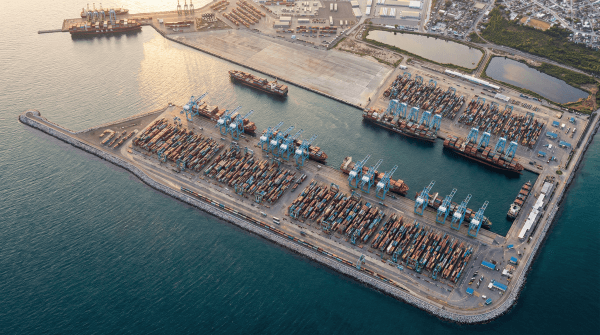
Different voices supported the decision of the San Antonio Port Company (EPSA) to restructure the Outer Port project's tender process by separating it into two: one for the enabling works and another for the construction of the breakwater.
The state-owned company justified this decision by stating that it will allow "strengthening the planning of the project's next stages, better managing the risks associated with its execution, safeguarding the public resources committed to the initiative, and encouraging the participation of local companies as contractors."
In this regard, PortalPortuario spoke with various industry experts, who agree that the new mechanism would not be detrimental to the development of this initiative, which government authorities have classified as "strategic."
Javier León, Secretary General of the Regional Logistics Council (Corelog), was optimistic about the decision, stating, "I believe it is the best way to adapt to new times and the requirements of foreign trade demand."
Furthermore, the Corelog representative added that "it is a more grounded way to carry out the tender for it to be successful. The report from the Chilean Maritime and Port Chamber (Camport) probably had a strong impact on the decision that was made because, in general, the country is stagnant, and after the National Reconstruction project is applied, it could move forward, but in about two more years, so from then on, demand will begin to increase, and that is why the decision has been made to support Valparaíso first before moving on to the Outer Port of San Antonio."
Meanwhile, from the Chilean Maritime League (Ligamar), through its Communications Director, Hugo Barra, they indicated that "we understand that the decision adopted by EPSA corresponds to an adjustment in the contracting strategy and not a change in the decision to develop the Outer Port."
Barra also highlighted the positive aspects of this new modality, noting that "separating the enabling works from those associated with the breakwater can contribute to better planning, adequate risk management, and safeguarding public resources."
"The important thing now is that the new processes advance with clarity and within defined deadlines, because Chile needs this infrastructure to respond promptly to the growth of its foreign trade and maintain its port competitiveness," concluded Ligamar's Communications Director.
On the other hand, Francesco Schiaffino, former port executive and industry expert, also emphasized that despite the modification of the process, the project will not be delayed considering the strategic nature of the Outer Port, explaining that "we hope it is news only to act in a better way, taking care of the State's interests and not delaying the initiative because this is the great project that will help us stop the decline in our country's competitiveness and capacity. No other is seen in the short term," he indicated.
"I am optimistic and hope that it does not delay it, that it does not postpone it, and that it is for the better. Otherwise, we have problems because there is no other project in the area that can provide the quality and size to improve Chile's port situation," emphasized the expert.
It should be remembered that, for the moment, EPSA has not provided details about the new tender deadlines, nor has it specified the position of the companies and consortia that were already pre-qualified in the previous competition.