• 2 min de lectura
• 2 min de lectura
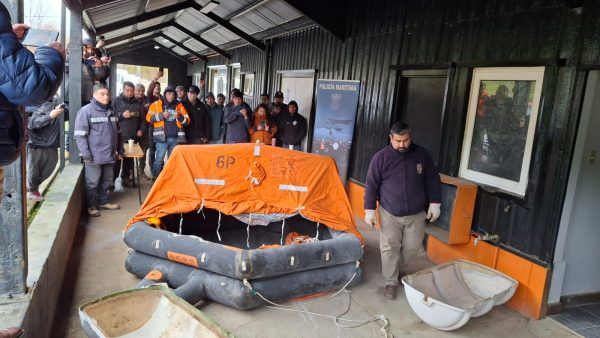
The Provincial Labor Inspectorate of Castro established a working group to teach safety standards and rescue practices to the crews of cabotage vessels on Quinchao Island, Chiloé Province.
The tripartite initiative was named "Strengthening Labor, Safety, and Health Regulatory Compliance in Small Vessels on Quinchao Island," and its opening took place at the commune's municipality. The activity is led and coordinated by the provincial inspector of Castro, Gabriel Flores Navarrete.
Participants include shipowners and crew members of vessels that transport passengers between Quinchao and other nearby islands. The first session was attended by 40 participants representing a dozen of these vessels. The Labor Inspectorate also convened the Labor Safety Institute (ISL) and the Maritime Governorate of Castro.
Flores explained that "within the framework of the execution of the regional inspection program called Maritime Connectivity Transport, in early July, two inspectors from the Provincial Labor Inspectorate of Chiloé-Castro carried out ten inspections of small vessels dedicated to passenger transport on Quinchao Island and its surroundings, finding in nine of those cases, infractions of labor regulations that basically dealt with the lack of training in the use of flares and in the use and assembly of emergency rafts, among other matters."
"Thus, given this evidence, the need arose to establish a working group in the sector that would include the participation, given their competencies, of the Labor Safety Institute and the maritime authority," added the provincial inspector of Castro.
For his part, the regional ministerial secretary (seremi) of Labor and Social Security, Jorge Moreno Oyanadel, stated that "as the Ministry of Labor and Social Security, we value the formation of this Working Group for the Strengthening of Labor, Safety, and Health Regulatory Compliance in Small Vessels on Quinchao Island, because it represents an instance of dialogue and collaboration among workers, employers, and public institutions to advance a preventive culture."
"Through this initiative, we seek to strengthen knowledge about labor regulations and the use of rescue devices, contributing to preventing accidents and safeguarding the lives of those who play a fundamental role in Chiloé's maritime connectivity. The coordinated work between the Labor Directorate, the Labor Safety Institute, and the Maritime Authority is key to continuing to promote safer workplaces with greater protection for workers," Moreno added.