• 2 min de lectura
• 2 min de lectura
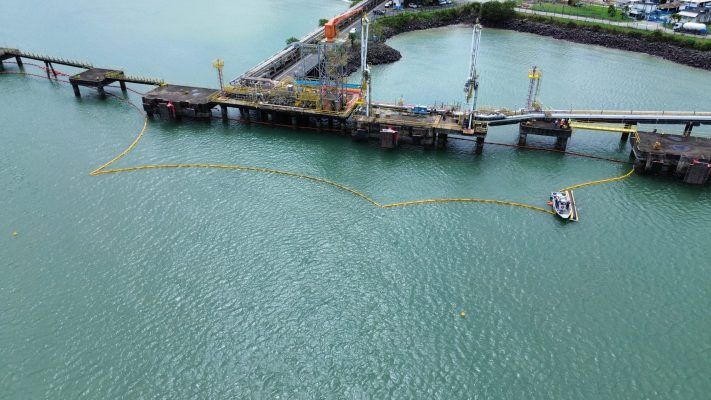
The Port Company of the State of Bahia (Codeba) concluded the cycle of training and emergency drills carried out in the ports of Salvador, Aratu-Candeias, and Ilhéus. The program, which began on August 4, aimed to strengthen the response capacity of the teams, improve protocols for managing emergency situations, and increase integration among professionals involved in port operations.
Throughout the cycle, practical exercises were carried out simulating different emergency scenarios, such as the containment and cleanup of oil spills, rescue and assistance in maritime accident situations, rescue of endangered wildlife, and emergency care for port workers. These activities allowed for a practical evaluation of mobilization, communication, response, and integrated team performance procedures.
The program began in the Port of Salvador, with the first practical simulation on August 4. Subsequently, activities were carried out in the Port of Aratu-Candeias, between the 5th and 7th, and in the Port of Ilhéus, between August 10th and 13th.
In addition to practical exercises, the cycle included training in the Incident Command System (ICS 100/200), tabletop simulations, wildlife rescue training, and evaluation meetings. The program allowed for testing different stages of emergency response and identifying opportunities to improve the protocols adopted in the ports.
In the Port of Ilhéus, the activity included the participation of representatives from the Whales in the Serra Project, the Brazilian Navy, and the Brazilian Institute of Environment and Renewable Natural Resources (Ibama), responsible for the port's environmental license. Collaborators from Caruso, OceanPact, and Aiuká, companies that operate in activities related to the environment and emergency response, also participated.
The simulation was coordinated by the General Directorate of the Port of Ilhéus (GPI), with the support of the Environmental and Occupational Safety Directorate (GMAST), the Port Guard, and EnvironPact. During the exercise, the procedures for mobilization, communication, and joint action of the teams in an environmental emergency situation were observed.