

03 de novembro de 2026
Port of Itajaí Expands Channel Monitoring with New Equipment Installation to Face Climatic Challenges
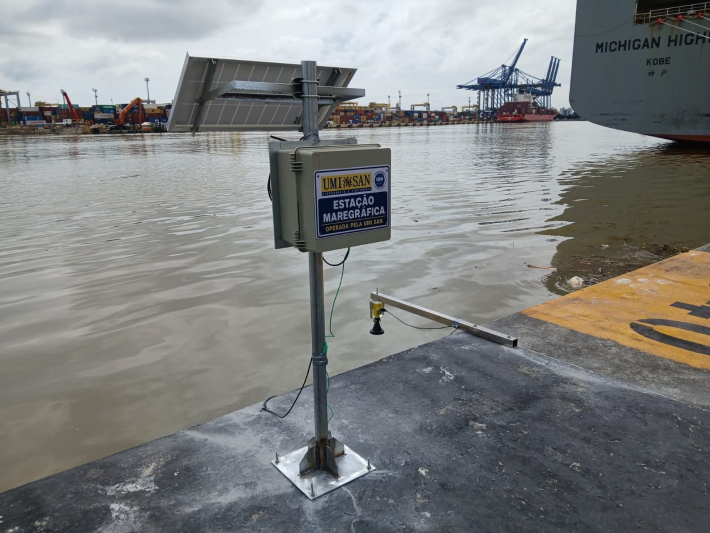
The Port of Itajaí took another step in modernizing its navigation safety infrastructure with the installation, this Tuesday (3), of two radar tide gauges and a weather station in the waterway access of the Itajaí-Açu River. The equipment is part of a new hydrodynamic and meteoceanographic monitoring system, which will allow continuous monitoring of the environmental and operational conditions of the Port Complex of Itajaí.
The initiative gains importance in view of the challenges posed by the atypical climatic and hydrological conditions recorded in recent months, in a scenario influenced by the El Niño phenomenon, which can alter rain regimes and river flows, intensifying sediment transport and silting processes.
With the implementation of the system, the Port expands its capacity to monitor the conditions of the access channel, gathering technical information that will contribute to more precise, preventive, and safe decisions in port operations.
The installed equipment is now undergoing data verification and calibration, a necessary procedure to ensure the reliability of the measurements before their operational use.
The installation was carried out by UMI SAN Serviços de Apoio à Navegação e Engenharia Ltda., a company contracted to implement, operate, and maintain the system.
Technology at the service of navigation safety
Radar tide gauges continuously measure variations in water level, without direct contact with the river. Installed above the surface, they use radar signals to monitor the rise and fall of tides.
This information, combined with bathymetric surveys, contributes to the assessment of the available depth for navigation and the conditions for ships entering and leaving.
The weather station complements the system with information on atmospheric conditions in the waterway access region.
“We are advancing in the modernization of the Port of Itajaí with investments in technology and monitoring. Given the climatic challenges and the effects of hydrological variations on the channel, we need increasingly precise information to guide our decisions. This structure strengthens navigation safety and contributes to ensuring the continuity of port operations,” highlights the Superintendent of the Port of Itajaí, Artur Antunes Pereira.
Permanent monitoring and facing climatic effects
The new system includes four physical stations, named Offshore, Internal 1, Internal 2, and Meteorological, in addition to two numerical modeling points, located at Boca da Barra and downstream of the Internal Evolution Basin.
The structure will cover approximately 9.3 kilometers of the waterway access, from the outer region to the evolution basins and berths.
When fully implemented, the system will allow monitoring, 24 hours a day, parameters such as currents, tides, waves, winds, visibility, and rainfall.
The implementation is part of a permanent management strategy for navigation conditions, especially in view of the challenges caused by climatic and hydrological changes in the Itajaí-Açu River estuary.
This strategy combines three fronts of action: continuous monitoring, daily maintenance dredging, and complementary targeted dredging campaigns.
Currently, the dredge Njord performs daily maintenance of the channel through water injection technology, while complementary campaigns with suction dredgers are scheduled according to the needs identified in technical surveys.
The combination of these measures allows monitoring changes in depths, guiding interventions, and strengthening the preventive management of the waterway access.


