

• 9 min de lectura
• 9 min de lectura
Traffic remained resilient across both chokepoints despite a sharper regional security deterioration. Hormuz volumes and laden flows strengthened even as CENTCOM expanded strikes on Iran-linked tanker assets, while Bab el-Mandeb stayed operationally stable through 10 September despite the Houthi capture of Mokha.
Key developments
Traffic overview Strait of Hormuz
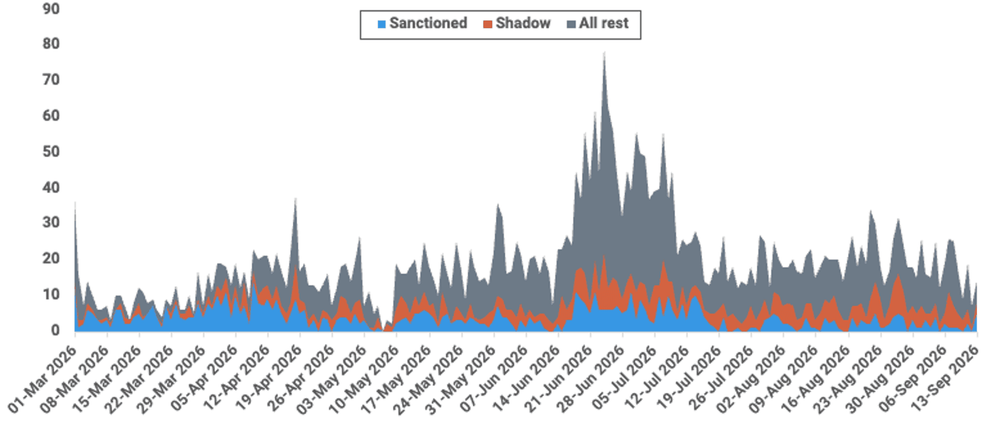
Vessels crossed Strait of Hormuz by risk level as of September 13 Source: Kpler Risk and Compliance; full traffic data is available including non-commercial vessel tracking from MarineTraffic
Vessels crossed Strait of Hormuz by direction of crossing as of September 13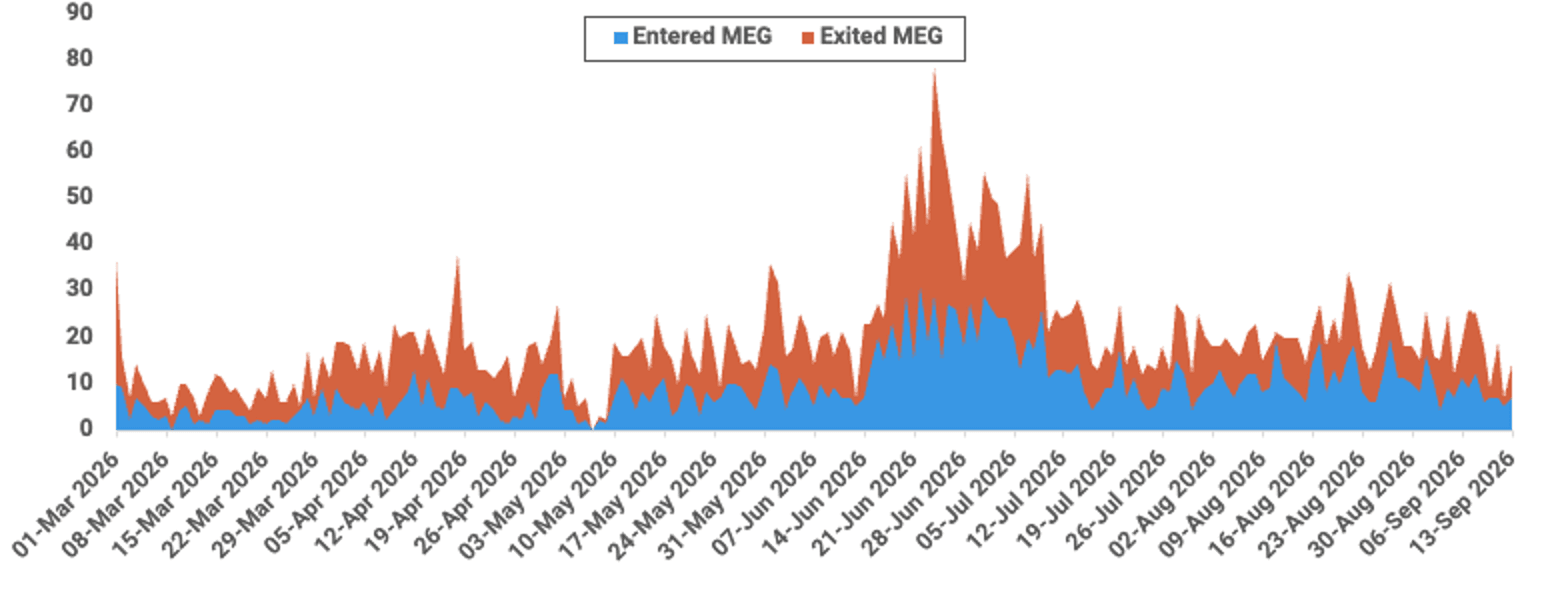 Source: Kpler Risk and Compliance
Vessels crossed Strait of Hormuz by route of crossing as of September 13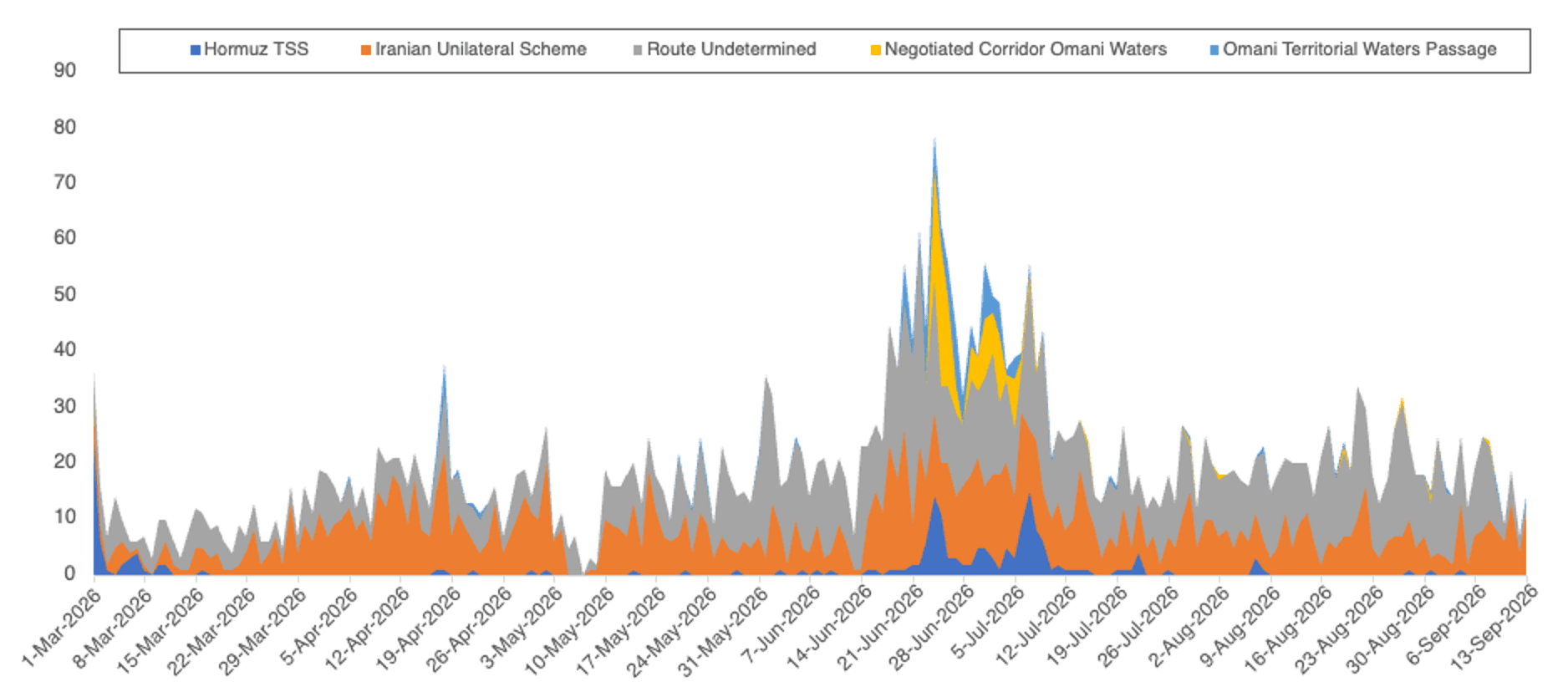 Source: Kpler Risk and Compliance
Strait of Hormuz crossings totaled 118 from 7–13 September, up 53.2% from 77 during the previous week. Daily activity was 26 crossings on 7 September, 25 on 8 September, 18 on 9 September, 9 on 10 September, 19 on 11 September, 7 on 12 September and 14 on 13 September. Traffic therefore rebounded strongly overall but remained volatile, with activity falling sharply after the strong start before partially recovering late in the week.
The weekly risk profile included 77 All Rest crossings, 31 shadow fleet crossings and 10 sanctioned crossings. Combined sanctioned and shadow fleet traffic rose from 23 to 41 crossings, lifting its share of total traffic from 29.9% to 34.7%, driven primarily by shadow fleet activity more than doubling from 14 to 31. Directionally, traffic shifted toward outbound movements, with 65 Exited MEG crossings versus 53 entries. Laden voyages rose sharply from 33 to 63, while ballast movements edged down from 29 to 27, indicating a material recovery in underlying cargo flows rather than simply a rebound in repositioning traffic.
Routing continued in established patterns. The Iranian Unilateral Scheme became the largest category at 60 crossings, or 50.8% of traffic, up from 41.6% the previous week, while Route Undetermined accounted for 52, or 44.1%. Iranian-scheme concentration strengthened toward the end of the week, accounting for 13 of 19 crossings on 11 September and 11 of 14 on 13 September. Alternative routing remained marginal: two crossings used Omani Territorial Waters Passage and one the Negotiated Corridor in Omani Waters, while three were classified as Dark/Unknown Route. No Hormuz TSS crossings were recorded.
The rebound in traffic and laden volumes therefore occurred despite a deteriorating security environment, but without broader route normalization. Instead, stronger commercial flows were accompanied by rising shadow fleet participation and greater concentration into the Iranian Unilateral Scheme, suggesting operators are adapting to the higher-risk environment rather than moving back toward conventional routing.
Bab el-Mandeb
Bab el-Mandeb crossings totaled 256 from 7–13 September, up 3.2% from the published 248 crossings during the previous week. Daily activity was 39 crossings on 7 September, 38 on 8 September, 41 on 9 September, 42 on 10 September, 24 on 11 September, 29 on 12 September and 43 on 13 September. Traffic fell sharply immediately after the Houthi capture of Mokha, but recovered to a weekly high on 13 September, providing little evidence so far of a sustained volume shock. The corridor remained materially more active than Hormuz, running at roughly 2.2 times its volumes.
The weekly risk profile included 186 All Rest crossings, 34 shadow fleet crossings and 36 sanctioned crossings. Combined sanctioned and shadow fleet activity was unchanged at 70 crossings, although the composition reversed, with sanctioned traffic rising from 26 to 36 and shadow fleet crossings falling from 44 to 34. Their combined share eased slightly from 28.2% to 27.3%. Directionally, traffic remained weighted toward vessels entering the Red Sea, with 133 entries versus 123 exits. Dark transits edged down from 23 to 22, while 234 of 256 crossings used the Bab el-Mandeb TSS, lifting adherence slightly to 91.4%.
Laden traffic rose strongly from 109 to 131 crossings, led by Crude/Co at 26 cargoes and CPP and Dry Bulk at 20 each. The security backdrop nevertheless deteriorated materially during the week. After taking Mokha on 10 September, Houthi forces were reported to have advanced to Dhubab and Perim/Mayun, positions directly overlooking the Bab el-Mandeb approaches. The initial traffic response was visible in the fall to 24 crossings on 11 September, but the subsequent recovery to 43 on 13 September suggests operators had not yet begun a sustained withdrawal from the corridor. High TSS adherence and broadly stable dark activity reinforce that reading, although the territorial change raises the probability that any commercial response will emerge with a lag.
Vessels crossed Bab el-Mandeb by risk level as of September 13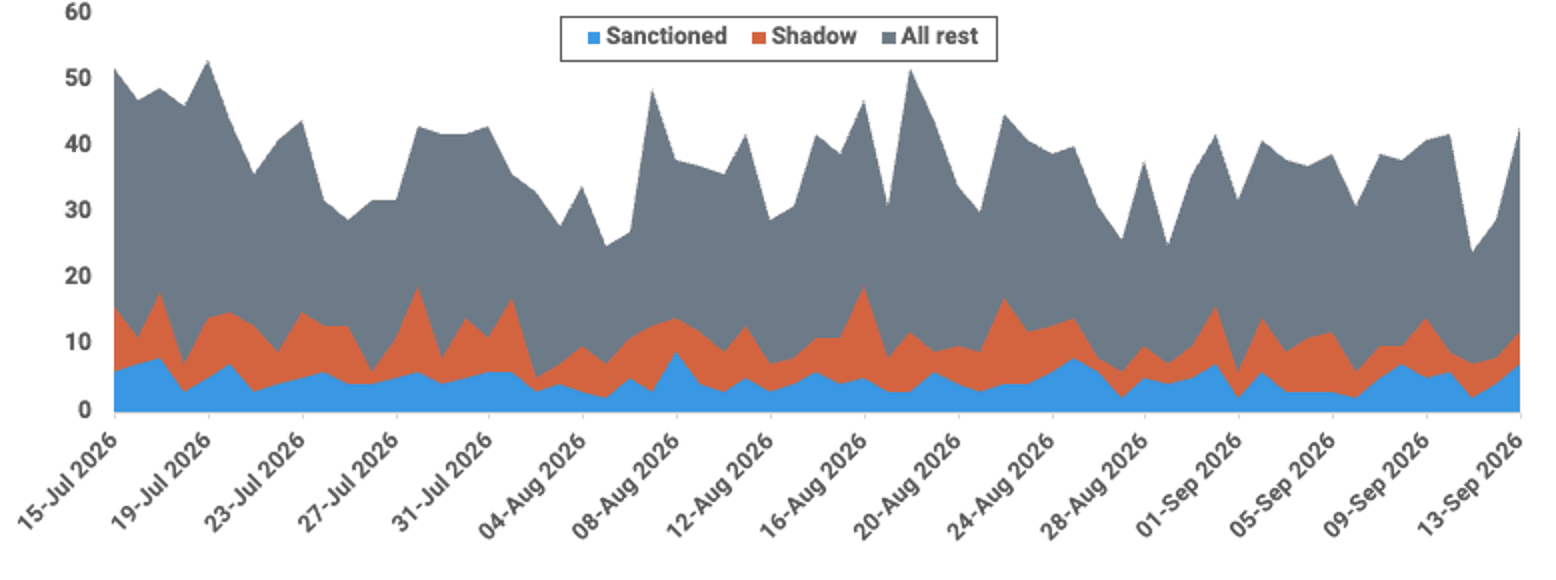 Source: Kpler Risk and Compliance; full traffic data is available including non-commercial vessel tracking from MarineTraffic
Vessels crossed Bab el-Mandeb by direction of crossing as of September 13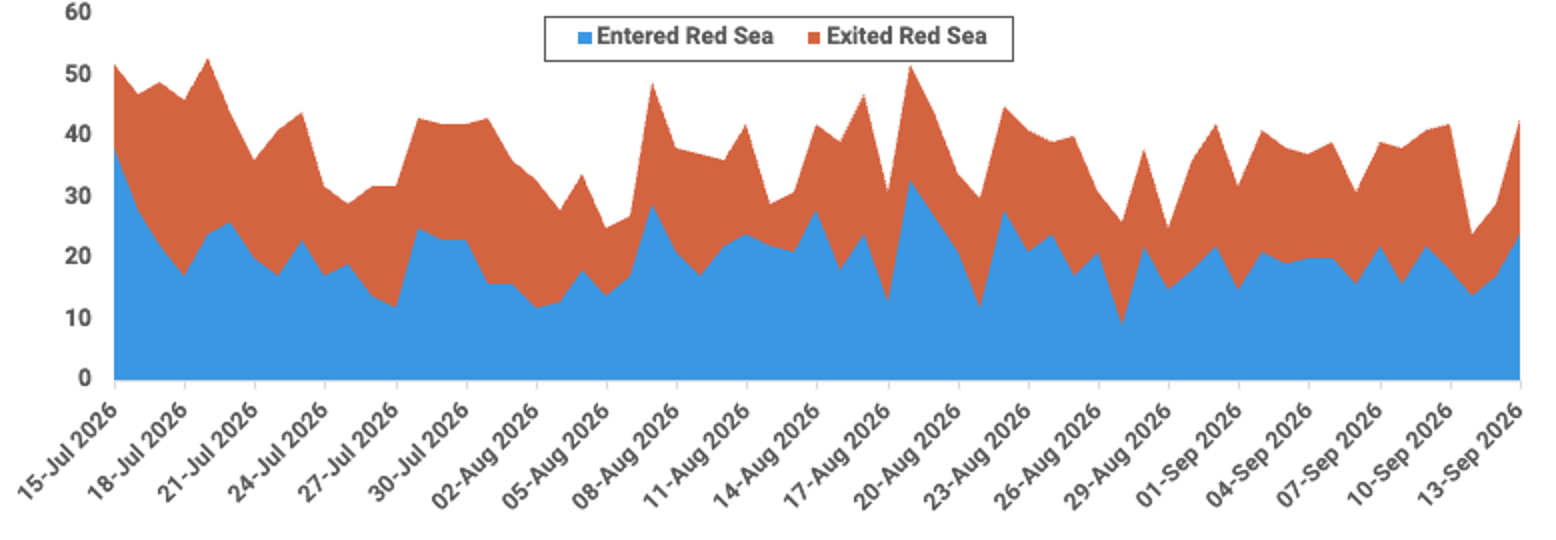 Source: Kpler Risk and Compliance
Regional security and diplomatic context
Traffic remained resilient through both chokepoints despite a materially worse security environment. Hormuz crossings rebounded 53.2% to 118, with laden movements rising from 33 to 63, even as shadow fleet activity more than doubled. Bab el-Mandeb crossings rose 3.2% to 256 and laden traffic increased to 131, with no sustained volume response yet to the Houthi advance along Yemen's Red Sea coast.
At Hormuz, the most consequential development remained direct US targeting of Iran-linked tanker assets.
Under the report's IMO-only threshold for confirmed vessel incidents, however, HORIZON 1 (IMO 9130456) remains the only tanker from the 8 September CENTCOM group appearing on IMO's confirmed list. IMO also confirmed HERCULES STAR (IMO 9916135) and NEW ANDROS (IMO 9294252) damaged on 9 September, with one seafarer killed aboard HERCULES STAR, but does not attribute either incident. As of 10 September, IMO recorded 75 confirmed Middle East incidents and 22 seafarer fatalities.
The traffic response has so far been adaptation rather than retreat. Laden Hormuz crossings almost doubled w/w, but the Iranian Unilateral Scheme rose to 50.8% of traffic and shadow fleet crossings increased from 14 to 31. Operators are therefore continuing to move cargo through the Strait while relying more heavily on Iranian-managed routing and risk-tolerant tonnage. The diplomatic offset also weakened late in the week as Oman postponed a planned regional meeting intended to advance the Iran–Oman Hormuz framework, citing the need for wider consensus after objections from some Gulf states.
At Bab el-Mandeb, the security change is more geographic. The Houthis seized Mokha on 10 September and by 11 September had reached Dhubab directly on the Strait, while Yemeni government forces withdrew from Perim/Mayun Island. Reuters also reported Houthi advances toward the Hanish Islands. Control of these positions does not by itself give the Houthis control of Bab el-Mandeb, but it places them on both strategically important mainland and island positions around its eastern approaches.
No new Houthi attack on merchant shipping during 7–13 September appears in IMO's verified Red Sea record. Traffic fell sharply to 24 crossings on 11 September immediately after the territorial advance, but recovered to 43 by 13 September, while TSS adherence increased to 91.4% and dark transits edged lower. There is therefore no evidence yet of a sustained commercial withdrawal, although the territorial shift materially increases the Houthis' ability to monitor, threaten or disrupt traffic around the chokepoint.
The regional picture has consequently become more acute at both corridors. Hormuz now combines contested routing with direct kinetic risk to tanker assets, while Houthi territorial gains have moved the Red Sea front directly onto the approaches to Bab el-Mandeb. Traffic resilience remains strong for now, but the two routes are becoming less credible as substitutes for one another at the same time.
Graph of physical attacks on vessels as of September 14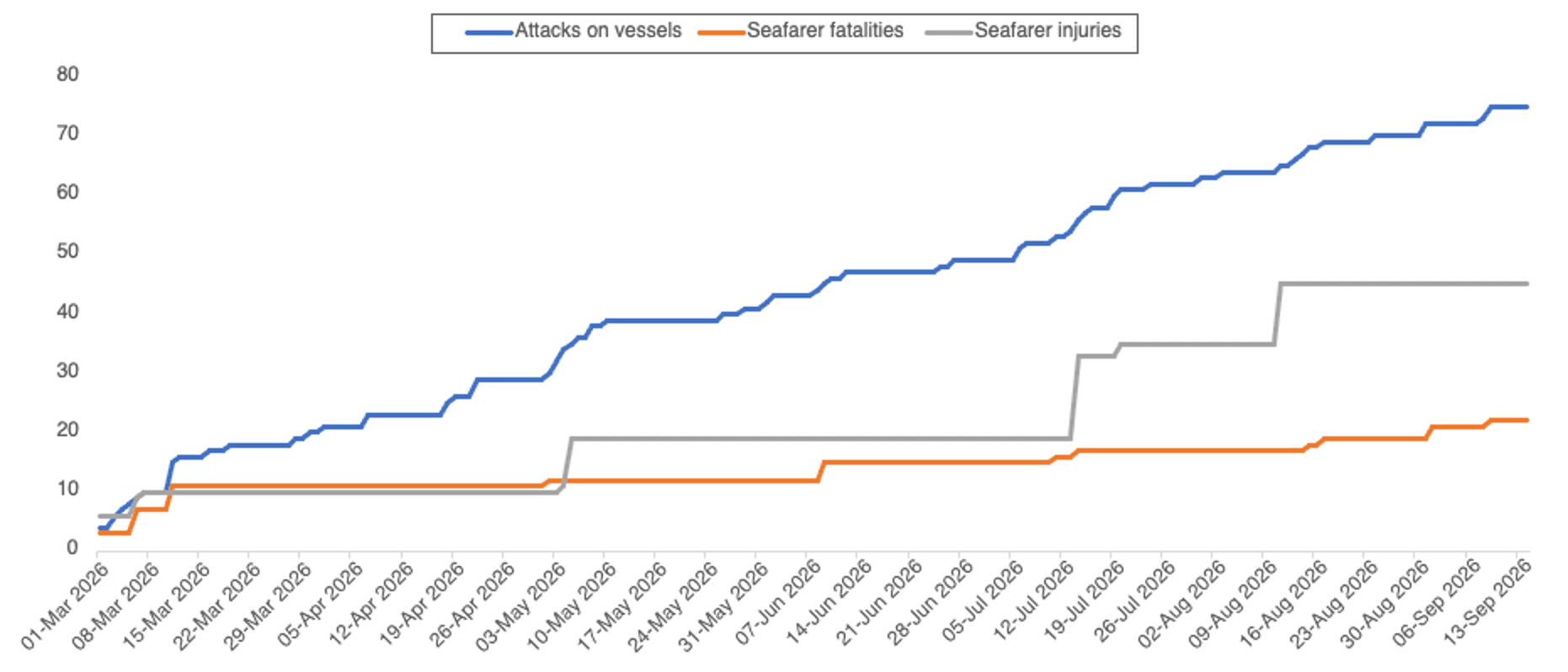 Source: Kpler Risk and Compliance, IMO
Analyst outlook
Over the next 24–72 hours, the dominant Hormuz variable is whether CENTCOM continues targeting Iran-linked tanker tonnage and how Tehran responds. The recent strikes mark a shift from sanctions and attacks on Iranian military infrastructure toward direct attrition of the oil fleet Washington says finances the IRGC.
That changes the meaning of the risk categories in the crossing data. IMO has so far confirmed HORIZON 1 (IMO 9130456) from the 8 September group as damaged, alongside separate confirmed incidents involving HERCULES STAR and NEW ANDROS on 9 September, for which IMO does not assign attribution. For Iran- or IRGC-linked tonnage, sanctions exposure can therefore increasingly translate into physical targeting risk.
Traffic has nevertheless proved resilient. Hormuz crossings reached 118 for the week and laden movements rose from 33 to 63, despite a sharp midweek slowdown. Shadow fleet crossings more than doubled from 14 to 31, while the Iranian Unilateral Scheme rose to 50.8% of traffic and no Hormuz TSS crossings were recorded. The immediate response therefore looks more like adaptation in fleet mix and routing than a sustained withdrawal. A renewed fall in laden traffic would be the clearer sign that kinetic escalation is beginning to suppress underlying Gulf trade.
At Bab el-Mandeb, the Houthi capture of Mokha and subsequent advances toward Dhubab, Perim/Mayun and the Hanish Islands materially improve the group's geographic position around the approaches to the Strait. This should not be equated with Houthi control of Bab el-Mandeb, and no new Houthi merchant-shipping attack during the week appears on IMO's confirmed Red Sea record. The significance is instead that the Houthis are now better positioned to monitor or threaten traffic around the chokepoint.
So far, operators have not withdrawn. Crossings rose to 256 and laden movements to 131, while traffic recovered from 24 crossings on 11 September to 43 on 13 September.
The near-term question is whether this operational resilience holds as the threat environment worsens simultaneously at both chokepoints. Any sustained deterioration in laden volumes or conventional routing would indicate that operators are moving from adaptation toward avoidance.