• 5 min de lectura
• 5 min de lectura
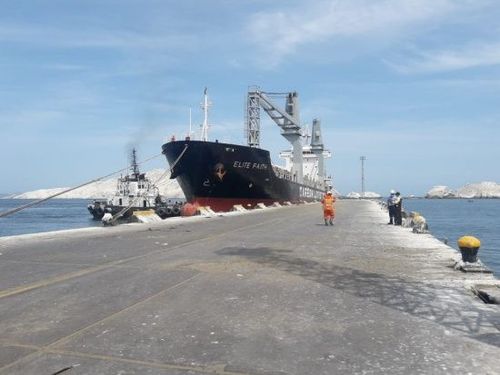
Law N° 21.774 incorporated new hypotheses for the participation of foreign vessels in cabotage. The draft regulation of August 19, 2026, shifts attention towards its implementation: whether these authorizations can be used within the real-time constraints of logistics.
The reform has an economic basis: the National Economic Prosecutor's Office informed the Senate that four players represented 76% of cabotage activity. However, a legal authorization does not guarantee effective competition. An operation may be permitted and efficient, but it may not occur if the procedure is slow, redundant, or uncertain. Regulatory friction thus becomes a critical variable of the reform.
The draft incorporates these new hypotheses but retains part of the previous procedural architecture. This is its main weakness.
A first example is "regular service." Articles 3 and 5 consider a call every fifteen days sufficient to prove its existence and finalize the annual authorization for a foreign shipping company. The rule is objective, but presence does not equate to effective supply: there can be nominal frequency without available capacity or suitability for specific cargo. The standard should prevent formal availability from acting as a practical veto.
The second point is the unavailability for cargo up to 3,000 tons. Article 13 understands that a Chilean vessel is unavailable when the waiting period exceeds three days, or two for perishables. However, itineraries must be updated "at least monthly," while availability changes in hours or days. More importantly: it defines when a vessel becomes unavailable, but not a maximum decision period to ensure that authorization arrives before the logistical opportunity disappears. Article 16 contains a better solution for another scenario: if the Ministry does not certify in a timely manner, unavailability is presumed. The new mechanism requires an equivalent temporary closure.
Vumar offers a solution. Article 22 mandates centralizing departure route information there, but Article 6 also requires sending it by email. A single window that forces duplicate submission is not truly single. The rule should be maximum traceability with minimal friction: the operator submits once, and the State distributes internally. Vumar could integrate availability, regular services, departure routes, tenders, crew complements, and authorizations, transforming operational data into decision infrastructure.
Tenders for over 3,000 tons show the same problem. The draft maintains thirty business days' notice, newspaper advertisements, sealed bids, and opening before a notary. These formalities protect publicity, integrity, and traceability, but one must ask if they can now be fulfilled digitally with lower cost and time. If a competitive tool only works for demand programmable with significant anticipation, its formal existence may overestimate its effectiveness.
The departure route requires traceability without reconstructing a discretionary authorization. The law has already enabled operation under objective conditions; the regulation must control it without transforming notification into a new barrier.
There is no single cabotage: liquid cargo, general cargo, bulk cargo, and territorial connectivity have different requirements. Also, geographically, a uniform rule can produce different frictions depending on scale, infrastructure, vessel types, frequency, and demand.
Law N° 21.774 deferred certain openings in Los Lagos, Aysén, Magallanes, and Chilean Antarctica for three years. It does not create a special legal category but demonstrates that the transition was not conceived as territorially neutral. From this arises a territorial adequacy test: to verify if national parameters are compatible with southern, insular, or lower-density markets and to distinguish which frictions can be corrected by regulation, which require management or infrastructure, and which stem from the law. The transitional period should be used to build capacities, not simply to await its expiration.
Human capital demands equal precision. Article 26 links scarcity, among other requirements, to more than 50% of the active maritime personnel being onboard. But valid titles do not equate to operational availability: this depends on rank, qualification, specialty, experience, and vessel type. Scarcity must be approximated to the required position, and implementation must comply with the legal mandate to promote the training of national officers and crew.
The tax dimension requires traceability, not turning the MTT (Ministry of Transport and Telecommunications) into an inspector. Since treatment depends on the contractual and operational structure, relevant information should interoperate with the SII (Internal Revenue Service) and Customs to incorporate factors that alter the effective cost.
It is not advisable to require each authorization to demonstrate "net country efficiency" or the future absence of deterioration of critical capacities: this would restore discretion where the law established objective hypotheses. The architecture must separate scales: simple ex-ante requirements, operational traceability, and ex-post systemic evaluation. If data shows concentration, loss of capacity, crew failures, or absence of effective competition, it is appropriate to correct policy, regulation, or legislation. The standard: regulated access, traceability, territorial adequacy, and correction.
The challenge of the regulation is to convert legal authorizations into effective operational possibilities: that a logistical opportunity can be identified, verified, and executed before it disappears, and that the State can subsequently observe its results. Its quality will be measured not only by legal fidelity but also by its ability to reduce frictions, produce useful information, and timely detect effects on competition and maritime capacities that are difficult to reconstruct.