

• 7 min de lectura
• 7 min de lectura

September marked a pause in the recent cycle of maritime sanctions designations. After 57 vessels were added for the first time in July and another 14 in August, September recorded no new vessel additions. The same applied to maritime companies, following seven additions in August.
That makes September only the second month in the last twelve months, after March 2026, in which neither vessels nor maritime companies were added to the dataset.
The absence of new names, however, should not be interpreted as a reduction in sanctions risk. Over the twelve months from October 2025 to September 2026, the dataset expanded by 336 vessels and 239 companies. Compared with September 2025, this represents growth of approximately 21% in sanctioned vessels and 42% in sanctioned companies.
September also brought an important regulatory development around Iran. New UK measures taking effect on 29 September expanded trade and transport restrictions to areas including maritime goods and technology, natural gas, oil and petroleum products and associated services. The measures also strengthened ship-related restrictions and enforcement powers, including the ability to restrict port access and detain specified ships.
September's zero additions contrast sharply with the activity of the preceding twelve months. October 2025 remains the largest vessel-designation month in the period with 92 additions, followed by July 2026 with 57, December 2025 with 47 and April 2026 with 45. In total, 336 vessels and 239 maritime companies entered the dataset between October 2025 and September 2026. The cumulative sanctioned population consequently increased by approximately 21% for vessels and 42% for companies over the period.
The most important US development came on 18 September, when the Lindsey O. Graham Sanctioning Russia and Iran Act of 2026 became law. The Act requires the President, within 30 days of enactment and every 180 days thereafter, to review potentially qualifying persons and vessels and to identify qualifying vessels as blocked property. Its maritime provisions cover foreign vessels used to move Russian crude oil, LNG, petroleum products, coal and other goods for sanctions-circumvention purposes, with factors including unsafe or non-standard maritime behaviour, inadequate insurance and price-cap evasion. It also captures certain owners, operators, managers and service providers, as well as vessels involved in relevant ship-to-ship activity.
The legislation is particularly relevant for cross-jurisdictional screening because sanctions already imposed by the UK, EU, G7 or a Five Eyes member may be used as prima facie evidence when determining whether a vessel is being used for Russian sanctions circumvention. For Risk & Compliance teams, this should be treated as a new vessel-sanctions mechanism, not as a September vessel-listing event. No vessel entered the Kpler dataset during September as a result of the Act, but the mandatory review cycle creates a clear route for subsequent US blocking actions.
The UK also strengthened its Iran sanctions framework during September. The amendments expanded restrictions covering maritime goods and technology, natural gas, oil and petroleum products, associated services and insurance, while introducing a strengthened transport regime with powers to specify ships, restrict their operation and related services, restrict port access and detain vessels. Again, the regulatory distinction matters: the amendments did not themselves add named vessels to the UK Sanctions List, but broadened the legal framework through which ships and maritime activity can subsequently be restricted.
Taken together, the US and UK measures make September more significant than the designation count alone suggests. The direction of policy is increasingly towards assessing the wider ecosystem around a vessel, including ownership and management, insurance, cargo, STS activity, vessel behaviour and exposure to sanctions imposed by allied jurisdictions. This means that a month with zero new vessel listings can still materially change the risk environment for shipowners, charterers, traders, banks and insurers.
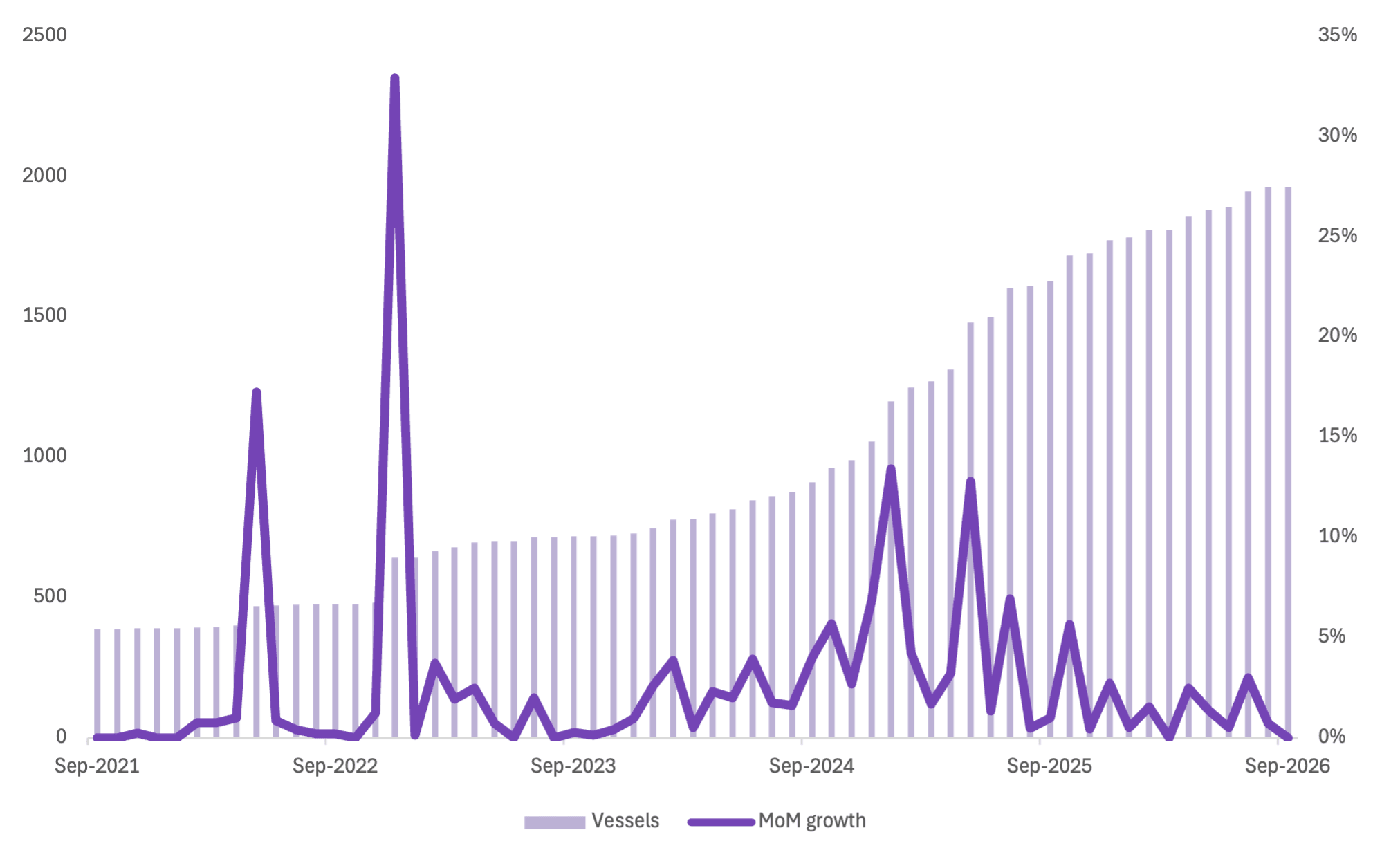 Graph 1. Cumulative sanctioned vessels and month-on-month growth, September 2021 to September 2026 - Kpler Risk & Compliance.
The cumulative sanctioned vessel population remained at 1,964 in September, resulting in zero month-on-month growth. This follows 57 first-time vessel additions in July and 14 in August.
The flat monthly figure should be viewed against the longer-term expansion of the dataset. Compared with September 2025, the sanctioned vessel population has increased by 336 vessels, or approximately 21%.
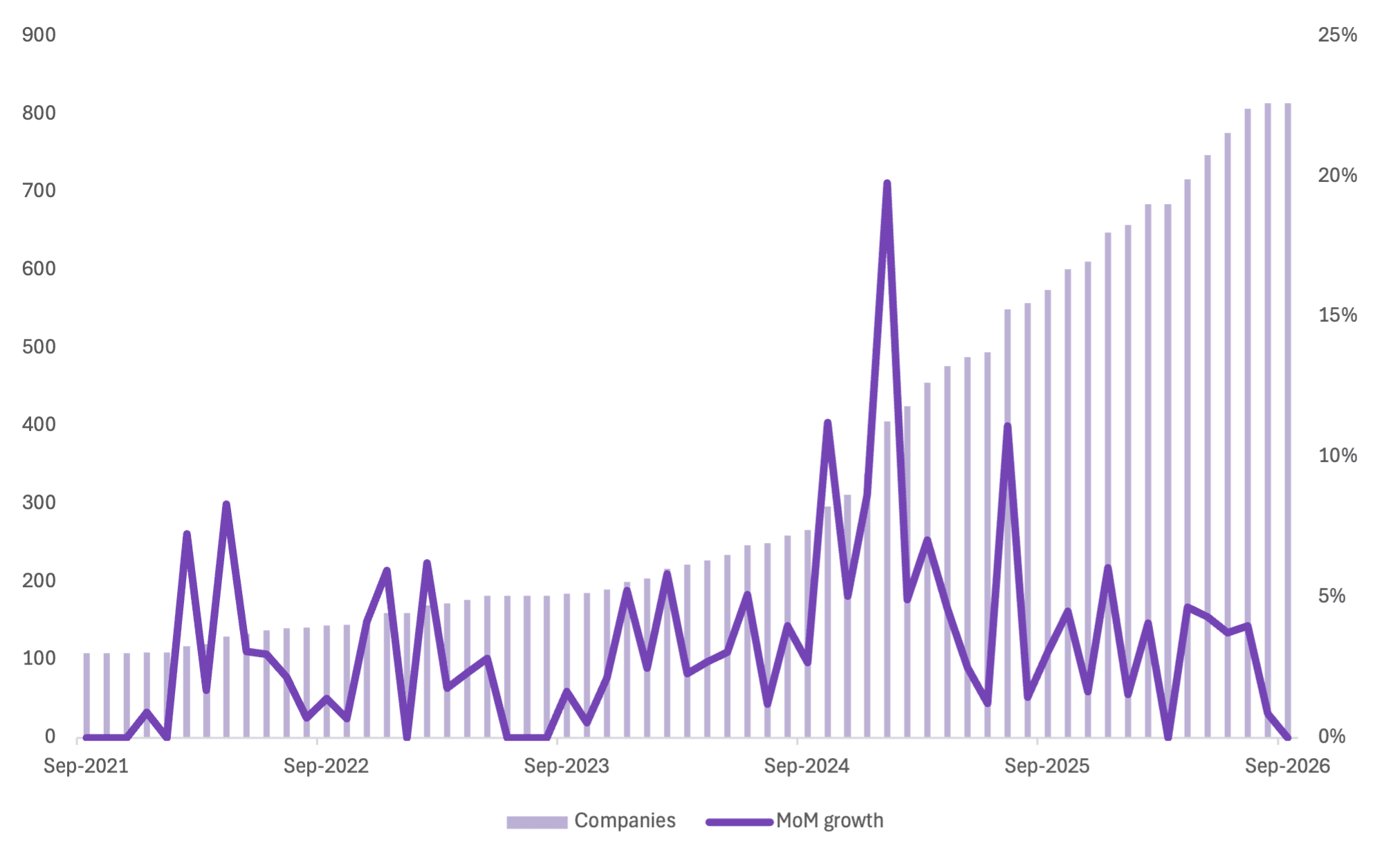 Graph 2. Cumulative sanctioned companies and month-on-month growth, September 2021 to September 2026 - Kpler Risk & Compliance.
Sanctioned maritime companies also remained unchanged at 814 during September.
The twelve-month increase has been considerably faster than for vessels. From September 2025 to September 2026, the company population increased by 239, or approximately 42%.
That divergence is important. Vessel screening remains fundamental, but sanctions exposure increasingly sits within the corporate network surrounding a ship. Owners, operators, managers and other counterparties can materially alter the risk profile even without a new designation against the vessel itself.
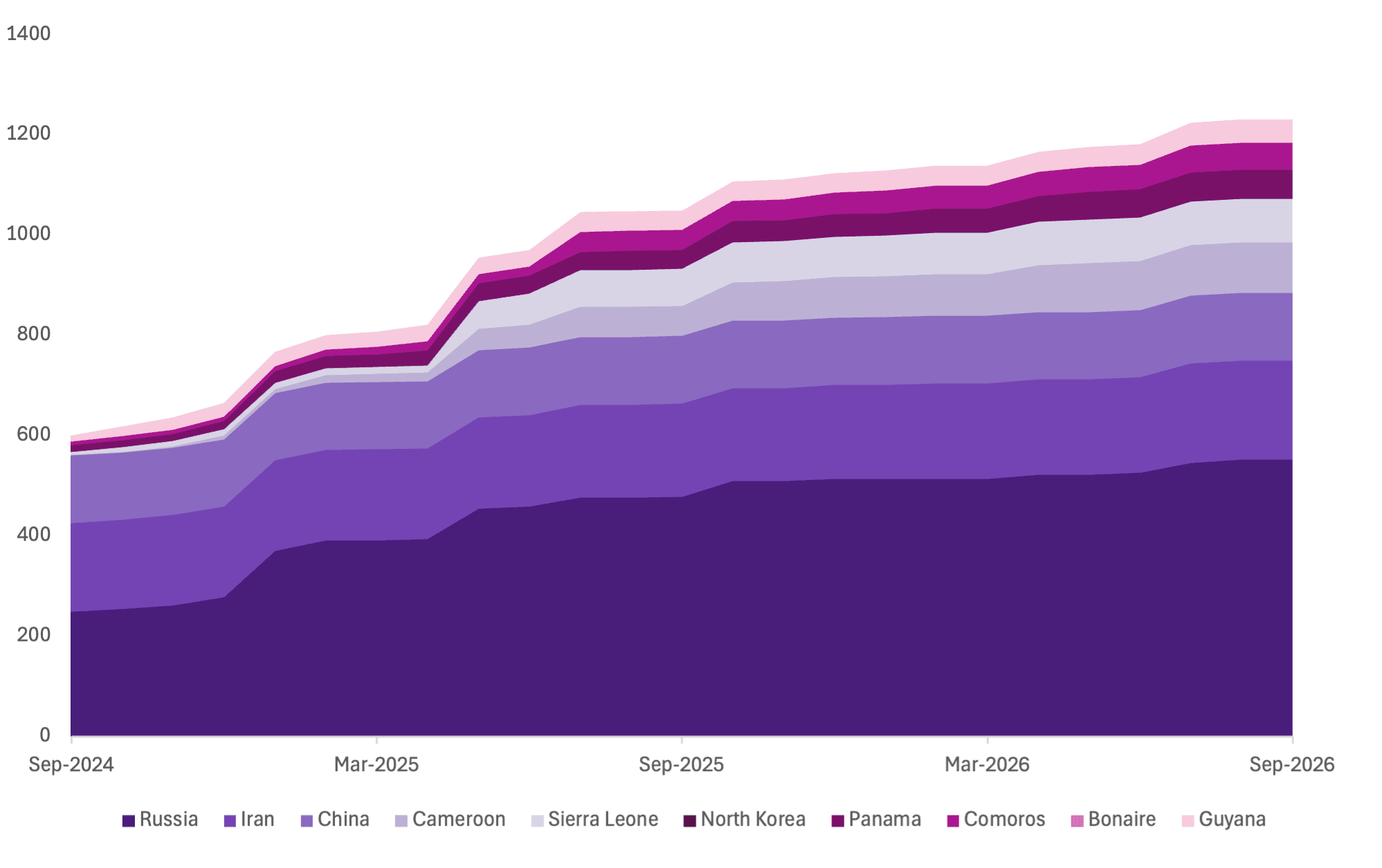 Graph 3. Sanctioned vessels by top-ten flag registry, September 2024 to September 2026 - Kpler Risk & Compliance.
With no new vessels entering the dataset, the leading flag categories were broadly unchanged during September. Russia remains by far the largest category, followed by Iran, China, and Cameroon.
The longer-term development remains more important than the monthly movement. The sanctioned population has spread across a wide range of registries as vessels change ownership, management and flag during their operating lifecycle.
This continues to demonstrate the limitations of using the current flag alone as a sanctions-risk indicator. Flag should be assessed alongside sanctions history, ownership and management links, trading activity, insurance and vessel behaviour.
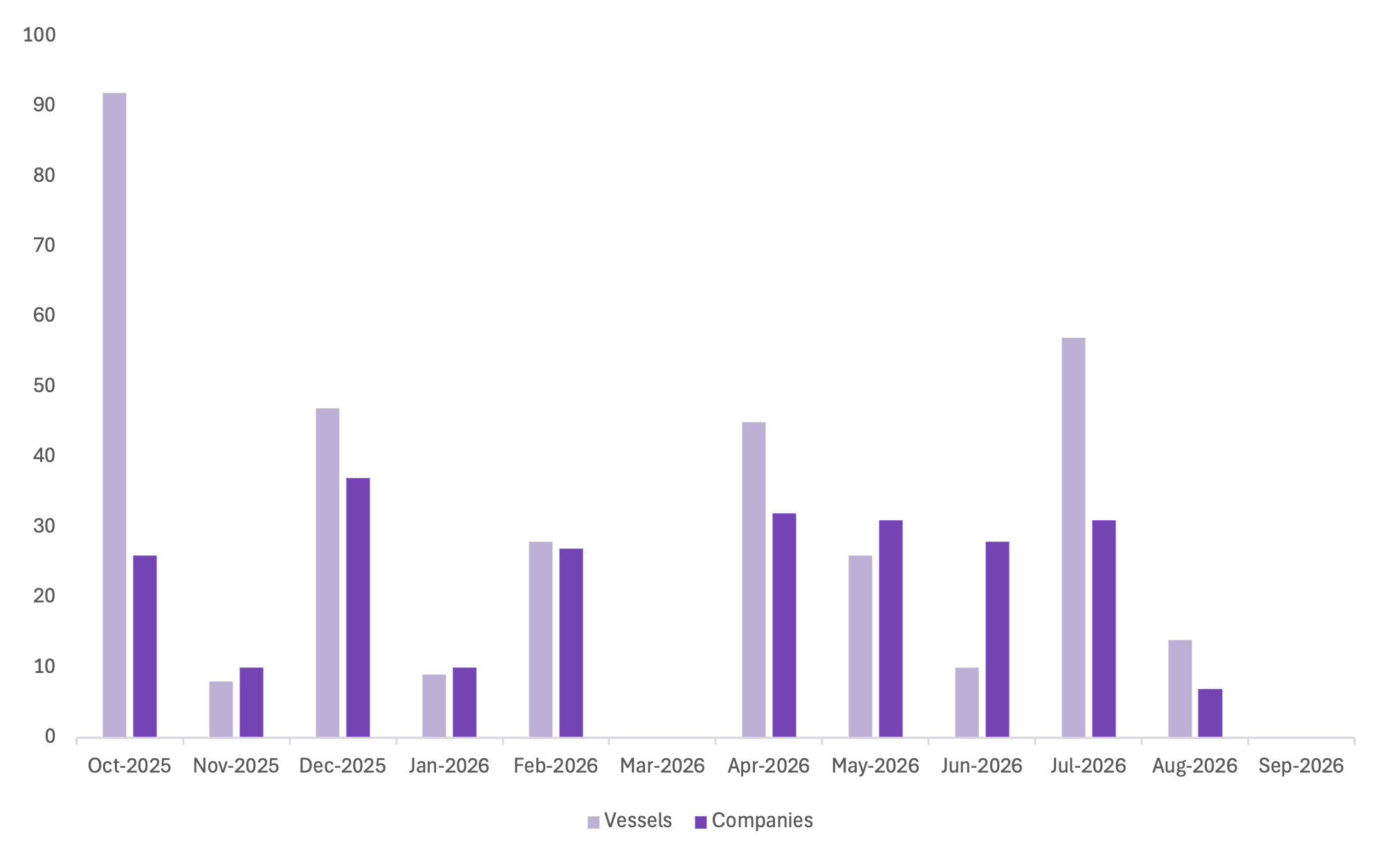 Graph 4. Vessels and companies added to sanctions lists over the last twelve months, October 2025 to September 2026 - Kpler Risk & Compliance.
The final chart illustrates the uneven nature of maritime sanctions activity. October 2025 recorded 92 vessel additions, while July 2026 added 57, December 47 and April 45. By contrast, both March and September recorded none.
Company additions followed a similar pattern, with larger waves in December, April, May, June and July before falling to seven in August and zero in September.
The pattern reinforces why individual monthly designation counts should not be viewed in isolation. Large sanctions packages are often separated by quieter periods in which authorities introduce new legislation, investigate networks and establish the legal basis for subsequent enforcement.
September 2026 was the quietest month for new maritime sanctions since March, with no vessels or maritime companies entering the Kpler dataset for the first time. Yet the absence of new names masks meaningful changes in the sanctions landscape.
The US has established a recurring mechanism that can result in vessels associated with Russian sanctions circumvention being identified as blocked property, while the UK has expanded its powers to target ships and maritime services connected with Iran. Both developments reinforce a broader trend: maritime sanctions compliance is moving beyond simply checking whether a vessel appears on a list.
For shipowners, charterers, traders, banks and insurers, the practical requirement is increasingly continuous monitoring across vessel status, ownership and management, cargo activity, insurance, STS behaviour and cross-jurisdictional sanctions exposure. September may have produced no new vessel listings, but it created important pathways for the next ones.

