

• 23 min de lectura
• 23 min de lectura
Cruise Norway's latest familiarisation trip to Northern Norway continued on September 8-9 with visits to Mo i Rana and Sandnessjøen, highlighting Helgeland's cruise infrastructure and shore excursion potential.
The centre offers an immersive experience blending art, nature, and cultural heritage, accommodating up to 60 passengers. The optimal visit duration of 1.5 hours allows for film screenings, facility tours, refreshments, and optional nature walks without creating scheduling conflicts for cruise itineraries.
Culinary experiences
The facility takes pride in offering authentic culinary experiences that reflect the region's cultural heritage. It provides three or four different meal options that can be customised to accommodate various dietary requirements and group preferences. A particular highlight is the traditional Sami coffee service, where coffee is brewed over an open fire using time-honored methods passed down through generations. The coffee is stirred with birch tree and juniper branches, infusing it with subtle natural flavours and creating an aromatic experience that connects visitors to indigenous traditions. This ceremonial preparation not only provides refreshment but also serves as an educational opportunity to learn about Sami cultural practices and their deep connection to the natural environment.
Nature walks
Several of the centre's packages include guided nature walks featuring some of Helgeland's most spectacular natural attractions. The Junkerdalsura canyon presents a dramatic river canyon with towering rock walls and unique geological formations. Kjemafossen waterfall, accessible via a suspension bridge, showcases powerful cascades down mountainsides. Skogvoktergarden, the historic forest keeper's farm, offers a child-friendly and easy-to-walk experience that tells stories of traditional livelihoods. Solvagtind mountain, one of northern Norway's most characteristic peaks, dominates the landscape with its distinctive profile.
The Saltfjellet area features easy 2-mile trails suitable for various fitness levels, with options for both short and longer excursions. Within just 7 minutes from the centre, visitors can reach a picturesque stream, while well-signposted paths lead to the canyon and other natural features throughout the area.
Sami cultural heritage and conservation education
"The Sami history is strong here," noted Kari Nystad-Rusaanes, GM at the centre, highlighting the facility's commitment to preserving and sharing indigenous cultural narratives. The centre holds official authorisation to provide educational nature talks about five distinct national parks in the region, all of which contain significant reindeer populations that are integral to Sami cultural heritage and traditional livelihoods. These presentations offer cruise passengers valuable insights into the symbiotic relationship between the Sami people and the Arctic environment, covering topics such as traditional reindeer herding practices, seasonal migration patterns, and contemporary challenges facing indigenous communities.
Saltfjellet represents an ancient Sami cultural landscape, featuring several thousand-year-old hunting pits and hearths probably used by nomadic hunting peoples. Just outside the centre, Sami turf-covered huts can accommodate 15-20 people in the largest structure. Passengers can be served food in these authentic settings. The area around the centre features very wheelchair-accessible short trails.
The centre is developing plans to bring nearby Sami community members to talk with visitors or arrange visits to Sami sites, creating opportunities for direct cultural exchange and deeper understanding of indigenous perspectives on land stewardship and traditional knowledge systems.
Film presentations and educational content
The centre has developed specialised programming for younger visitors, ensuring that families traveling on cruise ships find engaging, age-appropriate activities. The facility screens three different films that cater to various interests and time constraints with seating for 60 individuals. The first, "5 National Parks in 10 Minutes," provides a rapid-fire visual introduction to the region's protected areas, perfect for groups with limited time.
The second film, "The Fight for Saltfjellet," is a compelling 20-minute Norwegian documentary with English subtitles that chronicles the successful grassroots campaign to protect the Saltfjellet area from dam development in the 1970s. The documentary also shares the story of Per Adde, who possessed great knowledge about reindeer and Sami culture. He mobilised reindeer herders and farmers' unions through extensive lobbying against the threat to dam the area for extensive electricity production. The area, home to thousands of reindeer during summer months with reindeer husbandry deeply rooted in the region, faced what became the biggest resource conflict in Norwegian history.
Today, both Svartisen and Meldjoed remain protected. The area was ultimately designated a national park in 1989, with the government declaring it was the end for this sort of development work. This film not only showcases the region's stunning landscapes but also illustrates Norway's evolving environmental consciousness and the power of community activism in conservation efforts.
The centre features indoor seating areas where passengers can sit and hear short stories about fox, lynx, or ecosystems designed for small groups. A temporary geology exhibition will remain at the centre until Christmas, after which the centre will introduce a permanent geology area. The facility includes a library, café, and shop filled with quality items including arts and crafts and jewelry by local artisans.
Emerging offerings
The centre is developing new experiences to enhance its appeal to cruise passengers. Dog sledding is occasionally available, and the centre is looking to structure it as a regular offering, according to Nystad-Rusaanes.
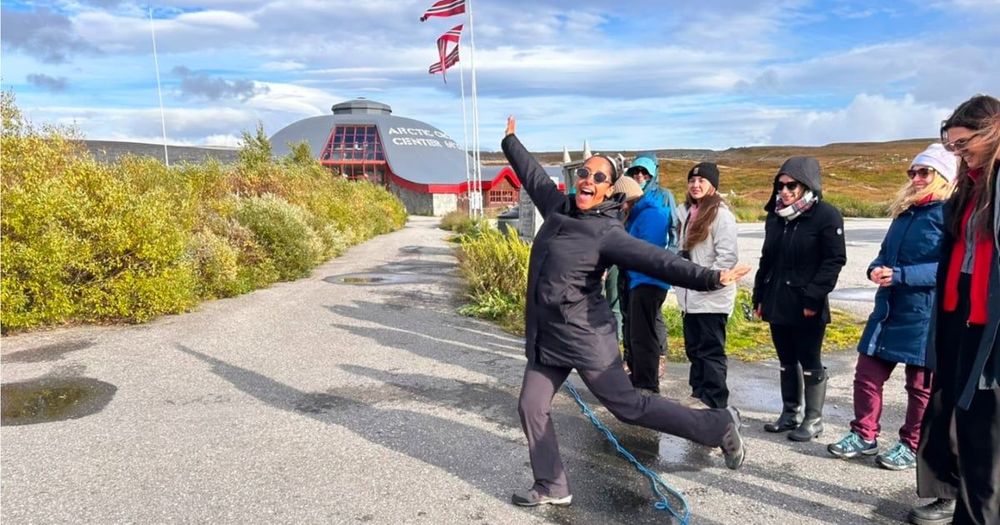
The group then participated in the Arctic Circle crossing ceremony, a symbolic experience where participants jump over a line marking the Arctic Circle and receive certificates commemorating the occasion. This traditional ritual has become an important part of Arctic tourism, providing visitors with a tangible marker of their journey into the far north and a memorable souvenir of their experience.
Toranes Quay
At Mo i Rana Port, Harbour Master Bjørnulf Tverā provided the familiarisation group with a comprehensive overview of recent infrastructure improvements that have significantly enhanced the port's capacity to accommodate cruise vessels. "We have dredged down to 11 meters from west to east," Tverā explained, detailing the technical specifications that allow the port to welcome larger vessels. The extensive dredging works were completed in 2025, marking a significant milestone in the port's modernisation efforts.
Mo i Rana's history as an industrial centre, particularly its steel production heritage, left a legacy of contaminated sediments in the harbour area. The dredging project required careful handling of this polluted material to prevent environmental damage. In an innovative approach to environmental remediation and circular economy principles, the contaminated sediments were processed and converted into concrete for building materials, allowing for safe reuse rather than disposal.
The port's infrastructure includes a 300-meter dock positioned just 200 meters from Mo i Rana's town centre. This proximity eliminates the need for shuttle services for most passengers who can reach the heart of the community with only a 5-minute walk from the ship. "We put up fences so we can guide passengers to where the buses are waiting," Tverā added, explaining the port's approach to passenger flow management. These temporary barriers create clear pathways that direct passengers efficiently to waiting tour buses while maintaining security and preventing confusion.
The port can provide gangways, security, water services, and more. "We do not have shore power at the moment but we're looking into it," said Tverā, acknowledging this limitation while indicating the port's commitment to future improvements that would allow vessels to reduce emissions while docked.
Seasonal advantages
The port's location requires approximately 30 nautical miles of sailing time to reach from main shipping routes, translating to 2-2.5 hours of transit time through a long fjord. This positioning offers particular advantages for winter cruise operations, as the sheltered location and ice-prevention systems make it accessible during colder months. Tverā noted that the port actually offers "more possibilities for winter than summer," making it an attractive option for cruise lines seeking to extend their Northern Norway season beyond the traditional summer months.
The port has received two cruise ships over the past four years, including the mid-sized vessel Amadea, demonstrating its capability to handle vessels of this size. While the port has received some requests for the upcoming year, no bookings had been confirmed at the time of the familiarisation visit.
Innovative ice prevention system
Mo i Rana Port's infrastructure includes a sophisticated system designed to prevent ice formation during the harsh Arctic winter months. This system operates by pumping salt water through a tube that extends 30 meters below the surface, with small holes along its length that release a continuous stream of bubbles. These bubbles create circulation that mixes the denser salt water from depth with the fresher surface water brought by the river, preventing the formation of ice even in extreme cold. "At -25 degrees Celsius still fine," Tverā noted, highlighting the system's effectiveness even in temperatures that would typically create thick ice coverage.
The port typically handles other traffic at the pier, including substantial timber operations, but this is halted and the area is cleared when cruise ships arrive. The pier is cleared, signage is added, and in winter, the port could add lights and bring reindeer to enhance the arrival experience and create a festive atmosphere for passengers.
The most recent cruise call took place on December 26, 2025, and the passengers went to the Arctic Circle monument as part of their shore excursion program.
Mo i Rana's strategic location near the Swedish border opens unique possibilities for two-country excursions. "Mo i Rana is very close to border with Sweden so there was a trip there during the December call, offering two countries in one trip. The Swedish culture is different so they get the Swedish storytelling at a Swedish mountain about Swedish Sami," explained Tverā. These cross-border itineraries allow cruise passengers to experience the cultural differences and similarities between Norway and Sweden, visit the symbolic Arctic Circle crossing point, and maximise the geographic diversity of their shore time.
Within Mo i Rana itself, one Sami experience is available, taking 1 to 1.5 hours to reach from the port. This provides an alternative for passengers seeking indigenous cultural encounters without crossing international borders.
The familiarisation group stayed at Scandic Meyergården, where they visited the oldest part of the hotel built in 1890. Historic photos adorn the walls throughout the building, which has a long and strong history according to Stig Johansen, owner of Polar Tours. The structure originally served as a guesthouse, providing hospitality to travelers for well over a century.
"Mo i Rana is founded by industry," said Johansen, emphasising the city's distinctive character. July 10, 1946, marks a very important date in the city's history. On this day, the Norwegian Parliament voted to establish the state-owned steel and ironworks company, Norsk Jernverk, in Mo i Rana. This decision fundamentally shaped the city's character and development, transforming it into an industrial centre that would define its identity for generations.
"Mo i Rana is an industry town," Tverā emphasised, acknowledging the city's distinctive character shaped by its industrial heritage, particularly steel production and mining. Mining was and continues to be a big industry in Mo i Rana. This industrial identity differentiates Mo i Rana from the fishing villages and agricultural communities that characterise much of coastal Norway, offering cruise passengers insight into Norway's economic diversity and industrial development.
The city has moved three times in its history, a remarkable aspect of its development that reflects changing economic priorities, natural constraints, and evolving urban planning approaches over the centuries.
City tour options and highlights
The city tour is a popular excursion that begins from the port. Tour operators can offer it as a standard city tour or as a panoramic experience with city tour that includes the industrial area.
The tour showcases houses, mostly boat houses, that were erected in the late 1600s, providing tangible connections to the region's maritime heritage and traditional architecture. The industrial area tour offers insights into the steel and mining operations that have defined the city's modern character.
Natural attractions and glacier access
Mo i Rana provides access to Norway's second-biggest glacier, which visitors can see from a distance and can also visit through organised excursions. From Mo i Rana, the journey requires a 1-hour drive, then a 30-minute boat ride, followed by a 45-minute walk to reach the glacier. Alternatively, from Bodø to the glacier, the journey takes 2 hours and 45 minutes by bus, then a 10-minute boat ride. These options provide flexibility for cruise itineraries with different time constraints and starting points.
The area offers numerous hiking possibilities throughout the surrounding mountains and valleys. Around Christmas, there are several events featuring homemade products like sweaters and wood products, providing cruise passengers with opportunities to purchase authentic, locally made souvenirs while supporting regional artisans. A big music event takes place at the end of August, potentially offering entertainment options for summer cruise calls.
The local museum can accommodate one busload of passengers at a time inside the facility, an important consideration for cruise planners developing shore excursion programs that need to coordinate multiple groups and venues.
A new airport is being built in Mo i Rana and will be finished in 2027, with direct flight connections to Oslo. This development will significantly improve accessibility to the region, which already benefits from more than 40 airports throughout northern Norway. The improved air connectivity will make it easier for cruise passengers to begin or end their journeys in Mo i Rana, potentially opening opportunities for turnaround port operations or fly-cruise packages.
Evening experience at Stenneset Open Air Museum
The familiarisation group enjoyed dinner at Stenneset Open Air Museum, housed in a building from the 1700s. Photos displayed in the house include relatives of one of the colleagues, creating personal connections to the region's history. The culinary experience featured delights including scallop and pumpkin purée, showcasing the region's commitment to high-quality, locally inspired cuisine that can enhance cruise passenger experiences.
Johansen discussed the development of a new specialised guide company focused specifically on the Helgeland region's cruise tourism needs. This initiative addresses one of the key challenges facing emerging cruise destinations: the availability of qualified, multilingual guides who can deliver high-quality shore excursions. Johansen's company is concentrating on recruiting and training guides fluent in German and English, the two most important languages for the European cruise market.
"We are training the guides and we want to use local guides, not taking guides from other parts of the country," Johansen emphasised, highlighting the company's commitment to community-based tourism development. This approach ensures that guides possess authentic local knowledge and personal connections to the places they interpret, while also keeping tourism revenue within the regional economy.
The Helgeland region has established strong cooperative frameworks for securing the necessary resources to support cruise operations, including qualified guides and sufficient bus capacity for shore excursions. This collaborative approach involves multiple municipalities, tourism operators, and transportation providers working together to ensure seamless experiences for cruise passengers.
On the morning of September 9, while traveling from Mo i Rana, the familiarisation group visited Sjøgata, located in the town centre of Mosjøen. Helgeland Museum provided a guided tour of this historic waterfront district. Mosjøen was the first city in Helgeland, giving it particular historical significance in the region's development.
A highlight of the tour was Northern Norway's oldest preserved gas station, listed in 1933 for the Halvdan Vik Company. The Shell station features characteristic architecture with a ceiling over the pumps, large clean surfaces, straight lines, and simple windows. These design elements reflect the modernist aesthetic that was emerging in commercial architecture during the 1930s, emphasising functionality and clean lines.
Today the station belongs to Vefs Museum and was protected by Riksantikvaren in 2016, ensuring its preservation for future generations.
Sjøgata is filled with quaint buildings that create a charming atmosphere. Notable establishments include Apen Café and Umami Kafé. The area has a brewed coffee heritage, reflecting the importance of coffee culture in Norwegian social life. Ola Oktoberfest-brygga represents another historic waterfront house that contributes to the district's architectural character. Beautiful houses line the water, creating picturesque views that appeal to cruise passengers seeking authentic Norwegian coastal town experiences.
The guide spoke about the restoration and renovation of Sjøgata with honest discussion of the district's challenges and recovery demonstrating the community's commitment to heritage preservation and the transformation that thoughtful restoration can achieve.
Fru Haugans Hotel
In Sjøgata, the group enjoyed lunch at Fru Haugans Hotel, northern Norway's oldest hotel, established in 1794. This historic property represents more than two centuries of hospitality tradition in the region, providing continuity between past and present while offering modern amenities and services.
Future museum development
From 2027, Helgeland Museum will welcome visitors to its new museum building where Strandgata and Sjøgata meet. This development will provide enhanced facilities for cultural interpretation and visitor experiences, creating a modern complement to the historic district's preserved buildings and offering cruise passengers a comprehensive introduction to the region's heritage.
Continuing the journey, the group moved to Arven Hydropower Station, widely considered one of the most attractive power stations in the world due to its setting in forest and hills. The facility's integration into the natural landscape demonstrates how industrial infrastructure can be designed to complement rather than dominate its environment.
Arven is developing a visitor centre in this valley focused on education for energy tourism, hoping to open it in 2028-2029. The centre will focus on renewable energy with encouragement for finding solutions to future problems, positioning it as both an educational facility and a forum for discussing energy challenges and innovations.
The building itself will feature eating spaces with 100-person capacity, making it suitable for cruise group visits. One of Norway's leading chefs will work on menu design, ensuring that the culinary experience matches the facility's high standards in other areas and provides cruise passengers with memorable dining that reflects regional ingredients and traditions.
Arven is hoping next year to build a weaving staircase made of wood that will extend from the facility down to the sea. This architectural feature will end at a sauna where people can bathe in the ocean, combining traditional Norwegian sauna culture with the invigorating experience of cold-water bathing. This amenity would provide cruise passengers with an authentic Nordic wellness experience in a spectacular natural setting.
Sami culture is present in this area, with potential for cruise development that could incorporate indigenous perspectives on the relationship between energy development and traditional land use. The presentation delivered by Arven emphasised hydropower as a legacy in Norway that has made it possible to live in very rural places but live in a modern way. This framing highlights how renewable energy infrastructure has enabled population dispersal and economic opportunity in remote regions, allowing communities to maintain their connection to traditional territories while accessing contemporary amenities and opportunities.
At Helgeland Port in Sandnessjøen, dort director Laila Brunvold and facilities manager Ole Valberg conducted thorough inspections of both Horvneset quay and Sandnessjoen quay facilities, providing the familiarisation group with detailed information about each facility's capabilities, limitations, and operational procedures. The port officials expressed that they really want cruise ships, demonstrating strong commitment to developing this sector.
Hovneset Quay
Horvneset quay is specifically designed and equipped to accommodate large cruise vessels, having successfully hosted Norwegian Star in 2023. The facility is located in an offshore area and operates on a one-at-a-time basis for large vessels. The infrastructure allows the port to serve two small expedition ships simultaneously or one large cruise vessel at a time, providing operational flexibility that can accommodate various scheduling scenarios and vessel combinations. The largest cruise vessels can be accommodated at this facility.
Sandnessjøen Quay for expedition ships
Sandnessjøen quay has been designated for expedition ships. The facility successfully hosted Amadea in 2025.
An important operational consideration at Sandnessjøen is the daily arrival of the Hurtigruten coastal ship, which docks at 12:45 PM and departs at 1:15 PM. The coastal ship also arrives late at night.
The port maintains contracts with two tugboat operators and provides professional pilot services, ensuring safe navigation and maneuvering for visiting vessels. Sandnessjøen organises shuttle buses for cruise passengers, providing efficient transportation between the ship and town centre or excursion departure points.
Sandnessjøen typically receives one cruise ship annually under normal circumstances, though it successfully accommodated two expedition ship calls last year, including Amadea.
Torolvstein Viking House
The familiarisation group visited Torolvstein Viking house in Sandnessjøen, an authentically reconstructed Viking longhouse that provides immersive historical experiences for cruise passengers. The facility is managed by Oddvar Pettersen, who has developed comprehensive programming that brings Viking Age history to life through interactive activities, cultural demonstrations, and traditional hospitality.
The venue's location, just 10 to 15 minutes' walk from the cruise port, makes it exceptionally convenient for shore excursions, particularly for passengers who prefer walking to bus transportation or for cruise lines seeking to minimise transportation costs. The facility's remarkable flexibility allows it to accommodate groups ranging from intimate gatherings of 10 people to large events of up to 250 people, making it suitable for everything from small expedition ship calls to major cruise vessel visits.
Several busloads of visitors during the summer season.
The venue has established experience hosting German cruise ship passengers, demonstrating its capability to serve international visitors and manage the logistical requirements of cruise group visits. The facility offers diverse programming that can be customised to match cruise line preferences, passenger demographics and time constraints. Core offerings include tastings of local foods prepared using traditional methods, theatrical performances that dramatise Viking Age stories and legends, and cultural activities that provide hands-on engagement with historical practices.
Torolvstein Viking house has developed an impressive array of interactive activities designed to engage cruise passengers of all ages and physical abilities. These include axe throwing competitions that allow participants to test their skill with this traditional Viking weapon, tug of war contests that encourage team building and friendly competition among passengers, archery demonstrations and participation opportunities that showcase Viking hunting and combat skills, and stilt walking that provides entertainment and challenges balance.
A particularly popular feature is the opportunity for visitors to dress in authentic Viking costumes, creating memorable photo opportunities and enhancing the immersive historical experience. Cultural performances, including traditional music, storytelling, and demonstrations of Viking Age crafts and skills, can be arranged to complement other activities and provide educational context about daily life, beliefs, and social structures during the Viking era.
The facility operates throughout the year, making it available for both summer and winter cruise calls. The venue can be effectively combined with other excursions in the area, allowing cruise lines to create half-day or full-day itineraries that include multiple attractions and provide comprehensive introductions to the region's history, culture, and natural environment.
Petter Dass Museum
At Alstahaug, the familiarisation group visited the Petter Dass Museum, an architectural landmark designed by the internationally renowned Snøhetta architects, the same firm responsible for the Oslo Opera House and the National September 11 Memorial Museum Pavilion in New York. The museum celebrates Petter Dass (1647-1707), a Norwegian poet-priest whose epic work "Nordlands Trompet" (The Trumpet of Nordland) provides vivid descriptions of life, nature, and communities in Northern Norway during the 17th century. Dass's poetry remains culturally significant in Norway, and his work offers valuable historical insights into the region's maritime culture, natural environment, and social conditions during a formative period in Norwegian history.
The museum complex encompasses multiple historic and modern structures, creating a comprehensive cultural experience that spans centuries. The site includes a medieval stone church that represents some of the oldest Christian architecture in the region, an 18th-century vicarage that provides insight into the living conditions of clergy during Dass's era, and a contemporary museum building that houses exhibitions, a cinema and a café. This combination of historic and modern architecture creates visual interest and allows visitors to experience both authentic historical structures and state-of-the-art interpretive facilities.
Maria Veie Sandvik, who led tours of the facility during the familiarisation visit, explained that the museum receives between 15,000 and 20,000 visitors annually, demonstrating its established position as a significant cultural attraction in the region. This visitor volume indicates strong appeal to both domestic and international tourists and suggests the museum's capacity to handle cruise passenger groups as part of its regular operations.
The museum can comfortably accommodate two buses simultaneously, with sufficient space for groups to move through exhibitions without overcrowding and adequate facilities for visitor services. This capacity makes it suitable for mid-sized cruise ship calls or for serving as one venue in a rotation of attractions for larger vessels.
The institution is actively developing multilingual guide capabilities to better serve the international cruise market. While English and Norwegian language services are well established, the museum is working to add Dutch and German language capabilities, recognising the importance of these markets for Northern Norway cruise tourism.
Accessibility
The facility is largely wheelchair accessible, ensuring that visitors with mobility limitations can experience most of what the museum offers. The medieval church features ramp access that allows visitors with mobility limitations to enter this historic structure, while the modern museum building includes lift availability to ensure all exhibition spaces can be reached by visitors regardless of physical ability.
An interesting feature of the museum is its small jetty, which allows some visitors to arrive directly by vessel. Museum staff meet these arrivals at the pier, providing a seamless transition from water to land and creating a memorable arrival experience. This capability could be particularly appealing for small expedition ships or for cruise lines seeking to offer tender operations that deliver passengers directly to cultural attractions rather than to a central port facility.
The museum's cinema seats 80 people and screens a specially produced 22-minute introductory film about Petter Dass's life, work, and cultural significance. The film features singing performances of Dass's poetry set to music, bringing his words to life and demonstrating their continued relevance in Norwegian cultural life. This audiovisual presentation provides an efficient and engaging introduction to Dass's legacy, making his 17th-century poetry accessible to contemporary international visitors who may be unfamiliar with Norwegian literary history. The film's length is well-suited to cruise excursion schedules, allowing time for the screening plus facility tours and refreshments within a typical shore excursion time block.
The museum features rotating exhibitions across its different buildings, ensuring that repeat visitors encounter new content and providing variety for cruise lines that call multiple times per season. During summer months, the museum hosts local handicraft sales, providing cruise passengers with opportunities to purchase authentic, locally made souvenirs while supporting regional artisans. These sales feature traditional Norwegian crafts that reflect the region's cultural heritage and natural materials, offering alternatives to mass-produced tourist merchandise and creating economic benefits for local craftspeople.