• 3 min de lectura
• 3 min de lectura
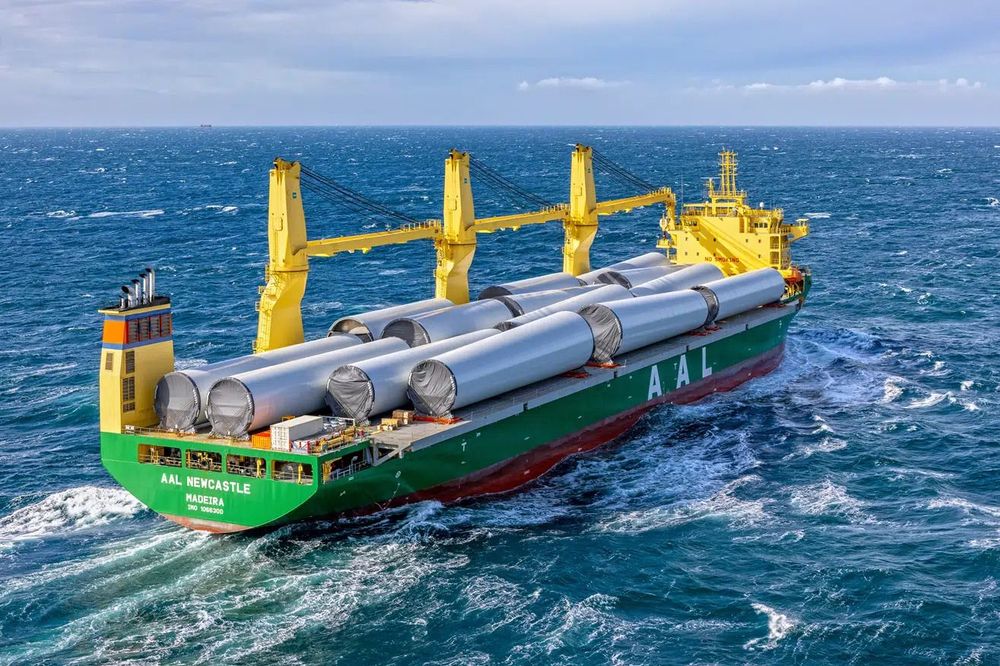
AAL Shipping (AAL) has reported a 19% improvement in the Operational Energy Efficiency Indicator (EEOI) across its entire fleet since 2023.
"The EEOI decreased from 17.80 in 2023 to 14.40 in 2025, meaning less carbon dioxide was emitted for every ton of cargo transported per nautical mile," the company stated.
"This improvement reflects AAL's ability to manage its fleet growth and increased cargo volumes more efficiently, while reducing its emissions intensity," it added.
The results, detailed in AAL's 2025 Sustainability Report, come at a time when the maritime industry is adapting to an increasingly strict environmental landscape, which includes the FuelEU Maritime regulation, the EU Emissions Trading System (EU ETS), and the International Maritime Organization (IMO)'s proposed Net-Zero Emissions Framework.
This framework seeks to support the transition of international shipping towards greenhouse gas emission neutrality by or around 2050, through a global standard for marine fuels and an emissions pricing mechanism.
"We consider the IMO's proposed net-zero emissions framework, which is widely expected to define the next phase of global maritime decarbonization, to represent a positive step for the environment and a fundamental driver in the industry's transition to emissions neutrality," said Markus Remmers, Global Head of Operations at AAL Shipping.
"AAL's supply chain resilience and our operational capabilities allow us to adapt to constantly evolving regulations, while continuing to support complex project cargo movements worldwide. Early and transparent dialogue with clients is essential, as it allows us to develop practical and cost-effective solutions agreeable to all parties well in advance of implementation deadlines, thereby minimizing disruptions to project execution," he added.
AAL highlighted its "third-generation Super B-Class fleet of 32,000 dwt. Introduced in 2024 with cargo capacities exceeding 90,000 FRT and a lifting capacity of up to 800 tons, these vessels recorded the most outstanding energy efficiency performance across the entire fleet, achieving average EEOI values of 4.27 in 2024 and 4.99 in 2025; all while maintaining the heavy-lift capability and operational flexibility that clients depend on" as a key factor in this improvement.
"Alongside fleet modernization, AAL is also optimizing its performance through efficient route planning, advanced vessel monitoring, and digital technologies that drive fuel efficiency and data-driven decision-making across its global operations," it added.
Meanwhile, Yahaya Sanusi, Deputy Head of Engineering at AAL Shipping, commented that "clients are increasingly seeking logistics partners who can support both their project execution and their sustainability goals. By designing and investing in more efficient vessels, coupled with smarter operations, we are delivering tangible results today, while building a fleet ready for the next stage of the industry's low-emission transition."
The company also reported zero environmental incidents between 2023 and 2025, underscoring the robustness of its environmental management systems, process controls, and crew training programs.
"As the regulatory landscape continues to evolve, AAL remains committed to balancing environmental performance with the operational demands of transporting some of the world's largest and most complex cargoes, ensuring that clients benefit from efficient, reliable, and future-proof project logistics solutions," the shipping company concluded.