

• 3 min de lectura
• 3 min de lectura
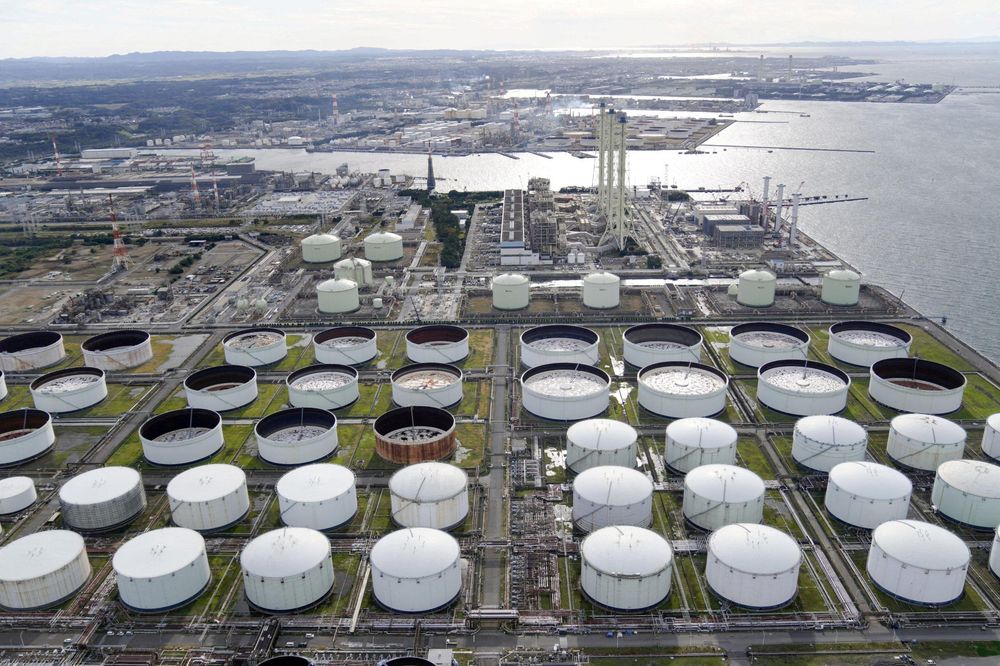
Idemitsu Kosan, Japan's second-largest oil refiner, has begun sourcing Saudi crude from Yanbu Port via the Suez and Cape of Good Hope routes.
According to Idemitsu Kosan President Noriaki Sakai, the company has ruled out short-term supply risks thanks to the support of Emirati cargoes diverted via Fujairah and imports from North America.
Although the head of the Japanese company acknowledged longer shipping times and higher transportation costs, Sakai emphasized to Reuters that they do not foresee significant supply disruptions.
Attacks by Houthi rebels in Yemen have blocked the transit of Saudi crude through the Bab el-Mandeb strait, forcing the fleet to divert to alternative routes.
Voyages that typically took 20 days have been extended to 50 or 60 days; however, Idemitsu Kosan will continue to source via the Suez route, Noriaki Sakai confirmed.
Although the refiner avoided detailing the itinerary, Saudi Aramco has been offering additional cargoes since July from the Egyptian port of Sidi Kerir, in the Mediterranean. Under this scheme, oil loaded in Yanbu (Red Sea) is transported to Ain Sukhna and then via the Sumed pipeline to Sidi Kerir for re-export.
Japan depended on the Middle East for 94% of its crude imports in 2025, of which 93% transited through the Strait of Hormuz. The closure of this route at the end of February after the conflict between the United States and Israel against Iran forced Tokyo to release strategic reserves and seek alternative supplies.
Despite the crisis, Noriaki Sakai maintained that maintaining access to oil from the region remains a priority for Idemitsu Kosan, supported by the historical relationship with producing countries and technical compatibility with local refineries.
The executive warned that diversifying to other sources would require costly infrastructure adaptations that would represent an "unnecessary investment" for the country.
However, the head of Idemitsu Kosan acknowledged public concern about high energy dependence and raised the need to define, together with the Government, a future supply balance.
Idemitsu Kosan's new five-year plan to 2030 marks a return to its core hydrocarbon business, distancing itself from the decarbonization focus of its previous strategy.
The refiner seeks to raise the utilization of its plants to 90% or more - after registering 84% between April and June - through the transversal application of maintenance and corrosion prevention protocols developed at its Hokkaido refinery.
In parallel, the company has identified liquefied natural gas (LNG) as a key growth area. Through MidOcean Energy, where it announced a USD 500 million investment in March, Idemitsu plans to consolidate international purchase, marketing, and trading contracts.
Likewise, the firm is advancing in the supply of solid electrolytes for the solid-state batteries that Toyota will integrate into its electric vehicles by 2027-2028, a segment with expansion potential towards drones, robotics, and energy storage, whose expansion of production capacity will be defined before the end of fiscal year 2030.