• 3 min de lectura
• 3 min de lectura
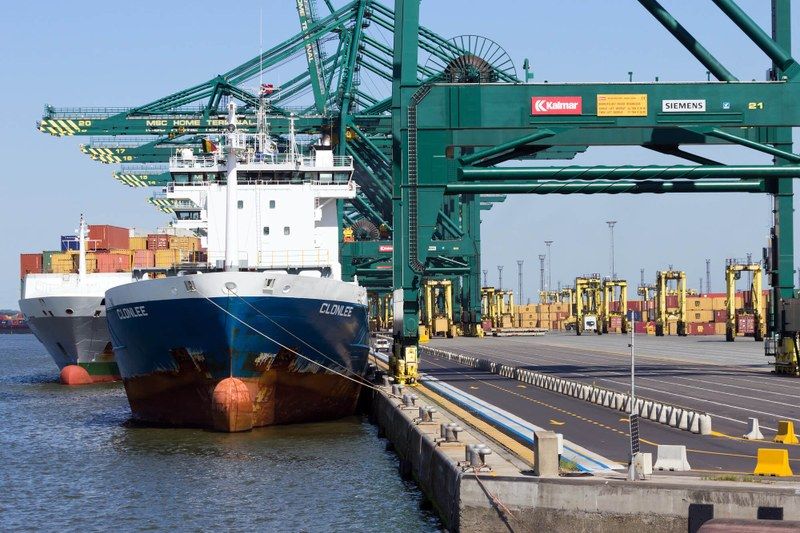
Before reaching its destination, cargo may pass through different structures within a port. During transit, storage areas receive goods awaiting the next transport and help organize movement between ships, trucks, and trains. It is in these spaces that products can remain for a certain period before proceeding to their destination.
The main function of the storage area is to organize the flow of cargo and allow movement to happen in a coordinated manner, according to the characteristics of each product and the operation's planning. This makes the port function as a connection point between different modes of transport. Goods can arrive by truck or train, remain stored, and then be taken to the ship. The opposite can also happen: products are unloaded, pass through the storage area, and continue by road or rail to their destination.
Planning
The space and structure used to store goods depend on the type of product and the conditions necessary to maintain it during its stay at the port. Containers are organized in their own areas and can be stacked according to operational planning.
For cargo such as grains, storage requires structures like silos, which allow for receiving large volumes and organizing the product before shipment. At the Port of Paranaguá, for example, the export complex has vertical and horizontal silos interconnected to the terminals, with a total capacity of approximately one million tons.
This structure is used for products such as soybeans, corn, and soybean meal, which often arrive at the port by truck and need to be directed to the terminals before proceeding to the ships.
Liquid bulk, on the other hand, requires another type of structure, such as tanks. At the Suape Industrial Port Complex, in Pernambuco, there are five fuel storage terminals that, together, have a capacity for 700,000 cubic meters of liquid bulk. The handling of this type of cargo represents a significant portion of the complex's operation; in the first half of 2026 alone, 9.14 million tons of liquid bulk were handled, mainly oil and its derivatives.
There are also products that require specific care during their stay at the port. This is the case for refrigerated cargo, such as meats, fish, fruits, and vegetables, which need to be kept at an adequate temperature to preserve their characteristics. The procedures for storing goods are defined according to what is being handled.
While ships operate in an organized manner to receive or deliver large volumes of cargo, trucks and trains arrive at the port at different times. Storage areas allow these movements to be coordinated, preventing the entire operation from depending on the simultaneous arrival of different vehicles.
Volumes can be received, checked, moved by specific equipment, and directed to a storage area. Then, according to operational planning, they proceed to the next mode of transport.
These locations help connect different stages of the same operation and are part of the logistics that allow products to reach various destinations. While one cargo awaits the next step, others may be arriving, being moved, or continuing their journey.