• 5 min de lectura
• 5 min de lectura
The connection with Asia opens an opportunity for coffee, cocoa, and other products, but its utilization will depend on this list of factors. Learn the details.
Peru has a direct gateway to Asia, but some areas of the country require extra effort to reach it. In 2024, San Martín, Ucayali, and Huánuco placed products worth US$ 465.1 million in international markets, although only US$ 84 million (18%) were destined for the Eastern continent.
This was previously reported by this newspaper when analyzing the report "From Chancay to the Amazon: panorama of expectations, challenges, and opportunities," by the Center for Studies on China and Asia-Pacific (Cechap) (of the Universidad del Pacífico), Clark University, and DAR. A question then arises: how to get production from a difficult geography to connect it with the trans-Pacific trade route?
Link between coast and jungle
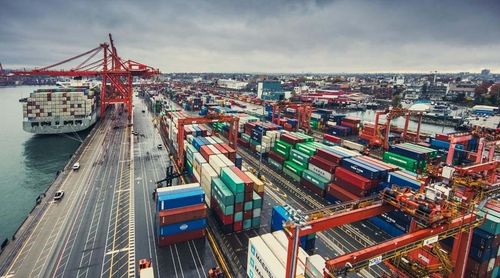
According to the report, the Port of Chancay closed 2025 with 317,400 TEUs —twenty-foot equivalent unit— and aims to mobilize between 500,000 and 1 million TEUs in its first five years. The challenge is not only to attract more ships and establish itself as a transshipment area but also to generate enough Peruvian cargo to sustain that growth.
The Amazon, in this scenario, appears as one of the alternatives. Ericka Sandy, president of the Chamber of Commerce, Production, and Tourism of San Martín, emphasizes that the connection with the megaport is a joint effort for logistical, commercial, and internal organizational reasons.
She identifies two key routes: a corridor that starts in Loreto and connects with Yurimaguas, San Martín, La Libertad, and reaches Chancay; and another that goes from Pucallpa (connected with Brazil), Tingo María, Huánuco, and Pasco to Chancay.
She even mentions that the plural mission transcends borders: there is interest from Brazilian representatives to coordinate, in the future, the transfer of soybeans, for example, to Asia through these routes, which would save the neighboring country between 10 and 15 days of travel.
However, although the region has great willingness, Stephani Maita, senior economist at the Peruvian Institute of Economy (IPE), points out that this area does not have a sufficient or competitive exportable supply to immediately consolidate itself as a relevant hinterland.
She also recalls that Loreto has ranked last in the infrastructure index for more than a decade and also faces the highest energy costs in the country by not being part of the National Interconnected Electric System (SEIN).
Added to this is the poor performance in water service: "Both in the continuity of service hours and in quality in terms of the amount of chlorine. This impacts the population, but also any company that develops, for example, products for human consumption," she states.
She also emphasizes that investment promotion laws in the Amazon have not generated visible impacts in more than 25 years.
In this regard, Sandy also acknowledges that, to compete globally, associativity must be strengthened and large-scale cargo promoted. She explains that markets like the Chinese demand massive volumes, something that no small producer can meet alone.
Beyond raw materials
Maita warns that, although coffee is a star product in the Amazon region, it still accumulates low export volumes compared to its competitors. In addition, it needs to be adapted to international standards and environmental certifications.
Wood is also one of the main resources, but its formal exploitation is limited by corruption and the presence of illegal economies.
There are "new" products or at least with nascent popularity that the expert considers on the list: palo rosa oil and macambo seeds are growing, but they lack resilience to climate shocks and access to information on certifications for high-value markets.
For her part, Sandy highlights that San Martín is a leader in chains such as oil palm, cocoa, tobacco, and sacha inchi. She perceives, in this regard, that the great challenge is to go from being exporters of raw materials to exporters of processed products.
"For now, the processed product that exists generally goes by airport. [...] However, we are the ones who export the most raw cocoa, but not processed cocoa. [...] Coffee is a commodity that seeks to generate greater added value," she argues.
Human capital under scrutiny
For the IPE spokesperson, in addition to all the challenges, "human capital needs to be strengthened," she argues. "Unfortunately, Loreto, Ucayali, Madre de Dios, and San Martín are among the last places in the competitiveness ranking, especially in the pillars of health and education," she details. Without a trained and healthy population, the productive potential of the regions is severely restricted.
In short, she emphasizes, for the Amazon to be a cargo hub for Chancay, which mainly operates with containerized cargo, it is necessary to drastically increase the volume of its agricultural production and fight against the "deep state abandonment," factors that currently limit the possibility.
"The situation in Loreto, San Martín, Ucayali, and Madre de Dios will not improve if we do not have better officials in charge, people with technical capacity," she expresses.
Sandy concludes by reminding that some ideas and projects around the Amazon were already discussed during the previous administration in the Ministry of Economy and Finance (MEF), but a formal dialogue with the current authorities has not yet been resumed. She therefore hopes that the current administration will once again pay attention to railway plans, especially.