• 3 min de lectura
• 3 min de lectura
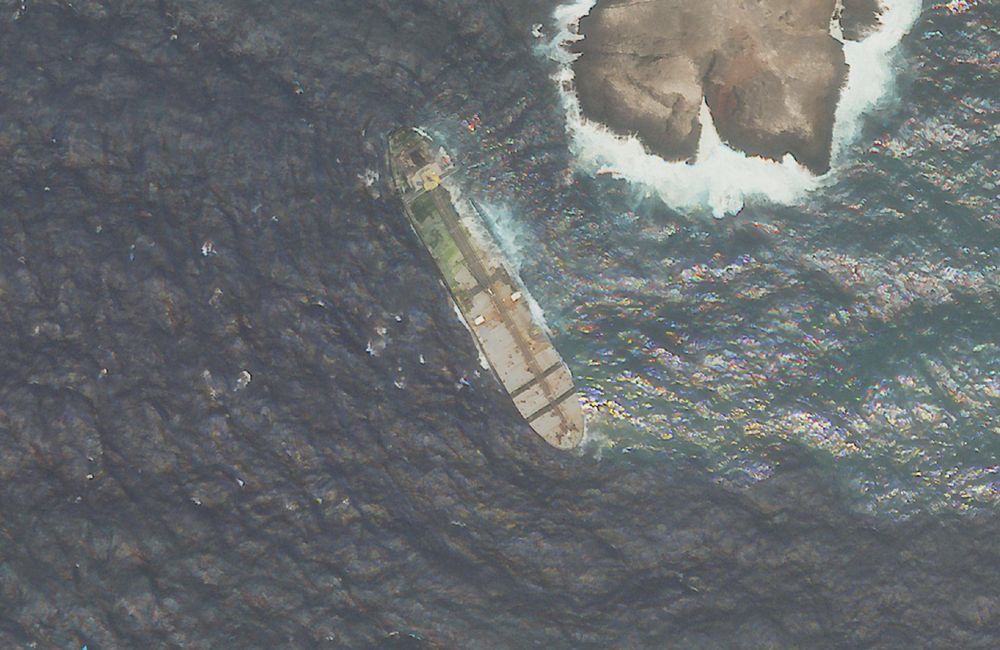
A sanctioned oil tanker is spilling crude oil off the coast of Oman. The hydrocarbon slick has spread in recent days, raising alarms about a possible environmental impact in the area, according to an analysis of satellite images and maritime sector specialists.
Ship tracking data reveals that, prior to its last voyage, the Caroline Bezengi had loaded Russian fuel in the Port of Novorossiysk, in the Black Sea.
Initial alerts for operational failures were registered on June 8 off the port facility of Mukalla, south of Yemen, according to two maritime security sources, who added that preliminary assessments pointed to an explosion on board.
A satellite image from July 28 shows a dark slick in the water near the vessel, as well as lighter streaks north of al-Qibliyyah Island, located near the coast of Oman and part of a protected marine reserve.
"The darker oil slicks suggest that at least one of the tanker's tanks appears to have fractured, causing the vessel to spill crude oil," said Wim Zwijnenburg, remote sensing specialist at the Dutch peace organization Pax, after analyzing the images.
"The monsoon season in the area, which usually peaks between July and August, could unleash adverse weather conditions that accelerate the dispersion of the crude oil," he added.
Reuters verified that the vessel observed in recent satellite images corresponds to the Caroline Bezengi, after comparing its deck structures and paint with archive photographs. The tanker is listed under sanctions by the European Union and the United Kingdom for its alleged involvement in the transport of Russian fuels.
An oil tanker specialist, who analyzed the satellite material, indicated that the vessel is likely listing. Meanwhile, other sources in the sector warned of the risk that the structure could eventually break in two.
"At this moment the vessel has not broken apart. Authorities are holding discussions to address the safety and environmental risks," a spokesperson for the International Maritime Organization (IMO), an agency dependent on the United Nations (UN), said this week, assuring that they are closely monitoring the evolution of the incident.
Russia uses its so-called "shadow fleet" - made up of old and poorly maintained vessels - to circumvent Western sanctions on its oil exports.
It has not yet been determined whether the damage from the explosion is due to a possible attack by Ukraine - which has targeted oil tankers linked to Moscow - or if it stems from the geopolitical conflict in the Middle East.