• 5 min de lectura
• 5 min de lectura
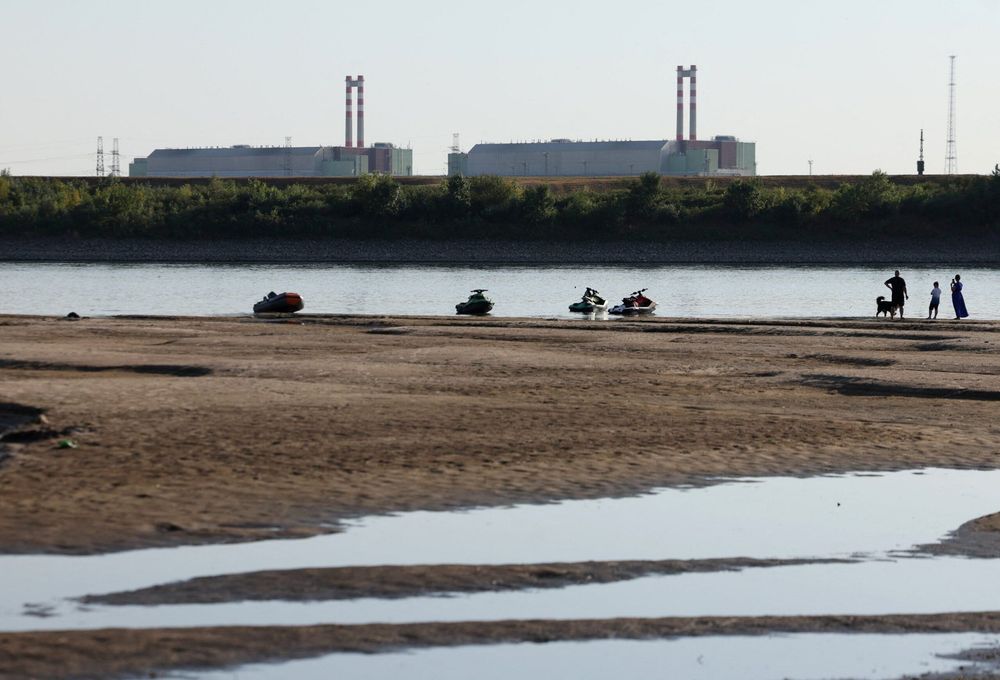
Hungary is fully shutting down its sole nuclear power plant for the first time due to the record low levels of the Danube River, straining energy supplies and posing a major test for the economy and new Prime Minister Peter Magyar.
One of the two reactors still operating at the Paks plant was shut down early Sunday, with the final one powering down later in the day, according to Magyar. He cited the progressively lower water levels, which are causing a shortage of water for cooling at the facility, which is operating at a little over a tenth of its 2,000 megawatt capacity.
The nation is heading into uncharted territory by shutting the nuclear plant for the first time in its 44-year history — a result of sustained drought across much of central Europe.
The plant, about 120 km (75 miles) south of Budapest, accounts for 40% of the country's electricity generation. Neighboring Romania on Friday ordered a state of alert in the energy sector after reducing output at its own nuclear plant.
Hungary's government is boosting power imports to cover part of the shortfall, and has asked large industrial companies, including car and battery makers, to voluntarily cut their consumption, warning that mandatory reductions may also be ordered.
A new crisis plan focuses on prioritizing electricity cuts at firms and limiting household usage only as a last resort. For example, rail freight will be stopped at peak hours from Monday while decorative lighting on state buildings has been turned off. Budapest ordered trams and subways to go slower to conserve electricity. Water supplies are also under strain, prompting the government to order a halt to the watering of grass and stadium pitches.
It's all shaping up to be a major test of Magyar's leadership, less than four months after a landslide election that ousted Viktor Orban. That's true even as the new premier pointed to the deterioration of energy and water infrastructure during 16 years of Orban rule, including delays to the modernization of the Paks plant's cooling system as well as in its controversial Russian-led expansion.
"We inherited a fragile, expensive and vulnerable system," Magyar said in an address on social media. "We now have to operate, defend and fundamentally rebuild this system all at once."
Before the drought, Magyar had moved quickly to deliver on his pledge to dismantle Orban's illiberal regime, crack down on corruption, restore the rule of law, and hold officials of the previous administration to account. Now the energy crisis is eclipsing all other issues.
The call to pare energy usage by companies is likely to hamper industrial production, just as it was showing signs of revival after nearly three years of contraction. The drought is also poised to devastate agriculture, restraining economic growth and potentially fueling food inflation. That may challenge central bankers who'd penciled in a third consecutive monthly interest rate cut in August and potentially more for later in the year.
The unexpected outlays on electricity imports are also roiling budget consolidation efforts. The government is still in the process of amending this year's fiscal plan, which Magyar has said were based on falsified numbers and didn't include much of Orban's spending splurge ahead of the elections.
Energy crisis concerns are spilling into the markets. The forint, one the world's best performing currencies since investors started pricing in Magyar's election win early this year, closed at the weakest level in three months against the euro on Friday, and posted its worst month in July since October 2024.
The @EU_Commission is closely monitoring the security of electricity supply situation in Romania, Hungary and the wider South-East European region in light of the ongoing heatwave and drought conditions.
We are in close contact with the national authorities and @ENTSO_E.— Dan Jørgensen (@DanJoergensen) August 1, 2026
At this stage, there is no immediate security of supply concern. ?
But we will keep monitoring the situation closely and stand ready to convene an ad-hoc meeting of the Electricity Coordination Group to facilitate information exchange and coordinate any necessary response.
— Dan Jørgensen (@DanJoergensen) August 1, 2026
Even before the drought, Magyar's government had started to address key energy and water system vulnerabilities. It opened a call for bids for major investments in wind energy, with the government planning to use freshly released EU funds to finance projects. Consultations had also started on modernizing the country's irrigation system.
But none of that will of help to deal with the immediate crisis as Hungary heads into another heat wave. Temperatures in Hungary's capital are expected to hit 37 or 38C (98.6F-100.4F) on each of the next six days, with no precipitation in the forecast.
The most acute situation is at Paks, where the cooling of nuclear reactors remains a vital task even after the reactors are taken offline. That can be done even under extreme conditions, when the water flow is as much as 90% below average, and even when the water temperature is elevated, the Hungarian Atomic Energy Agency said in a statement, citing available technology and reserves.
But with Europe warming faster than any other continent, the longer term outlook is grim and the short-term one isn't any brighter.
Historical water levels show that the Danube reaches its annual low point in August or September, according to Laszlo Nagy, the deputy director of the Paks plant, who added that it takes about a further week to bring the reactors online once water levels become adequate again. That means Hungary may have to do without its single-biggest energy asset for several months.
"The outlook isn't too good, unfortunately," Nagy told reporters on Friday at a joint briefing with Magyar. "We're facing an unprecedented situation."