• 3 min de lectura
• 3 min de lectura
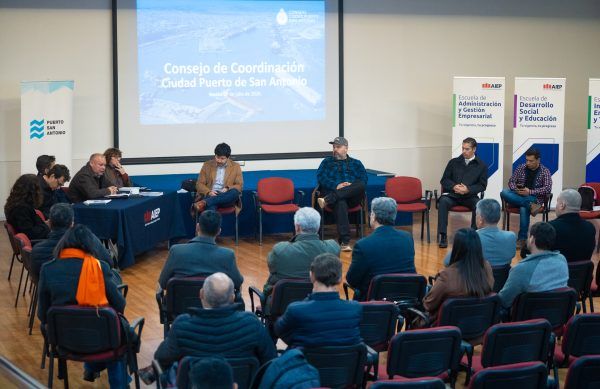
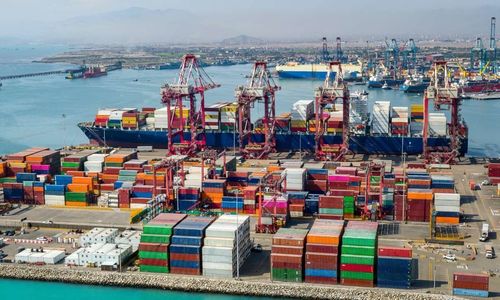
The San Antonio Port-City Coordination Council presented its 2026-2027 Work Plan, a tool whose main objective will be to advance in the construction of the Port-City Vision for San Antonio 2050, aimed at strengthening the relationship between the port, urban, environmental, economic, and social development of the commune.
The instance was chaired by the regional governor of Valparaíso, Rodrigo Mundaca, and included the participation of regional and local authorities, as well as representatives from public institutions, port concessionaires, social, trade, academic, and labor organizations. During the session, internal progress of the Council was also addressed, including the presentation of the Management Report, the update of its regulations, and the review of the functioning of its working committees.
The 2026-2027 Work Plan, which was the focus, seeks to provide continuity to the progress achieved during the previous period, a stage in which the Council strengthened its participation mechanisms, reviewed its internal structure, and advanced in identifying guidelines associated with economic development and employability, urban and cultural heritage, port infrastructure, quality of life, and sustainability.
The regional governor, Rodrigo Mundaca, explained that "this is the first session of the Council this year, in which we have new authorities. The session consisted of generally reporting on what has happened during the last two years, what we have done, and how this Council has been recomposed. But I believe that the most important thing is that we have defined what the next functioning of the Coordination Council will be."
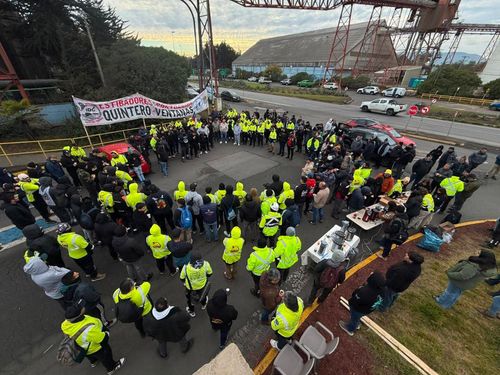
The authority added that "we are also defining the characteristics of the committees, which we want to be much more operational and have sufficient quorum to make decisions. Undoubtedly, our purpose is to harmonize all visions within the Council. When we talk about port cities, we talk about how we are able to encourage port development hand in hand with the city and how that development also contributes in labor matters. Ensuring port development as a source of local employment seems very important and relevant to us."
Mundaca, who valued the region's oceanic vocation and its condition as a gateway to the South Pacific, also referred to the challenge of continuing to grow in cargo transfer in Valparaíso and San Antonio. "It is legitimate, because we are thinking about the next 20 to 25 years. Port development is very important to maintain jobs and also to increase cargo transfer, generating more jobs and taxes for the region and the country," he said.
For his part, the General Manager (i) of Puerto San Antonio, Fernando Gajardo, stated that "this is a very important instance for San Antonio and its people, because it opens a space for different community institutions to contribute their ideas to the development of the port city, both in port matters and in those directly linked to the community."
Regarding the session, Gajardo highlighted that "significant progress was made in determining how this Council will interact during the year, through its four committees. These will have a space on the website, which can be consulted by the community, representing an important organization for the development of the Council's work."
In this new stage of the Coordination Council, one of the main challenges will be to transform collectively constructed diagnoses into sustained actions with follow-up, responsibilities, and defined deadlines. To this end, efforts will be made to consolidate the regularity of its sessions, strengthen its committees, and establish mechanisms that allow for better monitoring of its work.