• 3 min de lectura
• 3 min de lectura
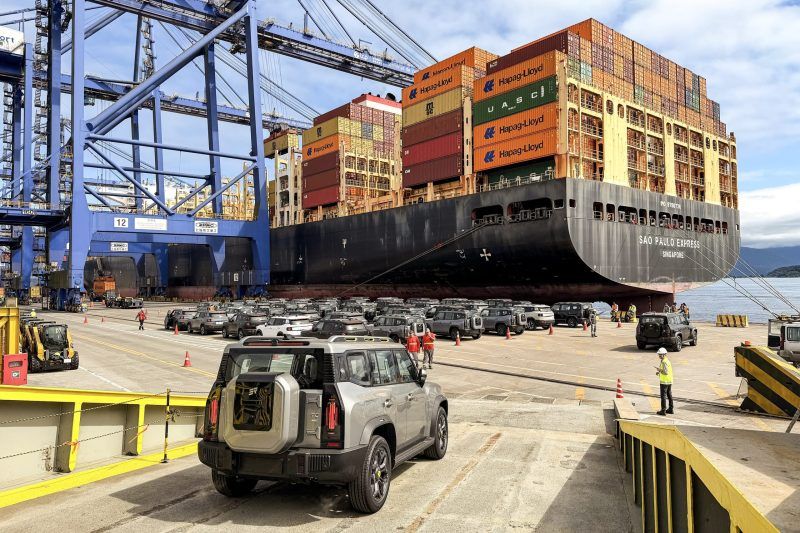
The Port of Paranaguá (Brazil) reported that vehicle imports grew by 382% in 2026, and four new brands have started operations at the Brazilian facility.
According to the port, "in 2026, Portos do Paraná expanded the range of car manufacturers importing electric and hybrid vehicles. Starting in the second half of the year, four foreign brands chose the Port of Paranaguá to import their models into Brazil: Jaecoo, Omoda, GWM, and Jetour. These new brands join the group that has been using Paraná's port infrastructure for some time, including Audi, Renault, Fiat, GM, Volkswagen, and Geely, which began operations in 2025."
Furthermore, it was detailed that "the volume of vehicle imports in Paranaguá, during the first eight months of this year, increased by 382% compared to the same period last year. In total, between January and August 2026, 107,100 vehicles were handled, including imports and exports, a figure that already exceeds the total for 2025, when 106,700 vehicles were loaded and unloaded. In the same period of 2025, operations totaled 67,800 vehicles handled, representing a growth of 58%."
"The first batch from Jaecoo and Omoda arrived in August. GWM and Jetour began unloading in the first week of September. In these two operations alone, more than 7,000 cars were received. The arrival of new brands expands the market served by the Port of Paranaguá and opens the door for further growth in vehicle traffic in the coming months," the statement added.
Regarding the advantages of the Port of Paranaguá for handling rolling cargo, it was highlighted that "it has infrastructure dedicated to vehicle operations. Pier 219 is exclusive for Ro-Ro (Roll-On/Roll-Off) vessels, while multi-purpose Pier 215 can also receive vehicles. Therefore, the port has the capacity to simultaneously receive two vessels with this type of cargo."
"Operations are also based on specialized equipment and one of the lowest accident rates in the country. In 2026, no damage was recorded on the more than 100,000 vehicles managed. Professionals remove an average of more than 270 cars per hour from Ro-Ro vessels. The proximity of storage areas, about 900 meters from the pier dedicated to Ro-Ro vessels, is another advantage of the Port of Paranaguá that facilitates and speeds up the entire process," the statement indicated.
In relation to the origin of the cars, it was detailed that "China was the main country of origin for vehicles imported through the Port of Paranaguá, representing 63% of the total. It was followed by Mexico (30.6%) and Germany (2.5%). As for export destinations, Argentina accounted for 49.9%, followed by Colombia (21.8%) and Mexico (10.1%)," the publication concluded.