• 4 min de lectura
• 4 min de lectura
The Port Authority of Santander (APS) presented this week, during a port-city initiative exchange session at the General Assembly of the Atlantic Arc Commission of the Conference of Peripheral Maritime Regions (CPMR), its model for transforming the port's waterfront through the creation of a cultural axis conceived by different administrations and institutions with the aim of developing an Urban District where culture is a fundamental pillar.
María Cuesta, head of the APS Planning and Internal Control division, was responsible for explaining how the Port has led this process, as over the last four decades, it has been recovering and enhancing part of its heritage, transforming disused port buildings into various cultural facilities that offer, throughout the year, "quality programming, thus contributing to the enrichment of Santander's cultural life."
Other entities have joined this proposal, and by installing a wide variety of cultural spaces on the waterfront, they are contributing to creating a "high-quality" cultural axis that constitutes "an example of good practices in the urban and cultural regeneration process of port cities," Cuesta noted.
Thus, the Palacete del Embarcadero, the Cabo Mayor Lighthouse Art Center, the Sotoliva Warehouse, the Maritime Station, the La Cerda Lighthouse, and the General Archive, all transformed into cultural centers operated by the APS itself, are joined by others managed by other administrations such as the Reina Sofía Museum-Lafuente Archive, the Santander Lighthouse, the Museum of Prehistory, the Festival Palace, the Gamazo Warehouses, and the Cantabrian Maritime Museum.
The head of the APS also referred to the importance of collaboration between administrations when addressing common challenges and cited the creation of a Permanent Port-City Forum as an example.
Santander has been the first port in the State Network to formalize an instrument, included in the State Ports Strategic Plan, to streamline integration, identifying common problems and coordinating policies by aligning interests and efforts.
Likewise, during the debate, the importance of working with certifications, such as Green Marine Europe - which participated in the session - for improving relations with communities and biodiversity was highlighted. Precisely, Santander has just become the first Port to join this program, also participating in the working group that adapted the Green Marine framework to the European context and the specific realities of ports.
The second session in which the APS participated focused on the analysis of the Comprehensive Economic and Trade Agreement between the European Union and Canada (CETA), and on proposing new opportunities for transatlantic collaboration in areas such as the blue economy, innovation, and digitalization.
In this regard, the APS Digital Transformation Plan Roadmap includes some priority projects such as the Port's 'Digital Twin', the digitalization of the automobile terminal, the creation of a platform for managing calls and berths, participation in the 4.0 program as a facilitating agent in various innovation projects, and the 'AI Santander Port' Artificial Intelligence Chair.
In addition, other issues were discussed, such as the need to promote cooperation across the Atlantic to advance maritime decarbonization and develop green maritime corridors.
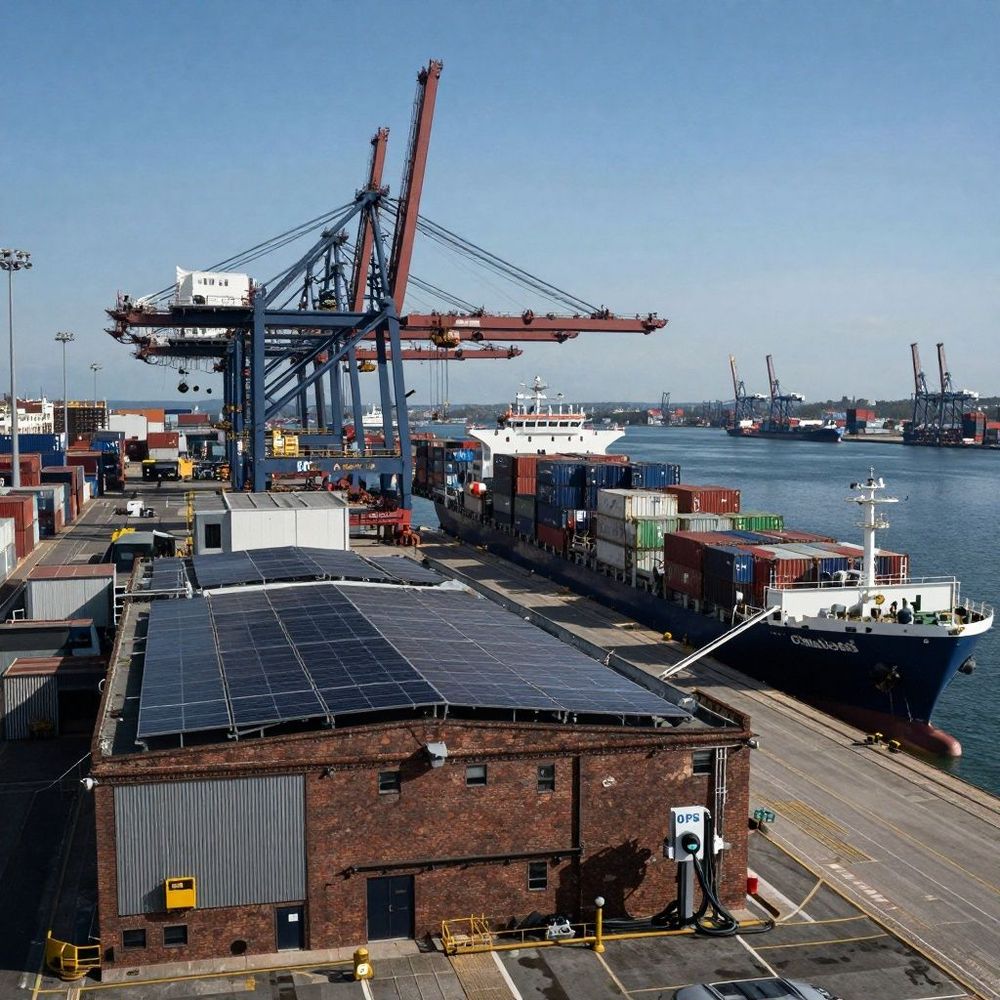
Cuesta had the opportunity to explain the "ambitious" Decarbonization Plan that the Port of Santander has, which bases its strategy on several pillars such as the implementation of OPS (Onshore Power Supply) technology, the installation of a photovoltaic plant in the automobile silo, and the use of sustainable fuels such as Liquefied Natural Gas (LNG).
The combination of these initiatives will allow the Port of Santander to advance "decisively" towards the objectives of the European "Fit for 55" package, since, "with the projects underway and those planned, the APS will achieve a 55% reduction in emissions by 2030, fulfilling the commitments established by the European Union, and will achieve total neutrality (100%) by 2050," she noted.
Finally, she referred to the efforts being made by the APS to promote a railway highway between Santander and Madrid, "the only piece we are missing" to be able to create a green corridor for freight transport between the Spanish peninsular center, the United Kingdom, and northern Europe.
The General Assembly of the Atlantic Arc Commission of the Conference of Peripheral Maritime Regions (CPMR) was held on June 8 and 9, 2026, in Quebec, Canada.
The meeting brought together representatives from twenty European and Canadian regions to discuss the Atlantic macro-region and the blue economy.