• 5 min de lectura
• 5 min de lectura
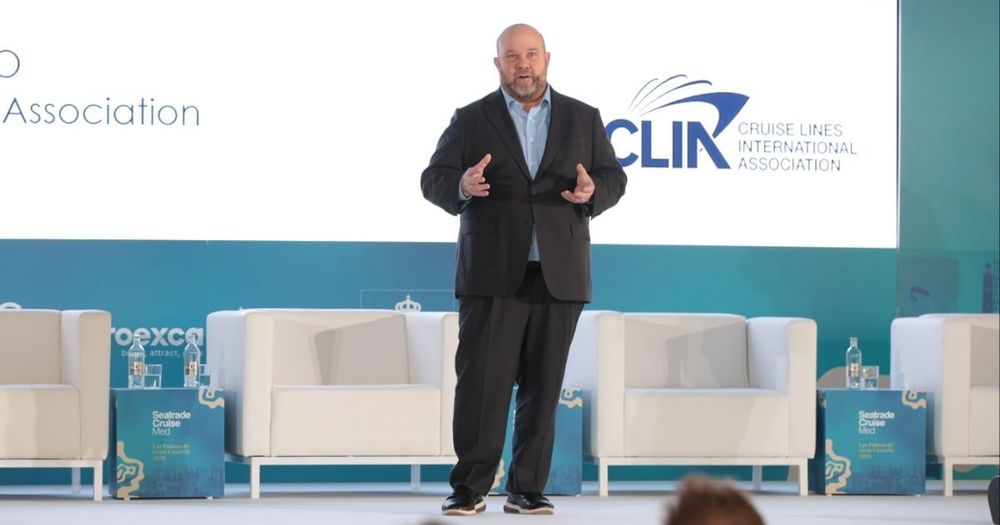
Cruise Lines International Association released its annual Environmental Technologies and Practices report, showing continuous progress in environmental technology adoption across more than 90% of global oceangoing cruise capacity.
The report, published annually since 2018, tracks year-over-year fleet data on environmental technologies and practices across CLIA-member cruise lines operating 327 ships with approximately 692,000 lower berths as of August 2026.
"Year after year, the data show cruise lines continuing to invest in the technologies, fuels, and operational capabilities that are making the global cruise fleet more efficient and positioning it for the future," said Bud Darr, president and CEO of CLIA. "The progress reflected in this report is the result of sustained investment and innovation by the world's cruise lines – from more efficient ships and fuel-flexible engines to onshore power capability and advanced environmental systems."
Analysis of the current CLIA member cruise line fleet indicates that 72% of oceangoing cruise ships are small- to mid-size vessels with fewer than 3,000 lower berths. Small ships under 1,000 lower berths represent 34.5% of the fleet, whilst mid-size ships between 1,000 to 3,000 lower berths account for 37.2%. Large ships over 3,000 lower berths comprise 28.3% of the current fleet.
This distribution is forecast to remain relatively stable through 2039, with small ships projected to represent 33.6%, mid-size ships 34.6%, and large ships 31.8% of the fleet.
The number of CLIA-member ships operating with multi-fuel engines capable of switching between conventional fuels and zero- and near-zero emission fuels has increased from one ship in 2018 to 30 ships today. These engines provide fuel flexibility to utilise alternative fuels as they become available at scale with minimal engine modifications.
Based on the August 2026 orderbook, 31 multi-fuel capable ships are forecast to be in service by year-end 2026, rising to 56 ships by year-end 2030. Through 2039, 69 CLIA-member multi-fuel capable ships are forecast to be in service.
According to International Maritime Organization data reported by cruise passenger ships, heavy fuel oil usage declined from 74.2% of reported fuel use in 2019 to 60.6% in 2024. Combined use of non-HFO fuels, including marine diesel/gas oil, very-low and ultra-low sulfur fuel oil, LNG, and other fuel pathways, increased from 25.8% to 39.4%.
CLIA's tracking of member cruise line use of non-HFO fuels reached 40.3% in 2025, consistent with IMO data trends.
European Maritime Safety Agency data via the EU THETIS-MRV database shows improved efficiency indicators for cruise ships sailing in Europe. From 2018 through 2025, average fuel consumption per ship declined approximately 18.5% and average CO2 emissions per ship declined about 19.4%.
The number of CLIA-member cruise line ships with shore power supply connectivity has more than tripled since 2018, increasing from 55 ships representing 25.0% of ships and 27.9% of capacity to 193 ships representing 65% of reporting ships and 72.5% of reporting capacity.
An additional 47 ships are planned for shoreside electricity system retrofits, with 39 newbuild ships specified to include the technology. By 2039, an estimated 279 ships representing 74% of ships and 82% of capacity are forecast to have OPS capability.
Currently, 40 ports worldwide where cruise ships call have at least one cruise berth with OPS, representing fewer than 3% of ports. Under EU Fit for 55 decarbonisation regulations, major European ports will be required to have OPS by 2030.
The number of ships equipped with Advanced Wastewater Treatment Systems approved and capable of meeting or exceeding IMO MARPOL Annex IV discharge standards increased from 136 ships in 2018 to 249 ships in 2026. These systems now represent 83.8% of reporting ships and 86.2% of reporting capacity.
Of this total, 124 ships with AWTS are capable of meeting the more stringent wastewater standards of the IMO MARPOL Annex IV Baltic Sea Special Area, compared with 16 ships in 2018.
Today, 293 ships representing 98.7% of reporting ships and 99.9% of reporting capacity can produce freshwater onboard using technologies including steam evaporation, reverse osmosis, and aeration systems. Of this total, 218 ships representing 73.4% of reporting ships and 83.3% of reporting capacity can produce 100% of their freshwater needs onboard.
The number of CLIA-member cruise line ships fitted with Selective Catalytic Reduction systems, which reduce nitrogen oxide emissions to help ships meet IMO Tier III NOx emission standards, increased from seven ships representing 3.2% of capacity in 2018 to 96 ships representing 32.3% of reporting ships and 27.6% of reporting capacity in 2026.
Waste-to-energy gasification systems, which convert waste into usable energy to support ship operations, are currently in use on seven ships representing 12,276 lower berths or 1.8% of reporting capacity.
Microbial digesters for food waste processing are in use on 137 ships representing 46.1% of reporting ships and 51.3% of reporting capacity, compared with 103 ships representing 42.7% of ships and 44.7% of capacity in 2022 when tracking began.
Darr added: "Cruise lines are continuing to invest in support of ambitious decarbonisation objectives by building ships capable of using new and lower-emissions energy sources alongside a range of other environmental technologies and practices. Realising the full potential of those investments will require fuel producers, governments, ports, energy providers, and other stakeholders to help create the conditions for safe, competitively priced renewable and lower-emissions fuels to be available at scale, supported by the infrastructure needed to deliver them."
Source: sea-trade cruise