

• 8 min de lectura
• 8 min de lectura
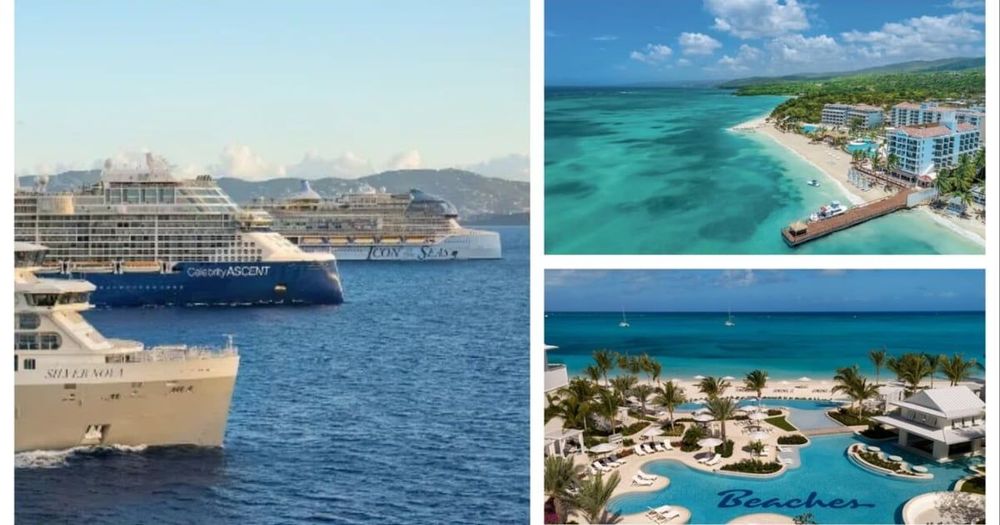
With its Sandals investment, Royal Caribbean Group advances Chairman/CEO Jason Liberty's vision to provide customers a "lifetime of vacations," capture more of its guests' wallets and keep them within its ecosystem.
Though the deal is expected to be accretive to RCL earnings in 2027, shares fell about 9% over the past couple days as news of the partnership broke and hit a 52-week low of $222.22 Wednesday before rebounding 4% in Thursday trading. The company believes sentiment will continue to swing positive as the market better understands the benefits.
The biggest question is whether Royal Caribbean's $3b investment for a 50% stake in the Caribbean all-inclusive resorts operator will return what the company could have earned from building new ships and its own destination developments.
There are also concerns about geopolitical and climate/weather risks that cruise operators have avoided by having movable assets. Ships can redeploy when there are security issues, regional conflicts or economic downturns and move away when hurricanes threaten, unlike land-based assets.
And some investors see risk in going outside the company's core competence. In years past, Carnival Corp., for example, briefly owned an airline and a Bahamas resort. And in 2000, Carnival called off a timeshare acquisition (Fairfield Communities) when CCL shares declined for weeks.
So, 26 years ago, Carnival was eyeing the same land-based diversification that Royal's undertaking but the market wouldn't accept it then.
A Carnival Corp. spokesperson passed on the opportunity to comment about Royal's Sandals deal.
Viking management has also talked about potentially diversifying into land-based opportunities that complement its business. Asked about the Royal-Sandals deal, CEO Leah Talactac told Seatrade Cruise News: "It makes sense for Royal. They're in the Caribbean and they like the sun and the waterslides, and Sandals is an extension of their product."
For brokerage William Blair & Co., the Sandals investment is an opportunity to "capture additional share of Royal's guests' vacation wallets (currently capturing 20% to 25%) through a broader vacation ecosystem."
The acquisition will be immediately accretive, with $300m of EBITDA partly offset by the cost of the debt to fund the acquisition, William Blair analyst Sharon Zackfia said in a note. A 6% interest rate would equate to about 45 cents of annual pre-synergy incremental EPS and a 7% rate about 36 cents of incremental EPS.
The cruise operator has been reaching out to investors in the past 24 hours, including holding a call with analysts Wednesday. Management indicted both the margin and return profiles at Sandals are similar to Royal.
"While we understand investors' uncertainty on the wisdom of deviating from the core maritime business, we were pleasantly surprised by comments on Sandals' similar margin and return profile and the math of the pre-synergy accretion of the deal," William Blair analyst Sharon Zackfia said in a note.
"Ultimately, the risk likely comes down to management distraction from the core business, which we believe is mitigated by the 50/50 JV structure and continuity of Sandals leadership," Zackfia continued.
As a result, William Blair views the risk/reward profile of the acquisition as neutral to favorable and reiterated its "outperform" (buy) rating for Royal Caribbean.
The joint venture will be governed by a board under the shared leadership of Liberty and Sandals CEO Adam Stewart, and a company spokeperson said it would be a true 50/50 structure though it was too early to discuss board composition and size.
A cruise industry finance expert with mergers and acquisition expertise called 50/50 challenging when no party has the controlling vote, and he'd expect somebody to have the right of first refusal or another control mechanism.
Veteran cruise line leader Larry Pimentel, distinguished executive-in-residence for international cruise curriculum development at Florida International University's Chaplin School of Hospitality & Tourism Management, had a different take. He thinks the 50/50 structure "potentially preserves something extremely valuable: Sandals' operating culture, Caribbean identity and brand equity, while bringing Royal's capital, technology, distribution and scale."
That may prove wiser than trying to integrate Sandals into a cruise corporation, Pimentel said.
Royal is buying expertise it lacks at comparable scale, he continued. "Building resorts is one thing. Operating a large all-inclusive hospitality company across multiple Caribbean jurisdictions is another. Sandals brings decades of operating knowledge, labor relationships, resort development capability and destination expertise" that would take Royal years to develop organically.
Pimentel also pointed out how different the cruise and land-based hotel businesses are, though ships are often called floating hotels.
Royal has acknowledged the difference in describing Sandals as an "adjacent vacation category," Pimentel said. Again, ships move and itineraries change, while hotels stay put and immerse guests in one destination.
Another difference: Ships are depreciating assets while hotels are appreciating assets.
As Royal CEO Liberty has often stated, he wants a bigger share of the $3t global vacation business.
Some 30% of his customers have vacationed at all-inclusive Caribbean resorts over the past two years.
Partnering with Sandals, one of the top names in all-inclusives, means Royal will participate in more than 50% of the US vacation market (along with its ocean and river cruise business and gaming via shipboard casinos).
"We see this as following the customer and all their different vacation needs," a company spokesperson said.
Also, over the past six years, the global all-inclusive market grew 8%, from $22b in 2019 to $35b in 2025, while growth was even stronger, 11%, for Caribbean all-inclusives over the period, from $9b to $16b.
With the Royal-Sandals pair up, both companies see opportunity to expand the Sandals/Beaches portfolio beyond the Caribbean's 18 properties, though a spokesperson could not say whether that means Mexico, for example, or further afield.
Pimentel sees the partnership as a "fascinating reversal in the traditional cruise-versus-resort competitive relationship" since cruise lines and resorts historically fought for some of the same vacation dollars.
"Royal is effectively saying why choose which category wins? Participate in both. That is a much larger strategic idea thant the transaction itself," Pimentel said.
This partnership doesn't mean Royal ships will be pulling up to piers at Sandals resorts, nor is the deal about day passes for cruisers to visit resorts.
There are possibilities, though, for the companies to connect on loyalty, not by merging their clubs, but similar to how the Royal Caribbean Group brands' loyalty clubs operate separately but with status match and the choice of where to apply points and get benefits across brands.
Some of the most important groups expressed enthusiasm about the Royal-Sandals tie-up.
"Today's travelers are looking for more flexibility and more ways to personalize their vacations. Bringing together two iconic brands in cruising and all-inclusive resorts has the potential to expand vacation choices and create even more opportunities for travelers to find the experiences that best fit their needs," said David Crooks, chief product officer, World Travel Holdings.
"This is definitely exciting news for travel advisors and for the future of the leisure travel industry," said Drew Daly, SVP and GM, Dream Vacations. "It will create new opportunities for travel advisors to engage clients in conversations about their next vacation."
Daly elaborated: "Travelers are not thinking in terms of cruise or land-based vacations. They are looking for the experience that is right for them, and advisors are uniquely positioned to help guide those decisions while keeping loyalty to their favorite cruise and/or resort brand."
At Internova Travel Group, Stephen McGillivray, chief partner marketing officer, was also warm to the deal.
"As a leading seller of both brands, we see tremendous potential in bringing these two iconic vacation companies closer together. The Caribbean is in their DNA, and it's in ours, too," McGillivray said. "Their vision of turning a vacation of a lifetime into a lifetime of vacations is music to a retailer's ears.
"It's also at the heart of what great travel advisors do: build relationships with customers that span many trips and many stages of their lives. This partnership gives our advisors even more opportunities to create extraordinary vacations, deliver exceptional value to travelers and introduce more customers to both brands."
The Royal spokesperson couldn't say how long the two parties have been talking and who initiated the discussions but it didn't happen overnight, and Sandals had other suitors.
Liberty and Adam Stewart have become "good friends" in the process, based on similar outlooks and corporate cultures.
"It's been a courtship," the spokesperson said.
Fuente: sea-trade cruise