

• 7 min de lectura
• 7 min de lectura
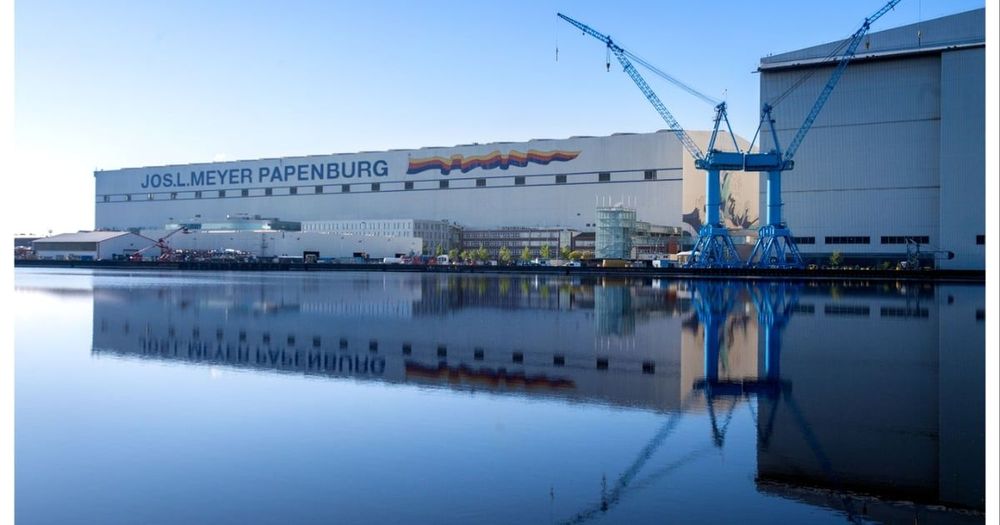
Whilst both parties have declined to comment about the speculation circulating in media, particularly in Germany, Seatrade Cruise News has learnt from industry sources that MSC's interest in acquiring a majority stake in Meyer Werft seems to have evolved from negotiations about the construction of up to six ships for MSC Cruises' New Frontier class, announced as a LOI in December.
The announcement outlined the construction of four 180,000gt, 5,400-passenger cruise vessels plus two options for annual delivery from 2030 onwards.
In June, Meyer and MSC Cruises issued a joint statement confirming that concrete planning for the ships' design and contract negotiations had reached an advanced stage. Both parties expressed confidence that negotiations would be successfully concluded "in the coming weeks."
Three months on no further information has been shared.
The most likely explanation is that emerging thoughts on MSC acquiring a stake in Meyer have turned the New Frontier contract into a (potential) part of a much wider-reaching takeover deal.
During summer, speculation about another potential contract between Meyer Group and MSC emerged with German and Italian media suggesting either MSC Cruises or Explora Journeys intended to order up to 10 river cruise vessels at Neptun Werft, Meyer Group's Rostock-based yard.
Today however, Explora Journeys announced a LOI with Dutch shipbuilder Den Breejen for a fleet of luxury river cruise vessels.
Meanwhile the ongoing restructuring of Meyer Werft Group, including Neptun, continues following the intervention of the federal government and Lower Saxony state jointly acquired about 80% of the shares in December 2024 and agreeing to invest €400m.
The restructure, running until the end of 2028, is proceeding as planned, according to the shipbuilder.
At the end of August, Meyer Werft declared 2025 group revenue increased to €2.83b, up from €1.37b in 2024. The revenue was primarily generated by the delivery of two cruise ships at Papenburg, two river vessels at Neptun and completion of the Global Dream project at Wismar.
The Group's operating result before interest, taxes, depreciation and amortization improved significantly from a €527.6m loss to a €251.8m loss. After taxes, the Group reported a net loss of €383.m, following a €569.2m loss the year before.
Looking ahead, the orderbook is promising at both Papenburg and Rostock. Significant process improvements have been implemented throughout and are bearing fruit. With André Walter, a new CEO with very broad experience took office on July 1; with him Ralf Schmitz, chief restructuring officer, and Jörg Heidelberg, chief operating officer, continue to head the Group.
Overall, the state of Meyer Group can be characterised as stable and giving reason to optimism. A strong asset of the Group is its excellently qualified workforce of about 5,000 across Papenburg and Rostock sites. Through in-house training (about 200 apprentices and students are qualified at Papenburg alone at present), Meyer ensures it retains this extremely high qualification standard.
Looking at the challenges, high labour and energy costs in Germany certainly bear mention. As it is common in shipbuilding, the financing of future newbuilds remains a complex task.
Just under 20% of the shares remained with the family of Bernard Meyer. This new structure, formally concluded end January 2025, was always intended to be temporary. Accordingly, a mid-term re-privatisation was always the objective.
MSC could now provide this opportunity. Overall, a Meyer Group with MSC as its majority owner would certainly have potential to evolve as a global innovation driver in the construction of specialised vessels. But as promising as this vision appears, a number of challenges remain.
Among these is the future role of the Meyer family. MSC's entry would require their approval. Speculation in the past days suggests that, in the wake of MSC's entry, the Meyer family's stake could be increased up to 25% or even 30% This would certainly help get the founding family to approve a deal. The chance of getting family consent seems possible. For Bernard Meyer, the prosperity of the yard has always been the top priority. If MSC is able to help that, he is very unlikely to block it.
Another, probably more complex, issue is how other customers would view MSC controlling the Group. Meyer Werft has been a top innovator as, for example, with the Helios class for Carnival Corp..
Its continuing ability to innovate, probably better than any other yard in the world, remains one of the most valuable assets the Meyer Group holds. But would competitors still be willing to discuss and realise groundbreaking innovation with a Meyer Group controlled by MSC?
Carnival Corp. declined to comment.
Could a "Chinese wall" ensure confidentiality for other clients?
If not properly addressed, this could discourage competitors from ordering at an MSC-controlled shipyard.
By comparison, other challenges appear relatively easy to address. Among them is the need to satisfy the expectations of German trade unions which have considerable influence.
Positive experiences gained with MSC's 49.9% ownership of Hamburger Hafen und Logistik Aktiengesellschaft, a leading German logistics and transportation company, may help to that end. In general, the trade unions have supported Meyer's restructuring.
So this issue appears manageable as long as the current employment at Papenburg and Rostock is secured. Likewise, details such as the future board composition can certainly be settled.
A key question is what MSC could get out of a deal? It appears as if the return on investment might not be the top priority in Geneva. Instead, the prospect of adding a top shipyard with sophisticated technological know-how could be a strong motivation, and that goes far beyond MSC's cruise activities.
While it appears unlikely that the construction of container vessels returns to Europe, Meyer Group could, as part of MSC, certainly play a role in the constructive and technological development of future container vessel generations and, even more, in their propulsion, regardless of whether these vessels are built in the Far East.
It should also be remembered that, through GNV and SNAV, the Aponte family and thus MSC controls two very important Mediterranean ferry operators. In the 1970s, Meyer was a global leader ferry building. Innovative ferries have been delivered, for example, Pont-Aven delivered to Brittany Ferries in 2004. In the 2000s Meyer turned to the cruise segment for commercial reasons, but the knowledge of ferry construction continues to live on in the yard.
And Neptun, which delivered its most recent ferry in 2018, could provide relevant expertise: So far, SNAV and GNV are mainly concentrating on operating over longer distances with larger vessels or high-speed craft. But in Europe, the short-haul ferry market is also facing consolidation and a thorough renewal — with investments into new tonnage required particularly in Italy with its many short-distance island services.
Existing operators are often too small and financially too weak to build new vessels. Could SNAV fill this gap? Certainly it could — and Neptun would have precisely the knowledge and facilities to build innovative ferries tailored to these short routes.
And if a deal is concluded, what of the Meyer family's future role: In addition to its share of approximately 20% in Meyer Group, the family continues to fully control Finland's Meyer Turku, one of the largest and most modern shipyards in Europe.
Like Germany's Meyer Group, Meyer Turku is a leader in innovative (green) technology. Could MSC's entry into the Meyer Group pave the way to bring back the two technology shipbuilding leaders in Germany and Finland under one umbrella jointly held by the Aponte and Meyer families?
Such a move would create a very strong pan-European shipbuilding venture and a global leader in innovative shipbuilding — strong and big enough to play in the same league as the largest Chinese shipbuilders.
At the same time, it would turn MSC into a global leader, not just in container shipping, cruise and ferry operations, but also in shipbuilding. Certainly this is a fascinating vision — but, at the same time, pure speculation for the time being.