

November 19, 2026
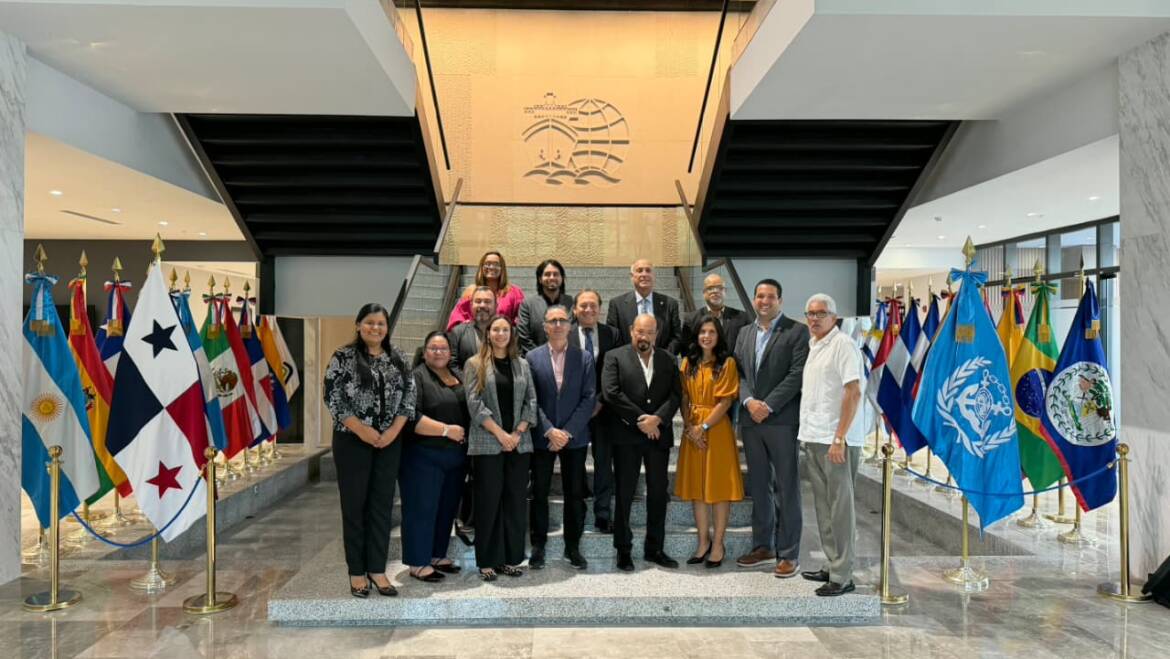
The AMP, with technical assistance from the IDB, is developing an analysis and consultation process to identify the challenges and opportunities that will define the country's maritime and logistics future.
Panama City, November 19, 2026. The growing competition among Caribbean port hubs, changes in supply chains, and the incorporation of new technologies are leading Panama to review the challenges and opportunities that will mark the future of its maritime and logistics sector.
As part of this process, the Panama Maritime Authority (AMP), with technical assistance from the Inter-American Development Bank (IDB), is advancing with a series of studies and consultations aimed at establishing the foundations of a new National Maritime Strategy (NMS), which will allow the country to define its priorities in the face of transformations in the international environment.
The administrator of the AMP, Luis Roquebert, emphasized that this process must transcend the institutional sphere and involve the participation of the country's different sectors. "This is not an institutional strategy, but a process that must involve the country," he expressed, noting that the construction of this instrument requires integrating the perspectives and contributions of entities and actors linked to national maritime activity.
The new strategy will have a comprehensive vision of the maritime sector, going beyond container movement and port operations. Its scope also includes activities such as cargo transport, fishing, maritime security, seafarers, and capacity building, among other areas that are part of maritime work and its contribution to national development.
One of the components of the analysis focuses on Panama's competitive environment in container shipping and transshipment traffic, taking as reference other port hubs in the region, including: Cartagena, Kingston, Caucedo, Freeport, and Limón-Moín.
The exercise seeks to provide elements to understand the dynamics that affect the country's competitiveness and guide decisions related to the future development of its maritime and logistics platform.
The transformation of the international maritime sector is also among the topics examined. Technical studies developed during 2026 have identified ten megatrends grouped into three areas: geopolitical; climate and energy; and technological, market, and labor.
Elements considered include the reconfiguration of supply chains, the decarbonization of maritime transport, the development of alternative fuels, digitalization, artificial intelligence, and the automation of port terminals.
Challenges related to the resilience of infrastructure to climate change and labor market transformations are also examined, factors that could influence how maritime and logistics activities evolve.
Governance and institutional coordination constitute another cross-cutting axis of the analysis, due to their importance in converting identified challenges and opportunities into articulated and sustainable actions.
The maritime sector will participate in the construction of the strategy
As part of this initiative, the AMP held workshops and consultations with representatives of public institutions, companies in the maritime, port, and logistics sectors, business chambers, guilds, and other actors linked to this activity.
The meetings allowed for an exchange of perspectives on industry transformations, a review of trends identified in technical studies, and the collection of contributions that will serve as input for the formulation of the new strategy.
"Panama has a historic opportunity: to build a solid, visionary, and long-term maritime strategy, forged with the participation of all sector actors. An inclusive process will ensure that the strategy reflects the reality and needs of the industry," said Manuel Pinzón, General Manager of SSA Marine MIT.
Ricardo José Sánchez, an IDB consultant who technically supports the process, highlighted that having a national maritime strategy will allow guiding the necessary decisions to maintain the sector's activity and enhance its benefits for the Panamanian economy. "So that quality services continue to be attracted, and that generates economic spillover for the country, job creation, attraction of investments, well, maintaining the growth cycle," he noted.
One of the first topics to be addressed during 2027 will be the governance of the strategy, considered a fundamental element to establish mechanisms that allow coordinating its execution and ensuring the continuity of the proposed actions. Simultaneously, working groups are planned with the different sectors linked to maritime activity, in order to delve into their needs, proposals, and priorities for the construction of this national instrument.
Regarding the importance of this component, Álvaro Lasso, representative of Georgia Tech Panama, stated: "Governance is vital to achieve the execution of the maritime strategy. The structure must be shielded by creating a body with powers and budget so that the implementation of the strategy does not depend on the administration in office."
The preparatory stage will conclude in December 2026 with the elaboration of a roadmap that will establish the bases for advancing in the formulation of the new National Maritime Strategy during the first half of 2027.
With this process, Panama seeks to build a long-term vision for its maritime development, based on technical evidence and the participation of the different sector actors, in a constantly transforming international scenario.


