

• 13 min de lectura
• 13 min de lectura
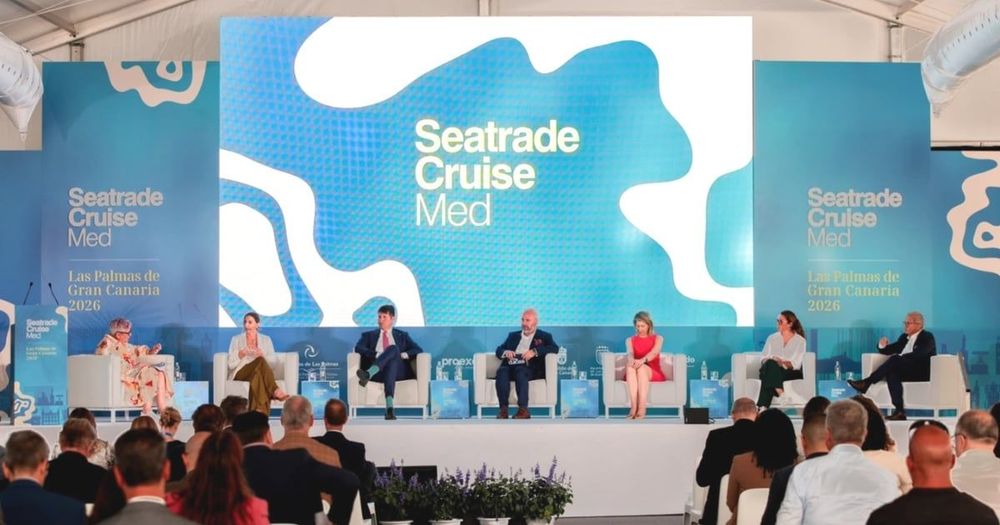
Industry leaders at Seatrade Cruise Med debate how to balance unprecedented passenger growth with mounting pressure from communities, governments and guests demanding more sustainable and authentic cruise experiences.
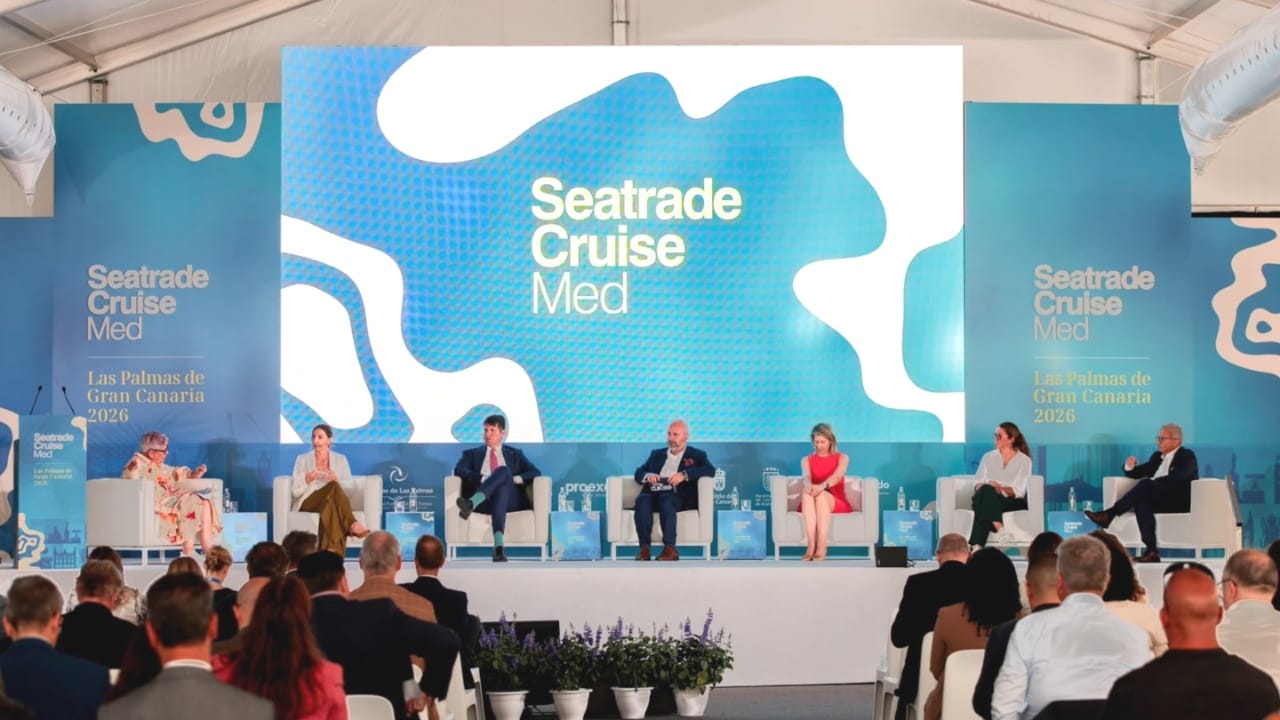
L-R: Mary Bond, Steffi Heinicke, Leonardo Massa, Nikos Metzanidis, Theodora Riga, Samantha Stimpson and Chris TheophilidesPHOTO: SEATRADE CRUISE
September 16, 2026
Seatrade Cruise Med 2026 kicked off this morning at Santa Catalina Terminal, Las Palmas Cruise Port with insights from some of the leading figures in the world of Mediterranean cruising. It began with welcome addresses by key local dignitaries, followed by Bud Darr, CEO, Cruise Lines International Association and Theodora Riga, president of MedCruise. The 'State of the Mediterranean Cruise Industry: Raising Expectations' panel then got underway.
Earlier, Bud Darr, CEO of Cruise Lines International Association, used his keynote to hint at CLIA's latest environmental report, released today, and declared the sector's health as "excellent."
Darr emphasised Europe's central role in the industry's success. "Europe is really critical to the cruise industry," he said, pointing to major source markets including the UK and Germany, and to an orderbook representing approximately $96bn in newbuild commitments extending beyond 2036, with more than 80 ships on order.
The future fleet will operate on a range of fuels and "be much more efficient" than existing vessels, according to Darr, who also challenged persistent misconceptions about ship sizing. The idea that vessels are uniformly getting bigger is "just not true," he said, with growth happening across all industry segments rather than only at the upper end of the capacity range.
Most ships on order are being built in Europe, representing a heavily booked yard position that Darr presented as evidence of the industry's commitment to the region. "Responsible growth is not a slogan," he told delegates.

Bud Darr PHOTO: SEATRADE CRUISE
MedCruise president Theodora Riga opened the main panel by challenging the industry's fundamental approach to measuring success, arguing that traditional growth metrics no longer serve the sector's evolving needs.
Citing annual passenger movements now at 39.75 million globally, Riga argued the industry's founding question has run its course. "For many years, our industry has asked a relatively simple question: how much can we grow?" she told delegates. "Success is creating something else: expectation." She said guests, cruise lines, governments, regulators and cities "are wanting more."
Riga framed rising expectations as an opportunity rather than a burden, describing it as "an invitation to become better," whilst emphasising that the industry's own metrics need to mature accordingly. "Asking whether a record year was good or not is not enough anymore. Was it a record year for the destination? Did they feel it? Did the local businesses feel it?"
MedCruise is conducting cruise economic impact assessments across the region, working with AIVP and Port City Compass. The critical measure, Riga emphasised, is "not how many passengers arrived – it's how far the value travelled," extending down to taxi drivers and restaurants.
She also challenged seasonal assumptions about Mediterranean cruising: "Our culture does not have a season. Our gastronomy does not have a season. Great cities over thousands of years don't have a season."
On decarbonisation, Darr's central argument focused on supply rather than ambition. Without fuel availability, he argued, targets become meaningless: "Without the molecules it doesn't happen – it's just a bunch of smoke and mirrors."
He outlined alternative fuel pathways and their respective trade-offs. Fossil LNG serves as a bridge fuel available now, whilst methanol shows promise but green supply remains scarce. Green methanol offers practical and scalable potential, whilst bio-LNG and synthetic methane can deliver deep emissions reductions. Hydrogen faces constraints from safety and storage challenges, and ammonia presents safety risks in passenger ship contexts.
The multi-fuel fleet is developing accordingly, with 31 ships operating multi-fuel engines by 2026, rising to 69 ships by 2039. Darr positioned this alongside broader progress markers: non-HFO fuel usage has climbed from 26% in 2019 to 40% in 2025; ships able to connect to shore power have tripled since 2018; advanced wastewater treatment has seen "tremendous progress"; and most ships, representing 84% of capacity, can now produce 100% of their freshwater needs onboard.
His closing request was regulatory: "We need fit-for-purpose IMO regulations," with collaboration being "critical" – a theme the subsequent panel returned to repeatedly.
The main panel discussion, moderated by Mary Bond, group portfolio director, Seatrade Cruise, examined how the industry is adapting to rising stakeholder expectations. "Expectations have grown exactly on relevance," said Chris Theophilides, CEO of Celestyal Cruises. "It's not just about the numbers; it's about being relevant to guests, being relevant to communities' expectations."
The panel brought together Theophilides; Samantha Stimpson, CEO, Fred. Olsen Cruise Lines; Leonardo Massa, VP Southern Europe – cruise division, MSC Group; Steffi Heinicke, SVP, guest experience and onboard revenue, AIDA Cruises; and Nikos Metzanidis, executive director, Europe, CLIA.
Stimpson cautioned against treating the cruise fleet as a uniform proposition. "We're still in a position of not one size fits all," she said. "There's different sized vessels, different ages of vessels, different levels of investment in those vessels."
Smaller ships carry distinct advantages, according to Stimpson, who argued that "the smaller vessels have got more flexibility, in my opinion, in smaller destinations and smaller ports."
For Metzanidis, rising expectations correlate directly with continued growth. The Mediterranean handled approximately six million passengers last year, and while CLIA has not yet released figures, "there are glimpses of growth also in 2026." His assessment was direct: "With greater growth comes greater responsibility."
That responsibility is intensified by the region's unique geography, featuring "a concentration of very old cities, medieval cities, very old ports that have specific geographical restrictions."
Traditional deployment patterns are evolving rapidly, driven by both logistical and commercial factors. Massa identified two primary categories of deployment drivers: "Some are logistic factors – the capability of the port to accept a ship of a size or another size – and others are more connected to commercial opportunities."
Connectivity improvements in railways, airports and roads are reshaping possibilities, not only enabling new itineraries but providing guests with "a better service," because "the guest experience starts from the moment of the reservation."
Celestyal has expanded operations across the entire Mediterranean basin and will operate year-round in both eastern and western regions, with Adriatic operations during summer. However, two new factors are influencing deployment decisions.
The first is geopolitical risk management. "The need to be geopolitically agile. We find the deployment reviews being more common and more frequent, whereas traditionally deployment was more set in longer durations," Theophilides explained.
The second factor is duration flexibility. "Long gone are the days when you had your traditional seven-day rotation," he said. Celestyal now offers 3-, 4-, 7-, 14- and 22-day cruises targeting specific source markets and guest expectations, with some guests seeking short breaks while others want "a longer, deeper connection to a destination."
Time in port has been restructured accordingly. "Where it makes sense we overnight, where it makes sense we have late stays. It's not that 9am to 5pm fixed formula anymore," Theophilides noted. The logic prioritises experience over operational convenience: "Not all genuine authentic experiences happen between 9am and 5pm."
This approach proves easier to implement with mid-size and smaller vessels compared to large ships operating fixed programmes.
For Fred. Olsen, the Mediterranean "is really important to us and always has been," according to Stimpson, with the line expanding through its first full fly-cruise programmes now entering operation. The line treats the Mediterranean as a year-round destination, though "there are some destinations that support our operation better than others."
AIDA's winter deployment in northern Europe provides a transferable lesson for Mediterranean operators. With two ships deployed in the north during winter, Heinicke offered clear evidence of demand creation. "Thinking of five, ten years ago, never ever would we have expected this could work."
Success came through narrative building rather than market discovery, achieved by "giving a picture and building stories around what our guests can expect," replacing default perceptions of harsh weather with "a story of coziness, of hygge culture, of snow." AIDA collaborated with ports and tour operators on skiing and winter experiences, matching them onboard with ice skating and Christmas markets.
Massa described season extension as "an incredible opportunity," citing MSC's northern Europe trajectory as proof: from one 2,000-passenger ship 25 years ago to six ships deployed there this winter. "Having customers all year round is very strategic," he said, benefiting both cruise lines and destinations.
When asked about barriers to year-round Mediterranean cruising, Riga struggled to find rational explanations. She recounted a December panel where a cruise line complained about a port's summer shade infrastructure at 40°C temperatures, yet the same port's December operations showed "perfect 22°C weather, everything open, 2,500 years of history — and almost nothing on the berth."
Metzanidis framed the issue structurally, noting that global tourism habits are shifting, climate change is redrawing operational possibilities, and post-Covid workplace flexibility has loosened traditional calendar constraints. An industry that has grown from 1.7 million passengers in the late 1980s to nearly 40 million "is due to a change," with year-round income providing sustainability for local communities.
Stimpson provided the panel's most candid assessment of community relations, describing it as "an ongoing process" against continuously shifting guest requirements. Fred. Olsen's guests seek to "speak to locals and try local cuisine, so it's our responsibility to make sure there's those opportunities in the destinations."
Her assessment of current performance was direct: "There is a real requirement for us to do better," noting the line is "more welcome in some destinations than in others." Economic benefit must extend beyond port operations: "not just because we turn up to a destination and there's people employed in the port – what are we doing to ensure the experiences our guests are offered give something back to the wider community?"
The challenge extends beyond cruise-specific issues. "It's not just a cruise tourism challenge. It is a destination tourism challenge," Stimpson concluded, drawing agreement across the panel.
Heinicke endorsed Stimpson's assessment and advocated for increased transparency through community engagement. AIDA opens its ships to local communities in many ports, showing residents water treatment and environmental facilities while putting officers and captains in direct contact with community members.
"Because there's a lot of resistance, there's a lot of perceptions that are wrong sometimes," she explained. Proper execution creates mutual benefit: "you really can build trust," while enabling cruise lines to understand community concerns directly.
The structural constraint affecting port development is tempo, according to Riga. "There's definitely a time gap. Cruise lines move at a much faster pace; ports can move at a much slower pace." Regulatory processes create delays, and "it takes a very long time" to complete projects.
Even successful infrastructure development faces obsolescence risks. Unless ports build for 30-year horizons, "usually by the time infrastructure is ready, it's outdated."
Successful examples exist, including Barcelona, which manages complaints while building infrastructure and relocating vessel deployment away from city centres while becoming more energy-conscious. Genoa and Malta also demonstrate effective approaches.
An internal MedCruise study presented at the event found 90% of member ports will have shore power supply projects in place by 2030, though Riga stressed these represent projects underway rather than completed installations.
Metzanidis called for increased government backing for infrastructure development. "We need governments to actually support the infrastructure," he said, while describing "a lot of bureaucracy" surrounding targets and regulations.
Passenger expectations are evolving beyond traditional cruise industry benchmarks. "Our guests these days are not comparing the experience to other cruise lines; they are also comparing it to other shoreside facilities," Heinicke observed, including hotels and theme parks. "We have to make sure we keep that pace and the full experience is comparable."
Comfort requirements have expanded to include easy port access, usable public transport and digital tools guests expect onboard
Stimpson confirmed that guests "are looking for more immersive experiences now," with Fred. Olsen investing significant time in "understanding exactly what the guest experience is that they're looking for and where their pain points are."
Theophilides described guest expectations as "most definitely changing," though he preferred the term "demanding." Celestyal's response begins with itinerary design and deliberate decisions to extend port stays, then builds shoreside experiences worthy of that time.
The line has developed a portfolio of small-scale "authentic encounters" away from traditional tourist areas, including olive press visits and family dinners at rural farmhouses in the western Mediterranean, and embroidery workshops with craftsmen in Casablanca.
The format presents inherent challenges: "for it to be authentic, it has to stay small scale, and so you need to develop a lot of small-scale events." This creates operational pressure, as "there's more pressure on my colleagues" to develop and deliver these experiences.
With Brussels conducting comprehensive reviews, Metzanidis reported that established frameworks face uncertainty. "Fit for 55 – what we knew back in 2019 – is all up for review. Everything is being reviewed."
This includes the alternative fuels infrastructure regulation setting shore power supply obligations and 2030 deadlines, plus questions of project sustainability and price affordability. The Renewable Energy Directive also faces review.
Two regulatory files matter most in the near term. The industry awaits the European Sustainable Tourism Strategy, which Metzanidis hopes will feature cruise as an example of well-managed tourism. The Emissions Trading System review is underway, where he counts an early victory: the industry's request for mechanisms to bridge price gaps between alternative and conventional fuels "is already there by the European Commission proposal."
Future fleet development emphasises efficiency rather than capacity increases. Heinicke confirmed AIDA is expanding its fleet from 11 ships, with two additions joining in 2030-31. Notably, "those ships are not going to be taller than the ones that we have," meaning existing facilities "can cope with that very well."
Instead, new vessels will be "really smart ships, more efficient ships." Her request to destinations focused on technology: expand shore power and supporting facilities to enable ships to utilise existing onboard capabilities.
Massa announced that MSC will deploy MSC Euribia to Las Palmas next winter, replacing MSC Fantasia for seven-night Canary Islands cruises, "not only increasing capacity, but also extending the season with a larger ship."
Seatrade Cruise Med takes place September 16-17.