

• 8 min de lectura
• 8 min de lectura
Port of Narvik is strengthening its position as a key cruise destination in Northern Norway, with expanded shore excursion offerings and enhanced turnaround capabilities taking centre stage during Cruise Norway's latest familiarisation trip (September 5-11).
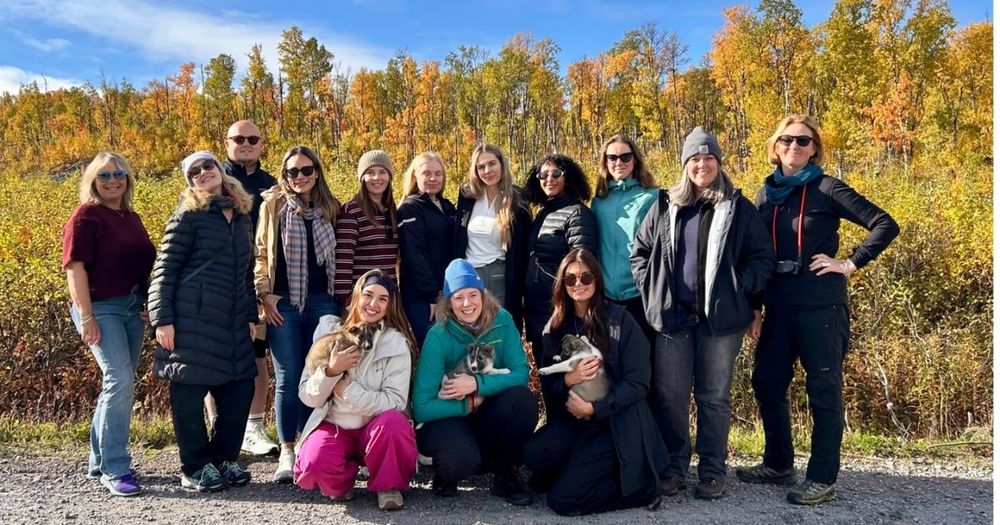
On Saturday, the familiarisation programme, featuring six cruise line representatives and four destination management companies, showcased Narvik's diverse portfolio of experiences, from innovative husky adventures to maritime heritage tours.
"The train is a USP and is our most sold product – the Polar Park is a close second," explained Grethe Parker, sales and marketing manager at Port of Narvik. The Arctic Train operates along the historic Ofoten Railway, with Parker noting that "99% of cruise lines use the Arctic Train in one form or another."
The railway journey combines Arctic landscapes with industrial heritage, following the dramatic route built to transport iron ore from Swedish mines to Narvik's ice-free harbour. The 120-year-old railway route takes passengers on scenic journeys lasting 2.5-3.5 hours, with the train making stops at Katterat Station and continuing to Bjørnfjell, the final station before the Swedish border.
The train can accommodate 220 passengers, though 180 is recommended for maximum comfort, with audio guides available in English and German, with French, Spanish and Russian coming soon. Staff aboard the dress in traditional navvy attire, reflecting the heritage of the railway workers who built the line by hand using simple tools.
At Katterat Station, the group visited a small museum dedicated to the Navvy Road, featuring exhibits of the original tools used in construction and a film about the railway's history. The museum also houses a lavvu (traditional Sami tent) that opened last year, specifically designed for Northern Lights experiences, providing content for tours even when weather conditions prevent aurora viewing.
The station features a replica village of Rallarveien with a screen showing Northern Lights films, ensuring passengers have engaging content regardless of weather conditions.
A black steam locomotive, a museum piece connected to the old iron ore trade, sits on the platform at Narvik Station alongside a small building housing a detailed model of Rombaksbotn as it appeared during the railway's construction period from 1898-1902.
Narvik hosts an annual Winter Festival week dating back to the 1950s, where participants dress like navvies in traditional railway worker attire. This cultural celebration adds authenticity to the destination's railway heritage narrative and provides additional context for cruise passengers experiencing the Arctic Train.
Narvik has diversified its offerings with unique experiences including "husky on wheels" adventures in nearby Bjorkliden, Sweden, with the fam trip also experiencing the new product at the weekend. This summer adaptation of traditional dog sledging uses small motorised buggies with seating for three people, pulled by huskies, making the experience viable during warmer months when snow and ice are absent.
A typical, comprehensive four-hour tour begins with a 45-minute drive from Narvik port to Sweden, followed by 1 hour 10 minutes to reach the location. Passengers spend 40 minutes with the huskies, with some experiences giving passengers the opportunity to act as mushers. The tour includes historical talks about Narvik's wartime significance, opportunities to interact with husky puppies, and light refreshments including tea, coffee and pastries.
The husky experience operates near Sweden's tallest mountain and cannot be conducted during the height of summer if weather conditions become unsuitable for the animals' welfare.
The Narvik War Museum offers accessible insights into the Battle of Narvik and the strategic importance of the iron ore route during World War II. Located approximately 10 minutes by coach from Narvik Cruise Port, the museum contextualises local events within broader themes of occupation, resistance and peacebuilding through exhibitions, photographs, personal stories and interactive displays.
The facility can accommodate between 10 and 90 passengers per departure during 2.5-hour visits and is wheelchair accessible, representing the port's commitment to inclusive tourism offerings. The museum experience is suitable for guests seeking a clear, well-structured introduction to Narvik's wartime past before exploring the town further.
Maritime heritage takes centre stage
A brand new addition to the shore excursion portfolio is the Ofot Fjord Shipwreck Experience, a small-group maritime heritage tour departing from Narvik Harbour's Pier 2. The 2.5-hour experience accommodates 6-12 passengers aboard the vessel Ofotr, combining fjord scenery with wartime stories.
The tour features an underwater ROV drone that provides live footage of wreck remains from the 1940 naval battles when German and Allied forces fought for control of Narvik's strategic port and iron ore route. Several wartime wrecks still rest on the seabed, forming an important part of Narvik's maritime heritage. The experience includes refreshments and onboard interpretation from the skipper.
Alternative options include swapping the drone experience for a fishing trip (maximum six passengers) or Northern Lights chasing boat tours. The port also offers a floating experience where passengers don safety warm suits to float in the water.
Navvy Trail hiking experience
Another recent addition to the portfolio is the Navvy Trail hiking tour, a six-hour combined rail and walking excursion that follows the historic path of the railway builders through dramatic mountain terrain. The tour accommodates 15-30 guests and includes coach transport, guide services, train tickets and boat transport. The walking portion requires suitable footwear and good fitness levels as it follows challenging mountain terrain.
The experience allows passengers to walk in the footsteps of the navvies who worked under demanding conditions to construct one of Northern Norway's most important railway lines, with guides sharing stories about the construction challenges and the workers' experiences.
Narvik is actively developing its turnaround capabilities, leveraging Norway's third-longest runway at 2,808 metres and comprehensive port facilities. "Airlift is not a problem," Parker asserted, explaining that turnarounds "is an area we want to grow."
The port features a 150-metre cruise pier at its ISPS cruise terminal capable of handling ships up to 350 metres in length, with 12-15 metres berth depth and no draft restrictions. Supporting infrastructure includes large baggage storage facilities, with the port able to provide buggies, wheelchairs, porters and other ground handling equipment as needed, though these aren't permanently stationed due to current demand levels.
The port can accommodate 12 buses simultaneously on the pier, with separate areas for shuttle buses and large shore excursion coaches. Passengers enjoy a 10-minute walk from the town centre, with views of the 'Sleeping Queen' mountain visible from the port area.
The 45-minute transfer from port to Harstad/Narvik Airport Evenes provides opportunities for scenic tours en route, with stunning scenery throughout the journey.
The port benefits from having three tug boats available and operates as an ice-free facility year-round. A marketplace operates on the ground floor of a wooden building on Pier 3, featuring local vendors selling local crafts to cruise passengers.
The Port of Narvik will launch shore power facilities in the first quarter of 2027, representing a NOK 93 million investment developed in collaboration with Plug Nord, with NOK 10.7 million funding from Enova.
"This is a transformative initiative for both the port and the city," said Børge Edvardsen Klingan, director of Port of Narvik. "By offering shore power, we are not only improving air quality and reducing noise but also supporting the local shift toward low emission maritime transport."
The facility will include high voltage and low voltage systems with 12 MVA capacity, supporting both 6.6 and 11 kV systems at 50 and 60 Hz frequencies.
"We are building the infrastructure necessary for a clean future," said Maria Bos, CEO of Plug Nord. "Narvik's leadership in this area sets a strong example for other ports in Norway and beyond."
The port also promotes a slow cruising concept, offering financial incentives to cruise lines that visit any three of four designated destinations within easy reach, allowing ships to sail slower and save fuel.
Narvik's cruise season demonstrates impressive year-round appeal, with the 2025 season running from the first week of January through December 29. The port recorded approximately 94-95 cruise calls this year, up from 66 in 2025, with bookings for 2027 and 2028 already exceeding 80 calls.
"We're trying to grow the summer season, as well," Parker added, noting that while Narvik is traditionally a stronger winter destination, the expanded portfolio is attracting more summer visitors. The port's year-round operations benefit shore excursion providers, with 70% of Arctic Train passengers coming from cruise tourism.
The port serves as an approved safety call for multiple cruise lines, providing backup options during adverse weather conditions elsewhere.
Narvik will host the 2029 FIS Alpine World Ski Championships from February 13-25, 2029. The event, described as the second-largest winter sporting event globally after the Olympics, will feature alpine slopes running from mountain to fjord, creating unique photographic opportunities that will showcase the destination to a global audience.
Preparations are underway with a new cable car system scheduled to open on January 1, 2027, further enhancing the destination's infrastructure and appeal to cruise passengers seeking winter sports experiences.
The fam trip continues in Narvik on September 6.