


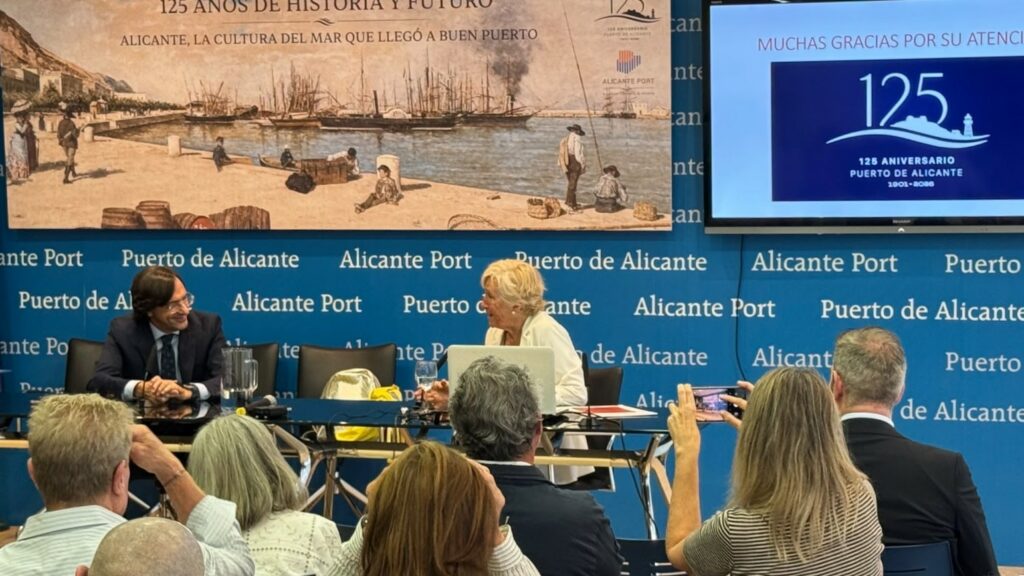
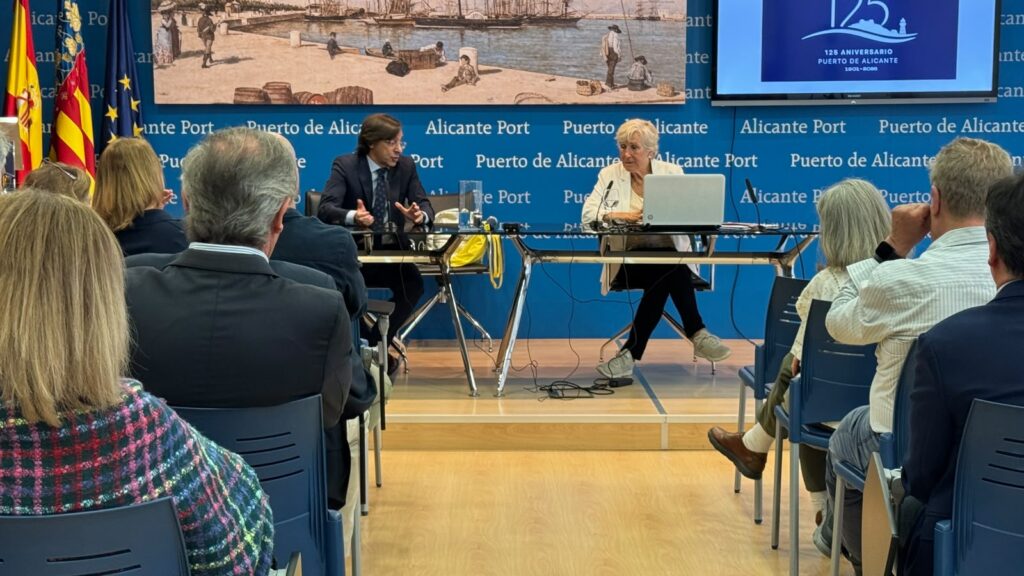
Alicante – October 28, 2026 – The Alicante Port Authority has commenced the lecture series organized to commemorate the 125th anniversary of the establishment of the Port Works Board, looking back at its own origins. Historian Guillermina Subirá Jordana, author of one of the main reference works on the historical evolution of the Port of Alicante, was tasked with opening a program that, through 16 lectures, will explore the history of the port and its deep economic, social, and cultural ties with the city until next March.
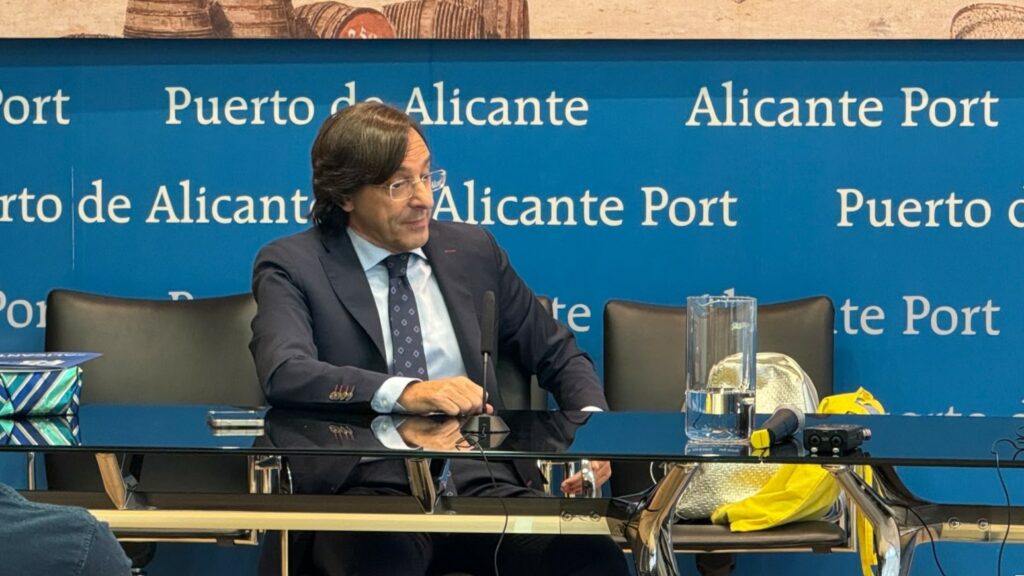
The President of the Port Authority emphasized that the commemoration of the 125th anniversary of the Port Works Board aims to contribute to disseminating knowledge about the historical, economic, and social importance of the Port of Alicante, its role in wealth generation, and its close link with the evolution of the province.
In this regard, he claimed the current Port Authority as the direct heir of that Port Works Board, which for 91 years promoted the modernization and growth of port infrastructure.
The president also noted that the anniversary is an opportunity to pay tribute to all generations of workers and professionals who have contributed to building the port and making it possible to this day. An extensive port family that, from different responsibilities and areas of activity, has participated in the transformation of a commercial port that today faces, once again, a period of significant changes.
He also recalled that the celebration commemorates 125 years of the Port Works Board, but not the birth of the port, whose history dates back much further. "It's not 125 years of the port, but 125 years of the Port Works Board. The history of the Port of Alicante is more than 2,000 years old," he stressed.
In this historical journey, he especially highlighted the alliance between the port and the population that grew around it, a relationship that has marked the evolution of Alicante and allows understanding the deep connection between the city and its port.
During the presentation of historian Guillermina Subirá Jordana, the president highlighted her fundamental contribution to the knowledge of Alicante's port history. Her research, developed in the 1980s, constituted one of the first major rigorous, systematic, and detailed works on the historical evolution of the Port of Alicante.
He especially emphasized her work Evolución histórica del Puerto de Alicante, published in 1987, which he defined as "the bedside book and the reference work for understanding the history of the Port of Alicante," as it covers its evolution from its origins to the 1980s. A work based on her Bachelor's Thesis, supervised by Professor Dr. D. Antonio Gil Olcina, presented in 1985 at the University of Alicante, obtaining the highest qualification.
The president also expressed the Port Authority's gratitude to the historian for having agreed to revisit that work decades later: "We are indebted to Guillermina Subirá for that research and dissemination work and for having accepted the challenge of returning to Alicante and recovering, with a new perspective, an essential part of our history."
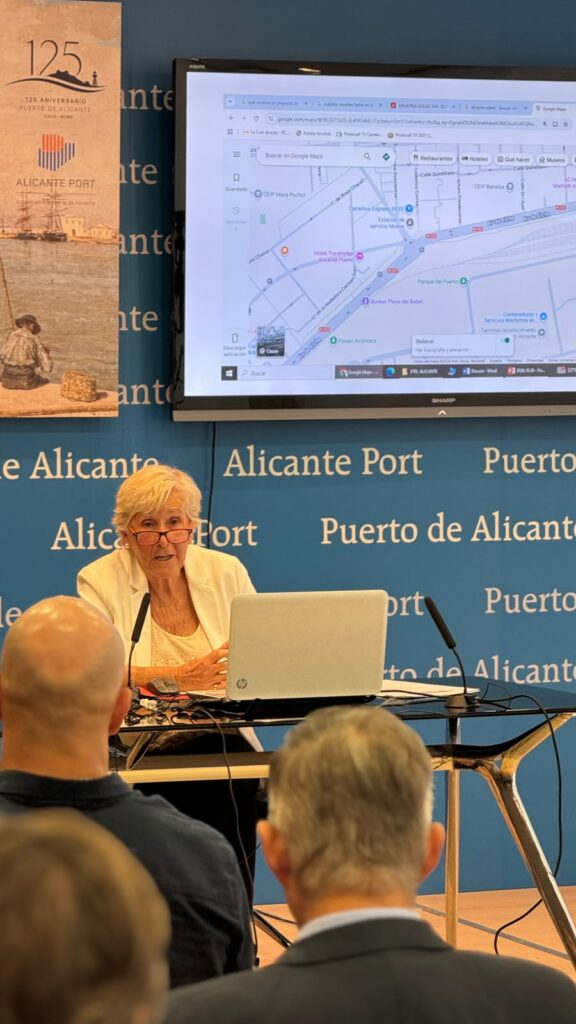
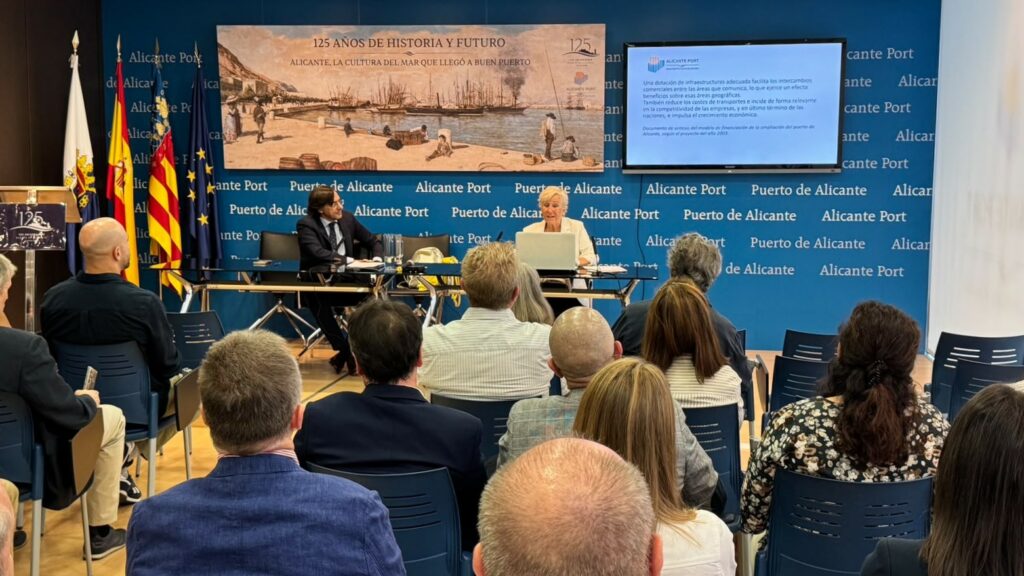
During her lecture, Guillermina Subirá reviewed the antecedents of the Port Works Board, going back to 1801 to explain the different boards and initiatives that preceded its official constitution in 1901. Through this journey, the historian contextualized the long process that allowed the port to be endowed with a stable structure to promote its development and modernization.
Subirá also recalled her first steps as a researcher at the Port of Alicante and how Sergio Campos, then president of the port institution, opened the doors of its archive to her to undertake the study of historical documentation. The historian even recounted the conditions in which she found those archives, to the point that she had to participate in the cleaning and conditioning of the archive before beginning to study and organize the abundant documentation it preserved.
That work allowed much of the port's evolution to be reconstructed and the numerous projects that, over the centuries, defined its configuration to be known. During the conference, Subirá reviewed the first port works and the successive proposals for expansion and transformation put forward to meet the commercial and city needs, some of which materialized and others remained only on paper.
Thus, the historian showed how the current physiognomy of the Port of Alicante is the result of more than two centuries of projects, decisions, works, and also initiatives that were never executed, but which allow understanding the aspirations that existed at each moment for the development of the port.
Her intervention ultimately allowed a journey through the transformation of the Port of Alicante, from those first attempts at organization and improvement at the beginning of the 19th century, to the present day, highlighting the permanent adaptation of its infrastructure to the economic, commercial, and urban needs of each era.
The intervention also served to present the spirit of the series, consisting of 16 lectures until March 3, which will allow an approach to the history and relationship of the port with Alicante from very diverse perspectives. After this first historical approach, the program will address areas such as art, literature, infrastructure, sports, or some of the figures who have left their mark on the port community.
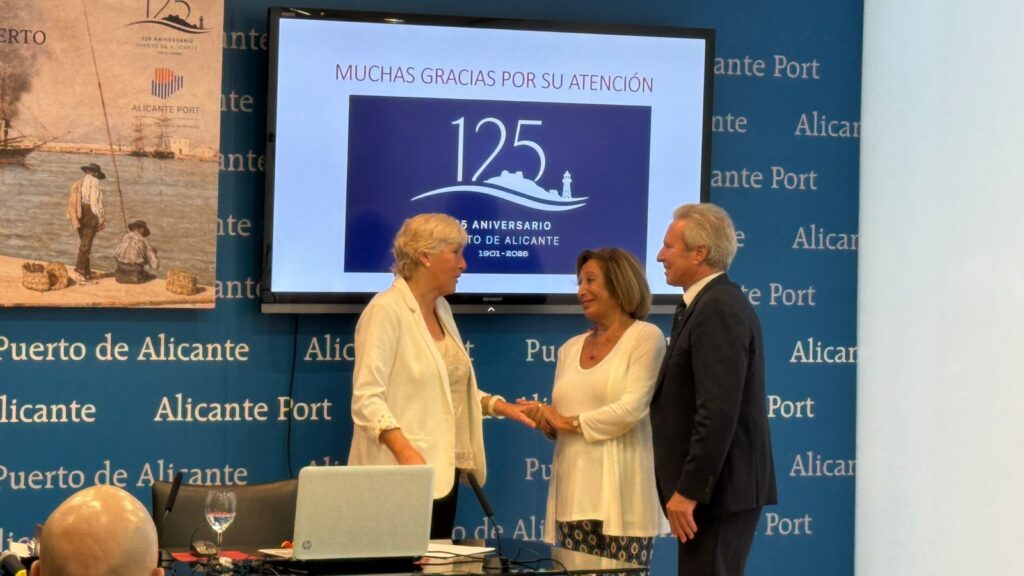
An emotional moment of Guillermina Subirá reuniting with the widow and son of Sergio Campos.
Source: Puerto de alicante

