• 3 min de lectura
• 3 min de lectura
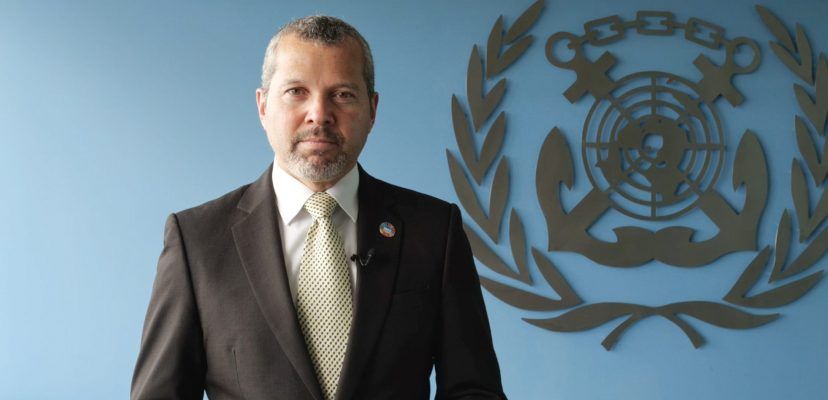
The Secretary-General of the International Maritime Organization (IMO), Arsenio Domínguez, urged Member States to refrain from carrying out actions that endanger merchant ships and put the lives of seafarers at risk.
Speaking before the IMO's Sub-Committee on Carriage of Cargoes and Containers, the Secretary-General warned of the serious repercussions that geopolitical tensions have on the shipping sector.
"We are reaching a point where these conflicts are being used as a pretext to attack merchant ships and innocent seafarers. Do not use these conflicts to attack innocent seafarers," he said.
Since the current conflict in the Middle East began on February 28, the IMO has verified 80 attacks against international shipping in and around the Strait of Hormuz, which have resulted in the death of at least 22 crew members and injured many others.
In the Black Sea and the Sea of Azov, dozens of fatalities have reportedly occurred due to attacks on international shipping in recent months, although exact figures are difficult to verify.
Attacks in the Red Sea have also resumed, with four confirmed fatalities in the latest attack perpetrated by the Houthi movement against a merchant ship on August 11.
The Secretary-General emphasized that the attacks occurring in these conflicts cannot be attributed to a single actor. "In the Strait of Hormuz, it is not just one country attacking merchant ships. In the Black Sea and the Sea of Azov, it is not just one country attacking merchant ships."
Domínguez stressed that addressing the root causes of these geopolitical conflicts is beyond the IMO's scope of competence, but their impact is increasingly evident in global maritime trade and shipping operations.
Along these lines, the senior United Nations official urged delegates to raise these repercussions on international shipping with their governments and in relevant international forums. "When disruptions occur in shipping operations, the consequences go far beyond the maritime sector, affecting economies, supply chains, and daily life.
"I urge you to communicate these repercussions to the relevant agencies in your countries so that this issue can be addressed within the United Nations, as appropriate (…). It is up to you, your governments, and the relevant United Nations agencies to address the root causes and find solutions," he remarked.
The IMO Secretariat is ready and willing to contribute to finding viable solutions for the shipping sector that Member States can propose at a technical and operational level.
The Sub-Committee on Carriage of Cargoes and Containers (CCC Sub-Committee) is meeting in London from September 14 to 18 to discuss safety issues related to the maritime transport of dangerous goods, bulk cargoes, and containers.