


Published21 October 2026
The addendum provides owners and charterers with a flexible mechanism for agreeing how the costs, time, fuel-saving benefits and environmental benefits associated with retrofit projects should be allocated between them.
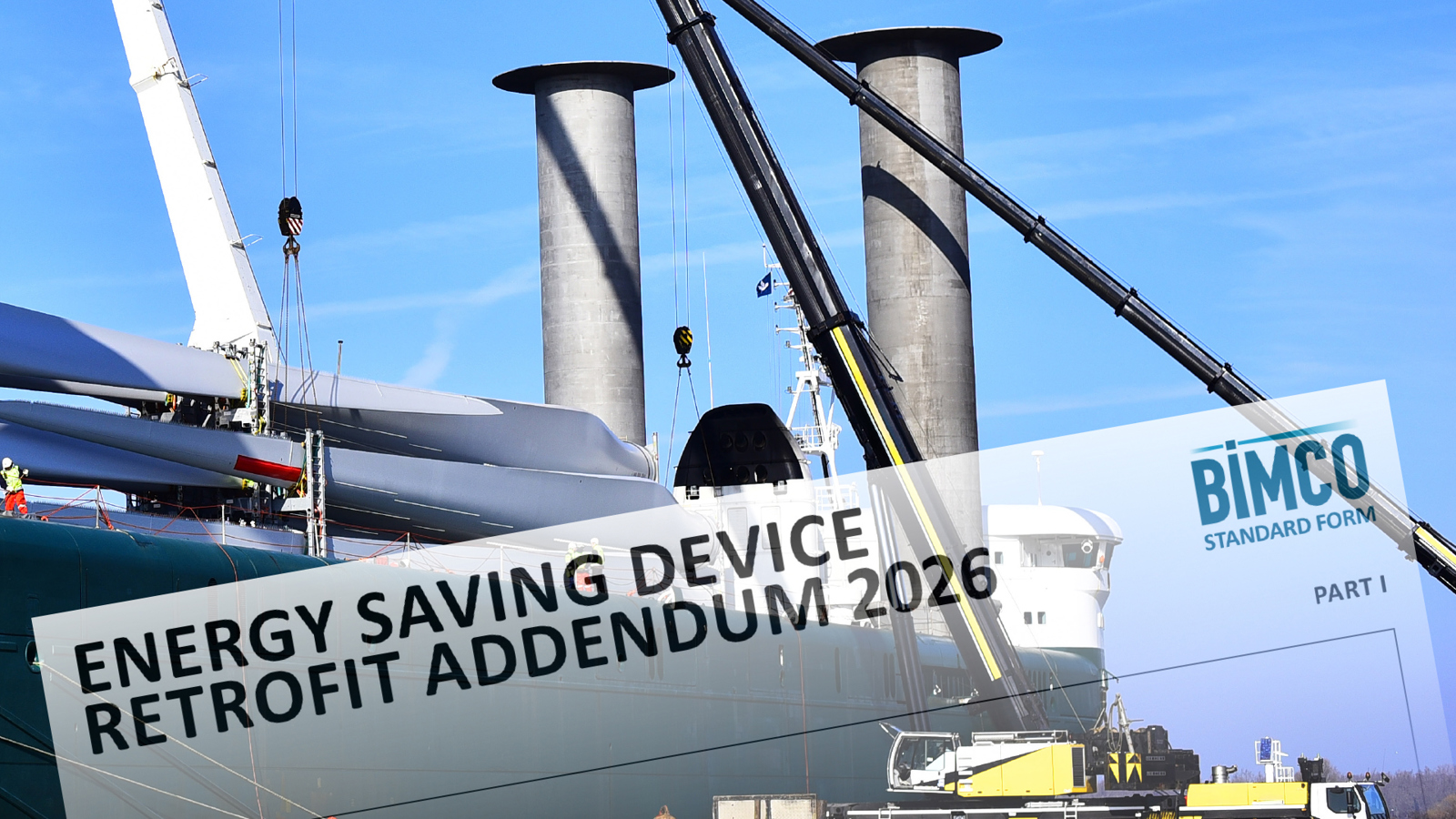
It provides a new contractual framework designed to facilitate the installation of energy saving devices during the period of a time charter.
The shipping industry is facing increasing pressure to improve energy efficiency and reduce emissions. New environmental regulations, market-based measures and commercial decarbonisation initiatives are encouraging stakeholders across the industry to explore technologies capable of reducing fuel consumption and improving vessel performance. At the same time, fuel efficiency continues to be one of the most important drivers of operational costs.
Although energy saving technologies have become increasingly sophisticated, investment in retrofit projects has often been complicated by a misalignment of commercial interests between owners and charterers.
In many cases, owners are to fund the purchase and installation of equipment onboard the vessel, while some or all of the operational benefits generated by that equipment accrue to charterers during the charter period. This has sometimes reduced the incentive for parties to proceed with retrofit projects, even where those projects could generate significant fuel savings and environmental benefits.
The Energy Saving Device Retrofit Addendum 2026 has been developed to help bridge this gap by enabling parties to structure commercially balanced arrangements that reflect the specific economics of each project. Rather than prescribing a single commercial model, the Addendum allows parties to determine how costs and benefits should be shared according to their particular circumstances.
"Our objective was to create a practical tool that can help unlock investment in retrofit solutions and support the industry's decarbonisation efforts.'"- Mattias Kjellberg of Stena Rederi AB, Chairperson of the subcommittee.
The Addendum has been deliberately drafted as a technology-neutral framework capable of accommodating a broad range of current and future energy-saving technologies.
It can be used for relatively straightforward retrofit projects as well as more sophisticated technologies whose performance depends on operating conditions, vessel configuration or interaction with other equipment onboard.
Among other things, the Addendum allows parties to agree how to allocate:
The Addendum also contains an optional performance assessment regime under which parties can agree a Performance Assessment Protocol tailored to the specific technology being installed. This protocol allows parties and their technical advisers to establish appropriate performance baselines, assessment methodologies and benefit-sharing mechanisms without embedding detailed technical requirements in the contract itself.
One of the notable features of the Addendum is the inclusion of a dedicated framework for the allocation of environmental attributes.
Environmental regulation continues to evolve rapidly and is increasingly generating commercial value connected to vessel efficiency and emissions performance. During the drafting process, the subcommittee considered it important that the Addendum be capable of addressing both existing and future environmental schemes.
Rather than attempting to identify specific schemes within the operative provisions, the Addendum adopts a broad approach through which parties can allocate rights, credits, allowances, certificates and similar benefits arising from environmental schemes relevant to their trading patterns.
This approach is intended to provide flexibility while helping the Addendum remain relevant as new environmental measures are introduced in the coming years.
As regulatory requirements and commercial expectations continue to evolve, vessel retrofits are expected to play an increasingly important role in improving fleet efficiency and reducing emissions.
The BIMCO Energy Saving Device Retrofit Addendum 2026 has been developed with this future in mind. By creating a flexible framework capable of accommodating a wide range of technologies, commercial models and environmental schemes, the Addendum seeks to help owners and charterers work together to implement retrofit projects that might otherwise prove difficult to realise.
"Historically, conversations around vessel upgrades have often taken place primarily on the owners' side, with no recognised industry standard for addressing how the costs, benefits and responsibilities should be shared between the parties. The Addendum provides a structured starting point for those discussions, enabling owners and charterers to work together when evaluating retrofit projects and negotiate arrangements that reflect their respective commercial interests. By providing that framework, the Addendum should help facilitate greater cooperation and ultimately support investment in energy-saving technologies across the industry."- Heather Johnson, Senior Counsel, Chevron U.S.A. Inc., and member of the BIMCO subcommittee.
The Addendum reflects BIMCO's continued commitment to providing practical contractual solutions that assist the shipping industry in addressing operational, commercial and regulatory challenges. As the industry's energy transition continues, the Addendum is intended to provide a foundation upon which owners and charterers can develop commercially sustainable retrofit arrangements tailored to their individual needs.
For further guidance or questions about the clause, please contact us at contracts@bimco.org.
Get the addendum and explanatory notesGet the addendum and explanatory notes
Note that explanatory notes are only available to BIMCO members (login required)

