• 2 min de lectura
• 2 min de lectura
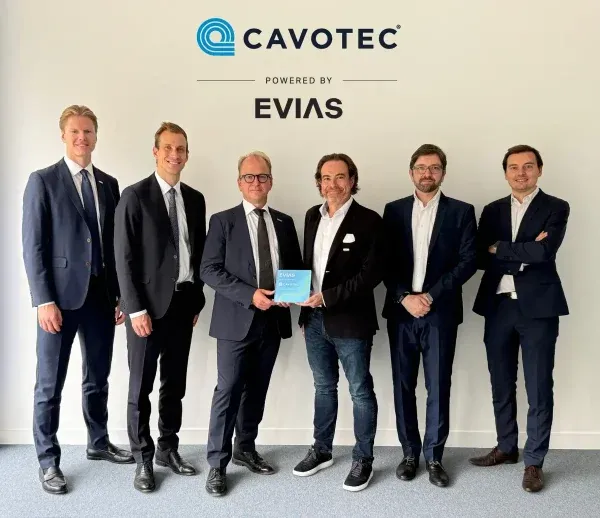
Cavotec and Evias have signed an exclusive distribution agreement to bring Evias' automatic in-ground charging technology to ports worldwide. This technology allows electric vehicles to charge while driving, which increases equipment utilization and saves space in busy ports.
This alliance expands Cavotec's electrification offering to horizontal transport applications, including terminal tractors, automated guided vehicles (AGVs), and other container handling equipment within the port.
"Evias' fully automatic charging technology integrates seamlessly into the demanding operating environments of our port customers and complements our current electrification and automation portfolio. This alliance allows us to expand our offering to horizontal transport and provide customers with an increasingly integrated approach to port electrification, from vessel and crane applications to terminal operations. Before formalizing this alliance, we analyzed various automatic charging solutions available on the market, and Evias clearly stood out, both for its value proposition and its technical design," said David Pagels, CEO of Cavotec.
Under this agreement, Cavotec becomes the exclusive distributor and installer of Evias' technology for the global port sector. The offering will be marketed under the co-branded Cavotec powered by Evias brand.
This collaboration responds to the growing demand for electrification of horizontal transport in ports, driven by container terminals' pursuit of operational efficiency and decarbonization. The Zero Emission Port Alliance industry organization estimates that between 33,000 and 47,000 new electric container handling vehicles will be ordered between 2025 and 2035.
Evias' technology is a conductive charging system designed for intensive fleet operations. A robotic arm mounted on the vehicle autonomously locates and connects to a charging rail integrated into the road, allowing energy transfer while driving or waiting for a container to be loaded.
Its modular design is optimized for safety, as only the segment of the rail directly under the charging vehicle is electrified, as well as for easy integration with existing port infrastructure. The solution reduces vehicle downtime associated with charging, which in turn saves space by decreasing the number of parked vehicles at any given time.