• 2 min de lectura
• 2 min de lectura
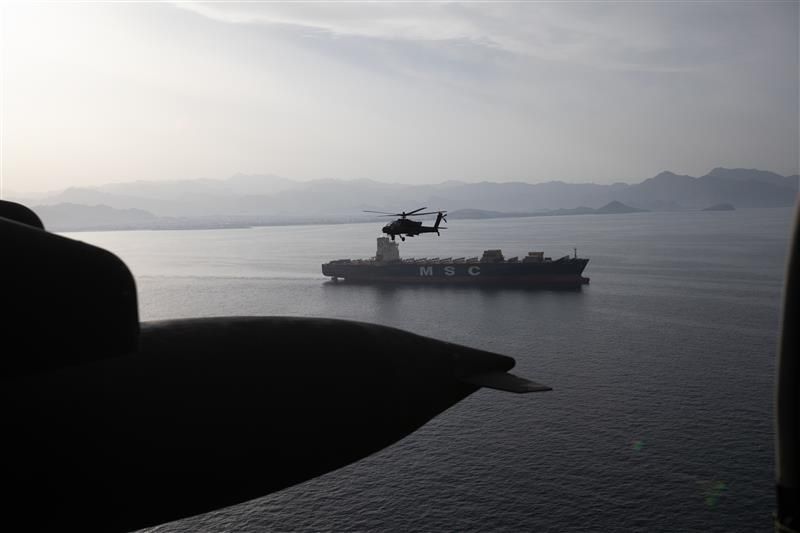
South Korean President Lee Jae Myung ruled out the deployment of combat troops in response to the situation in the Strait of Hormuz, stating that South Korea will not send military personnel in a way that could drag the country into a conflict abroad.
'Let me be clear. There will be no troop deployment that leads to involvement in a conflict. There will be no participation or involvement in the war,' he declared at a televised press conference, according to Yonhap news agency.
Lee emphasized that Seoul will maintain its principle of staying out of combat, even while evaluating measures to protect South Korean interests around the strategic waterway.
'There will be no troop deployment to participate or intervene in the war. I can state this clearly,' the president said, according to The Korea Herald.
'However, as other countries are doing, (South Korea) must protect the lives of our citizens, merchant vessels, and crude oil transport routes. This is also clear,' he added.
Yonhap quoted Lee as saying that South Korea needed to undertake 'the minimum level of activities' to safeguard its nationals and oil supply routes.
The South Korean military unit Cheonghae has already expanded the scope of its mission in the region, while Seoul examines ways to strengthen these measures.
'It is true that we are reviewing and thinking about ways to strengthen (the measures) in this regard,' Lee stated.
The statements came as Seoul weighed possible contributions to efforts to ensure navigation through the Strait of Hormuz, amid pressure from Washington.
Among the resources reportedly being considered are maritime patrol aircraft, explosive ordnance disposal teams, and unmanned systems capable of detecting and clearing naval mines, although Seoul maintains that no decision has been made.
The Strait of Hormuz is a crucial energy corridor for South Korea, while the conflict involving Iran and increased activity by Yemen's Houthi group in the Bab el-Mandeb Strait have raised concerns about maritime transport and crude oil supply.
Lee noted that South Korea faced difficulties in securing oil supply at the beginning of the conflict, as vessels avoided high-risk waters.