

Patricia Quiroga is a partner at Servicios Integrales de Comercio Exterior (SICE) Chile.
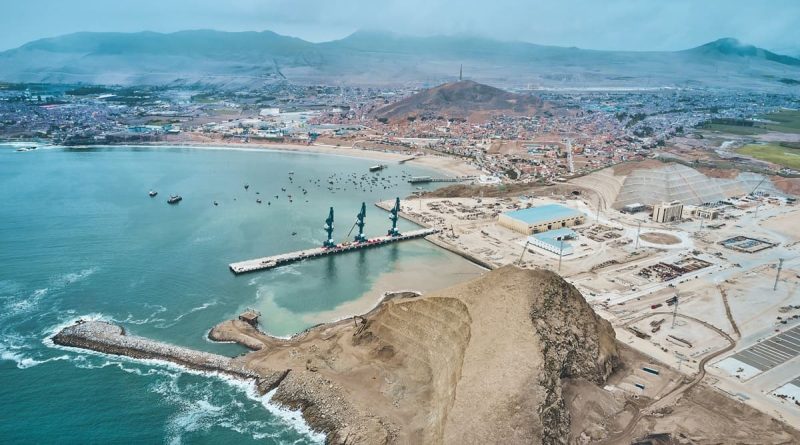
November 14 marks two years since the inauguration of the Port of Chancay. In the third quarter, according to Cosco Shipping Ports, the terminal moved 139,669 TEU, a 24.9% increase year-on-year, with a network of three main services and five feeder services.
In Chile, the conversation about Chancay often revolves around whether it takes cargo away from San Antonio. I argue that the useful question is different: how much Chilean cargo is already transshipped in Peruvian ports, and that this figure should be official and Chilean. Today, the discussion is based on estimates.
The circulating estimates come from Peru or academia. In December 2024, the then-president of the Peruvian National Port Authority (APN), Juan Carlos Paz, told this outlet that about 300,000 TEU with origin or destination in Chile were transshipped in Callao, half of that port's transshipment.
In October of this year, now as former president of the APN, he placed the share of Chilean foreign trade in containers passing through Peru at 8%, while academic Daniella De Luca, from the University of Valparaíso, estimated that close to 40% of Chancay's transshipment is Chilean cargo. These are reasonable estimates and point in the same direction, but I am not aware of an official Chilean statistic that confirms or corrects them.
This void is particularly significant right now. The Committee of Ministers has just upheld the environmental approval of the San Antonio Outer Port, while the president of Compañía Sud Americana de Vapores (CSAV), Óscar Hasbún, again questioned the project's necessity, and a study commissioned by the Chilean Maritime and Port Chamber (Camport) recommended postponing it.
The president of Empresa Portuaria San Antonio (EPSA), Sergio Merino, objected to the basis of that study: 2,540,000 TEU moved in the Valparaíso Region in 2025, when in practice it was almost 3 million. If current demand is debated with differences of almost half a million TEU, the Chilean cargo already transshipped in Peru should not be left out of the equation either. This is Chilean demand that currently connects with Asia through another port, and which can return or continue to go elsewhere.
In this same section, Cristian Espinoza, Commercial and Development Manager of Muelles de Penco S.A., proposed that port investments be prioritized, among other criteria, according to how solid the demand backing them is. From the importer's side, I would add that cargo does not change ports because of cranes. It changes when the route through Peru has available space or a better price. Many times, the SME importer does not even know which port their container transships through until they ask.
I propose that the National Customs Service and the Ministry of Transport and Telecommunications publish a quarterly official figure for Chilean import and export containers transshipped in Peruvian ports, separated by transshipment port and by Chilean origin or destination port.
The first version may be imperfect. The important thing is that a public and periodic series exists. With it, the discussion of the Outer Port would have another number on the table, and Chilean terminals would know which connections with Asia they are gaining or losing.
Chancay turns two years old. Chile should be able to state, with its own figures, how much of its trade passes through there.
@PortalPortuario


